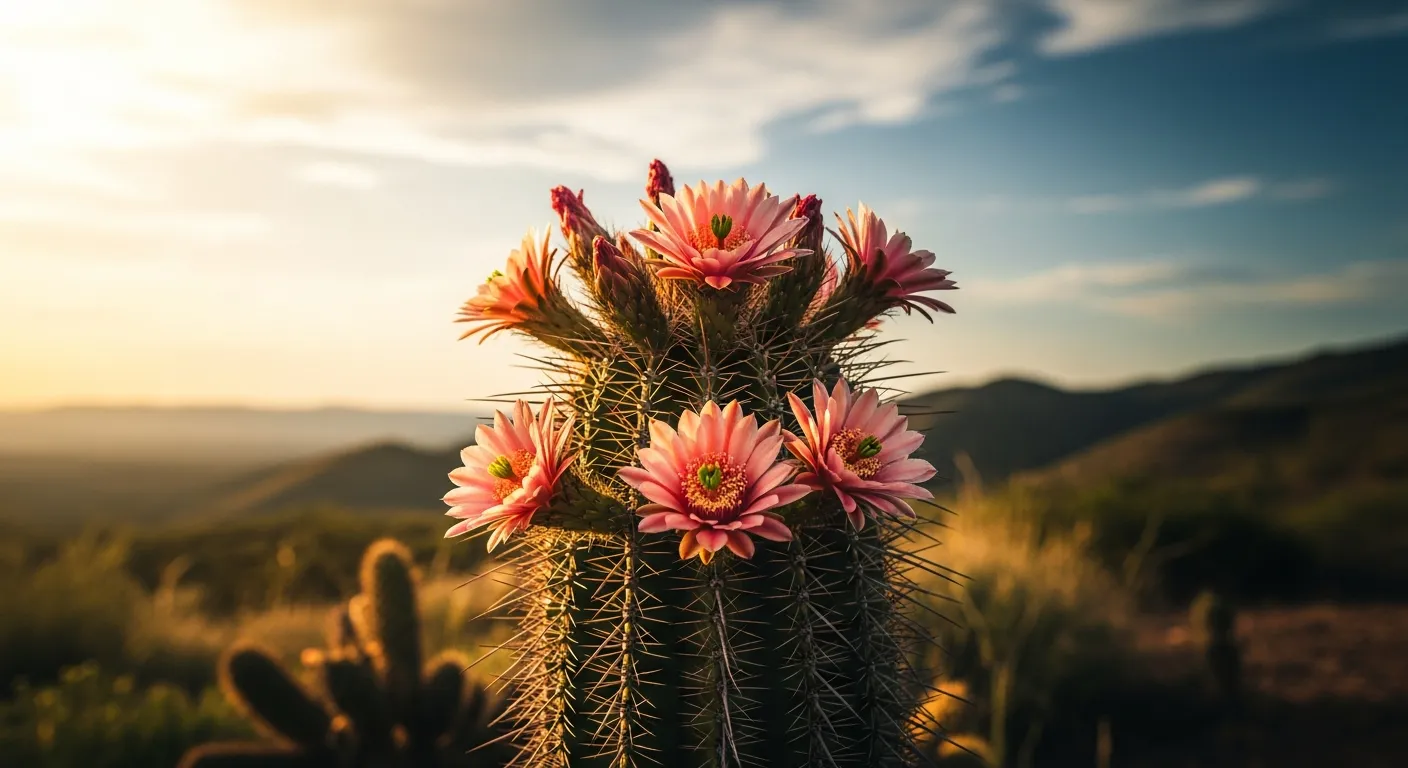
Cactus Won’t Flower? Here’s What’s Actually Holding It Back
Most people kill their chances of cactus flowers before winter even starts. I did it for three years straight with my Mammillaria gracilis kept it warm, comfortable, and consistently watered year-round because I felt bad letting it “suffer.” The result was a perfectly healthy, aggressively green ball that never produced a single bud. Turns out, comfort is the enemy. A cactus that never experiences stress has absolutely no reason to flower. That realization changed everything about how I care for cactus with flowers now.
Not All Cacti Play by the Same Rules
Here’s something that trips up a lot of people: “cactus” is an enormous, wildly diverse family. The care approach that coaxes blooms from a desert species will actively damage a jungle species, and vice versa. Before anything else, you need to know which camp your plant falls into.
Desert cacti think Mammillaria, Echinopsis, Rebutia, and Gymnocalycium evolved in arid climates with long dry seasons and cold winters. They need blazing sun, minimal water, and a genuine cool-dry dormancy period to trigger blooming. These are the ones most people picture when they think “cactus.”
Tropical cacti the Schlumbergera group (Christmas and Thanksgiving cacti) and Easter cactus (Hatiora gaertneri) are epiphytes from Brazilian rainforests. They grow on trees, not in sand. They want indirect light, more consistent moisture, and slightly higher humidity. Stick one of these in a south-facing window with desert-cactus treatment and you’ll wonder why it keeps dropping buds.
How to Tell What You Have
If your cactus has flat, segmented, leaf-like pads with no serious spines, it’s almost certainly a tropical type. If it’s round, columnar, or ribbed with proper spines, it’s likely a desert species. When in doubt, a quick image search of your plant’s label name will tell you immediately. Getting this right is the single most useful thing you can do before worrying about anything else.
The Four Things That Actually Determine Whether a Cactus Blooms
I’ve seen a lot of cactus care advice that reads like a general houseplant guide with the word “cactus” swapped in. What’s missing is the acknowledgment that flowering cacti have specific, non-negotiable triggers. These four factors aren’t just good ideas they’re the mechanism behind bloom production.
Light: More Than You Think You’re Giving It
Desert cacti need a minimum of six hours of direct sun per day during the growing season. Not bright indirect. Not “near a window.” Direct sunlight. Most indoor spots that feel sunny to us are genuinely dim by a cactus’s standards. I use a cheap lux meter app on my phone to check what looks like a bright windowsill often reads well under what a south-facing outdoor spot provides.
If your cactus is stretching upward or leaning hard toward a window, it’s already light-starved. A light-stressed cactus puts all its limited energy into survival, not reproduction. Flowering is a luxury it simply won’t invest in. The fix is to move the plant as close to the sunniest window you have south or west-facing in the Northern Hemisphere or supplement with a grow light during shorter days.
Watering: The Soak-and-Ignore Method
The most common reason I see healthy-looking cacti fail to bloom isn’t light it’s water. Specifically, watering on a schedule rather than reading the plant. Desert cacti want their soil to go completely, bone-dry between waterings. When you do water, drench it thoroughly until water pours from the drainage hole. Then ignore it until the soil is dry all the way through.
In practice, during the growing season (spring and summer), this usually means watering every 10–14 days. In winter, you might water once a month, or even skip a few weeks beyond that. The counterintuitive part: occasional mild water stress in summer actually helps push a cactus toward reproductive mode. A plant that’s always had enough water has no urgency to set seeds.
Soil and Pot: Getting the Foundation Right
Standard potting mix is too moisture-retentive for most desert cacti roots sitting in damp, compacted soil will rot before they bloom. I use Bonsai Jack Gritty Mix cut 50/50 with a commercial cactus mix, which gives an extremely fast-draining medium that dries out quickly after watering. If your current mix clumps when wet or stays damp for more than a few days, that’s worth changing.
Pot choice matters too. Unglazed terracotta breathes, pulling moisture out through the walls and speeding up the dry cycle. Glazed ceramic or plastic holds moisture longer not necessarily wrong, but it means you need to water less frequently. The one truly non-negotiable: a drainage hole. A cactus in a pot without drainage is on borrowed time, full stop.
Temperature: The Overlooked Bloom Trigger
Cold winter temperatures are not something to protect your desert cactus from they’re something to deliberately provide. Most desert species that bloom in spring or summer need temperatures to drop to around 45–55°F (7–13°C) for several weeks in winter to trigger bud formation. This is the piece most indoor growers accidentally skip by keeping their homes at a steady 70°F year-round.
An unheated spare room, a cool garage with a window, or even a spot near a cold exterior wall can work. My own Rebutia collection spends November through February in an unheated sunroom that drops to around 48°F at night, and they reward that treatment every April without fail. Tropical cacti like Schlumbergera don’t need cold temperatures but they do need long nights (13+ hours of darkness) in the weeks before blooming to set buds.
How to Actually Get Your Cactus to Bloom
The basics above create the conditions for flowering. These techniques help push it over the edge.
The Winter Dormancy Period Is Non-Negotiable for Desert Types
This is the most important thing in this entire article. If you do nothing else, get this right. From late October through February, desert cacti need to be treated completely differently than the rest of the year:
- Cut watering to once every 4–6 weeks: Just enough to prevent serious shriveling. The plant is resting, not growing it doesn’t need much water, and giving it more will interfere with the dormancy process.
- Move it somewhere cooler: Aim for 45–55°F (7–13°C). A dramatic drop in overnight temperature is especially effective. If your plant has been sitting at room temperature all winter, this is likely the main reason it hasn’t bloomed.
- Stop fertilizing entirely: Feeding during dormancy pushes vegetative growth when the plant should be resting. Save the fertilizer for spring when you see new growth starting.
When temperatures warm in March and you start seeing new spine growth or the faintest flush of green at the growing points, that’s your signal that dormancy is breaking. Resume normal watering and feeding at that point.
Feeding for Flowers, Not for Growth
Once the growing season kicks in, what you feed matters as much as how often. Standard balanced fertilizers are high in nitrogen, which pushes leafy green growth not what you want from a cactus. Look for a bloom-booster formula with a low first number (nitrogen) and higher second and third numbers (phosphorus and potassium). Something like a 2-10-10 or 5-10-10 N-P-K ratio works well.
Apply at half the recommended strength every three to four weeks from spring through summer. Over-fertilizing a cactus is a real risk I’ve burned roots that way before so diluting is worth it. Stop feeding entirely as fall approaches to let the plant wind down naturally into dormancy.
Deadheading and Managing Offsets
Once a flower fades, remove it promptly. Left on the plant, spent flowers divert energy toward seed production rather than setting the next round of buds. A clean removal takes seconds and keeps the plant focused.
If your cactus is producing a lot of offsets (the small “pups” that cluster around the base), consider removing some of them. A cactus putting significant energy into vegetative reproduction has less resources available for flowers. This isn’t always necessary some species like Mammillaria bloom prolifically even while offsetting but for plants that seem healthy but stingy with flowers, reducing offset load can shift the balance.
When Things Go Wrong: Fixing the Most Common Problems
Healthy Cactus, Zero Flowers
If your cactus looks perfectly healthy but refuses to bloom, the shortlist of suspects is short: skipped dormancy period, insufficient light, or immaturity. Some cacti need three to five years to reach flowering age there’s no shortcut for that. But if your plant is a few years old and still hasn’t produced a single bud, start with the dormancy protocol above. Ninety percent of the time, that’s the fix.
Age is worth mentioning because it’s genuinely frustrating to do everything right and still wait. My Echinopsis subdenudata the “domino cactus” didn’t bloom for four years after I got it. Then one spring it produced seven enormous white flowers over three days. Worth every year of waiting.
Yellowing, Rot, and Pests
Yellow and mushy at the base almost always means root rot from overwatering or poor drainage. If caught early, you can unpot the plant, let it dry out completely for a few days, trim away any black or brown roots with sterilized scissors, dust with sulfur powder, and repot in fresh dry mix. Let it rest a few weeks before watering again. It’s salvageable more often than people think.
For pests, the two most common on flowering cacti are mealybugs and spider mites:
- Mealybugs look like small white cotton specks hiding in crevices near the base or between ribs. A cotton swab dipped in 70% isopropyl alcohol applied directly to each bug kills them on contact without damaging the plant.
- Spider mites show up as fine webbing, usually during hot, dry indoor conditions. A thorough spray with diluted neem oil (I use Garden Safe Neem Oil concentrate) on all surfaces, repeated weekly for three weeks, typically clears them.
Treat early pests compound fast, and a stressed, pest-ridden plant won’t put energy into blooming.
Common Questions About Flowering Cactus Care
How long do cactus flowers actually last?
It varies enormously by species, which is part of what makes cactus blooms interesting. Some Echinopsis and night-blooming species produce massive, spectacular flowers that last only 24 hours or even just one night. It sounds like a raw deal until you’ve actually seen one open; then it feels completely worth it. Mammillaria and Rebutia species tend to be more generous, holding flowers for several days and sometimes producing multiple rounds in succession over a few weeks.
Can I move my cactus outside for summer?
Yes, and for desert species especially, a summer outdoors can be genuinely transformative more light and air circulation means healthier plants and better bloom potential for the following year. The critical step is acclimation. A cactus that’s been indoors all winter cannot go straight into direct outdoor sun without sunburning (which shows as white or tan scarring on the skin permanent and ugly). Start with a week in bright shade, then gradually increase sun exposure over two weeks before leaving it in full sun. Also bring it back inside before night temperatures drop below 50°F in fall, or lower if your species is cold-tender.
What’s the best pot size for a flowering cactus?
Smaller than you’d think. Cacti in oversized pots sit in more soil than their roots can efficiently dry out, which increases rot risk and slows the wet-dry cycle that healthy roots need. Choose a pot that’s only one to two inches wider than the plant’s root ball. When you repot typically every two or three years in spring go up just one pot size at a time. Snug roots in well-draining soil is the goal, not room to spread.
The One Thing Worth Acting On Right Now
If your cactus has been sitting in a warm, bright room at consistent room temperature all winter, move it somewhere cooler this coming fall. That single change providing a genuine cool, dry dormancy period does more to trigger flowering than any fertilizer, special soil mix, or grow light. You can learn everything there is to know about desert cactus care but if you skip the winter rest, most desert species simply won’t bloom. Start there. Everything else is fine-tuning.
