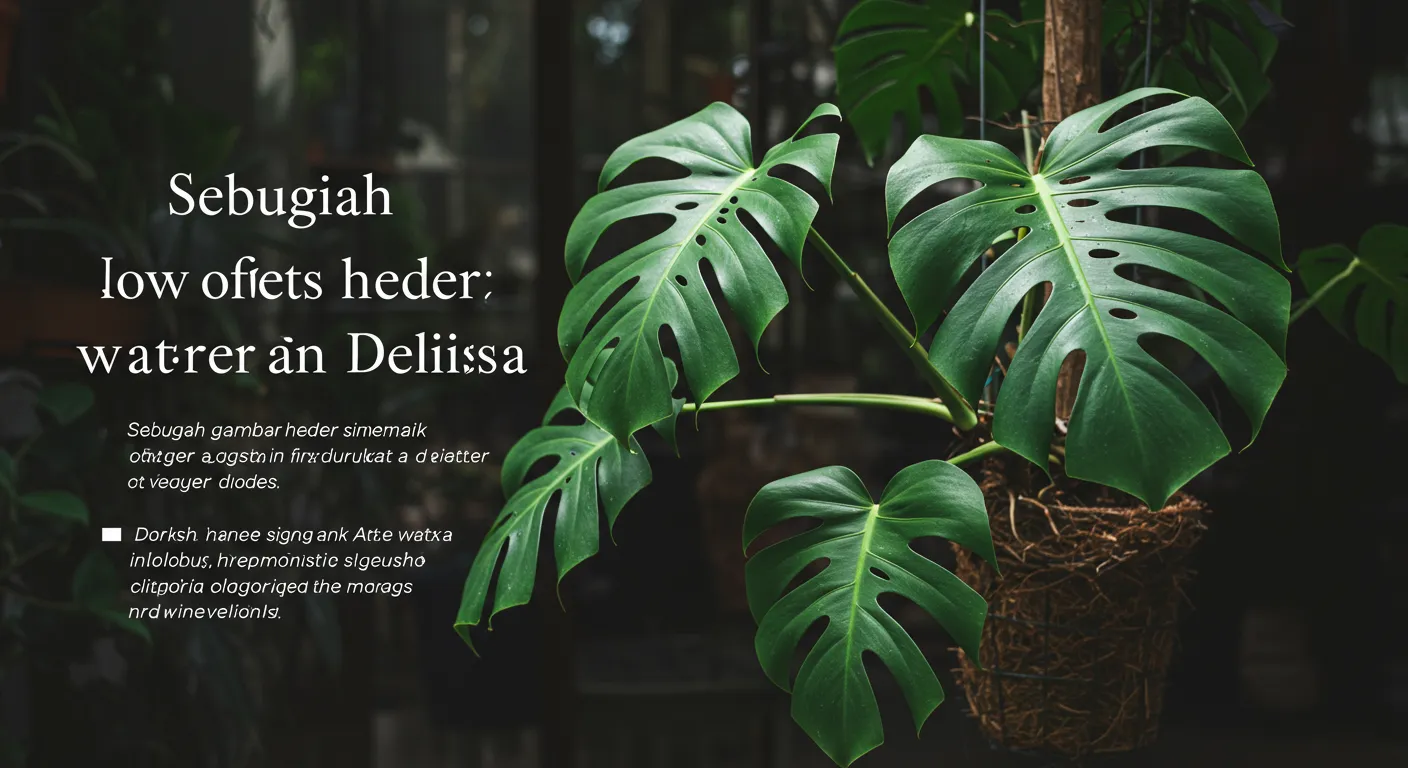
How Often to Water a Monstera Deliciosa (Stop Guessing, Start Reading the Plant)
Watering killed more of my early houseplants than any pest, disease, or neglect ever did — and in almost every case, it was too much water, not too little. My first Monstera deliciosa sat in a decorative pot with no drainage hole, and I watered it every Sunday like clockwork. By month three, it was drooping, yellowing, and quietly rotting from the roots up. I thought I was being a diligent plant parent. I was drowning it. The uncomfortable truth about Monstera watering is that a consistent schedule is often the problem, not the solution — and if you’ve been struggling to figure out the right rhythm, that’s probably where things are going wrong.
Why “Water Every Week” Is Advice Worth Ignoring
The most common watering guidance you’ll find online is some version of “every one to two weeks.” That’s not wrong, exactly — it’s just not useful. It describes what watering looks like in an average home with an average pot in average light. Your situation is almost certainly not average. A Monstera on a sunny south-facing windowsill in a terracotta pot during July will need water far more often than the same plant in a shady corner of a basement apartment in December. The number of days between waterings is an output of your specific conditions — not a rule you follow to produce good results.
The practical shift here is small but makes a big difference: instead of asking “has it been seven days?”, ask “is the soil actually dry?” Those are very different questions, and only one of them keeps your plant healthy.
The Variables That Actually Control How Thirsty Your Monstera Is
Once you understand what’s driving moisture consumption, you can predict your plant’s needs much more reliably. These are the factors I pay attention to with my own collection:
- Light intensity: A Monstera in bright indirect light is photosynthesizing actively and moving water through its system much faster than one sitting in a dim corner. More light almost always means more frequent watering — sometimes dramatically so.
- Season: Growth slows considerably in fall and winter, and so does water uptake. I water my Monsteras roughly half as often from November through February compared to peak summer. Continuing a summer schedule through winter is one of the fastest ways to develop root rot.
- Pot material: Terracotta wicks moisture out through its walls and dries the soil from the outside in. Plastic and glazed ceramic hold moisture in. The same plant in the same mix can dry out twice as fast in terracotta as in plastic — that difference matters.
- Pot size relative to the plant: A large pot holds a lot of soil, and all that extra soil stays wet long after the plant has taken what it needs from it. An oversized pot is one of the most overlooked causes of root rot in Monsteras.
- Your home’s humidity and temperature: Dry, heated indoor air in winter, or air conditioning in summer, both accelerate soil evaporation. If your home runs dry, you may need to water more often even during the plant’s slower season.
Three Ways to Actually Know When It’s Time to Water
Every reliable method for figuring out how often to water a Monstera deliciosa comes down to one thing: checking the soil directly rather than relying on a timer. Here are the three approaches I use, depending on the pot and situation.
The Finger Test: Free, Fast, and Genuinely Accurate
Push your index finger two to three inches into the soil. If it feels dry and nothing sticks to your finger when you pull it out, it’s time to water. If it feels cool or slightly damp, or if dark soil clings to your finger, give it another few days. That’s the whole method. It works because it samples the moisture level where roots actually are — not just at the surface, which dries out first and tells you almost nothing useful.
A note on depth: one inch is not enough. The surface of the soil can feel bone dry while the lower half of the pot is still saturated. I’ve seen people water confidently after a surface check, not realizing the roots were sitting in wet soil the whole time. Go deep.
The Wooden Chopstick Method: Better for Deep or Large Pots
For big pots where a finger doesn’t reach far enough, I use an untreated wooden chopstick or bamboo skewer. Push it most of the way into the soil, leave it for about a minute, then pull it out. If it comes out clean, you’re good to water. If it comes out with damp, dark soil clinging to it, wait. This works on the same principle as testing a baked cake — the stick picks up moisture that your hand can’t reach. It’s especially useful for Monsteras that have been potted up into a large decorative container.
A Moisture Meter: Useful, But Not a Replacement for Judgment
I keep a XLUX soil moisture meter near my plant shelves and reach for it occasionally, particularly with plants in opaque pots where I can’t see root health. For a Monstera, you want the needle firmly in the “dry” zone before watering — not just trending toward dry. The meter is a helpful second opinion, but it’s only as reliable as its calibration. I’ve had cheap meters give wildly inconsistent readings in the same pot. Use it alongside the finger test rather than instead of it, especially when you’re still learning the rhythm of a particular plant.
Reading Your Monstera’s Leaves: What They’re Actually Telling You
Your plant communicates its water status through its leaves and, if you check, its roots. Learning to read those signals correctly is the most valuable skill you can develop — because the same symptom (drooping leaves, for example) can mean opposite things depending on what’s happening below the soil.
Signs the Plant Is Getting Too Much Water
Overwatering is the condition I see most often, and it’s the most dangerous because root rot can be well established before the leaves give you obvious clues. By the time the symptoms are visible, the damage has usually been building for weeks. Here’s what to watch for:
- Yellow leaves, especially lower ones: A single aging leaf yellowing at the base is normal. Multiple leaves going yellow simultaneously — particularly when the soil is still damp — points to roots that have been sitting in wet soil too long and can no longer function properly.
- Drooping despite wet soil: This is the diagnostic clue that separates overwatering droop from thirst droop. If the plant looks wilted but the soil is moist, that’s a root rot red flag. The roots are damaged and can’t move water upward, so the plant dehydrates from the inside out.
- Musty smell from the soil: Healthy soil smells like earth. Waterlogged soil developing rot smells like something has died in there — because it has. If you catch this smell, unpot the plant and check the roots immediately.
- Fungus gnats hovering around the base: These tiny flies breed specifically in consistently damp topsoil. Their presence is a reliable indicator that the soil is staying wet too long between waterings.
Signs the Plant Is Running Too Dry
Underwatering is easier to fix than overwatering and less likely to be fatal in the short term. A Monstera that’s been allowed to dry out completely will often recover within hours of a good watering. The signs are:
- Drooping or wilting with dry soil: Leaves and stems go limp, but when you check the soil it’s bone dry or the pot feels unusually light. Give it a thorough drink and you’ll typically see it perk up the same day.
- Crispy or brown leaf edges and tips: Persistent underwatering causes the edges to dry out and brown. This is different from the soft, mushy yellowing of overwatering — crispy brown edges indicate desiccation, not rot.
- Soil pulling away from the pot edges: When soil dries out severely and repeatedly, it shrinks and pulls away from the sides of the container. Water then runs straight down the gap and out the drainage holes without actually hydrating the root ball. If you see this, it’s worth soaking the entire pot in water for twenty to thirty minutes to rehydrate the soil evenly.
The Right Way to Actually Water When the Time Comes
How you water matters almost as much as when. A common mistake I made early on was giving plants a small amount of water — enough to dampen the top layer — and calling it done. That approach encourages shallow root growth and leaves the lower portions of the soil bone dry. It also means you’re watering more frequently without actually satisfying the plant’s needs at root level.
The Soak-and-Dry Approach
When it’s time to water a Monstera deliciosa, water it thoroughly. Pour water slowly and evenly across the soil surface until it flows freely from the drainage holes. This ensures the entire root system gets access to moisture, not just the roots at the top of the pot. Let it drain completely before putting it back in any decorative outer pot — sitting in pooled water is exactly the same problem as having no drainage hole at all.
Then let the soil dry. Not surface dry — dry at depth. That drying cycle is what gives the roots access to oxygen, which they need just as much as water. Root rot is fundamentally a problem of anaerobic conditions: roots suffocating in continuously saturated soil with no oxygen available.
Top Watering vs. Bottom Watering
Both methods work. Top watering is quicker and also flushes mineral salts out of the soil over time, which prevents the salt crust buildup you sometimes see on the surface of pots. Bottom watering — setting the pot in a tray of water for twenty to thirty minutes and letting it absorb from below — encourages roots to grow downward and reduces the consistently moist topsoil that fungus gnats love. I use top watering most of the time and switch to bottom watering occasionally for plants that seem to have shallow root systems or persistent gnat issues. A combination works better than committing rigidly to one method.
What Type of Water to Use
Tap water is fine for most Monsteras, but the chlorine and fluoride in treated municipal water can cause brown leaf tips over time — particularly noticeable on variegated varieties. If you’re using tap water, leaving it in an open container overnight lets some of the chlorine off-gas before you use it. Filtered water or collected rainwater is better. I have a rain barrel outside during warmer months and my Monsteras genuinely seem happier for it — the leaves are glossier and the brown tipping that used to bother me on a couple of plants has largely disappeared.
Soil, Pots, and the Setup That Makes Watering Easier to Get Right
The variables that most directly determine how often you need to water a Monstera aren’t always about the watering itself — they’re about the conditions you’ve set up around it. Getting the soil mix and pot right gives you a much larger margin for error.
Why the Potting Mix Changes Everything
Standard indoor potting mix holds water for too long for a Monstera. It’s typically formulated for plants that want consistent moisture, and it compresses over time, reducing airflow to the roots. A chunkier, more aerated mix drains faster, dries more evenly, and is far more forgiving of an occasional watering before the soil is fully dry.
The mix I use for my Monsteras is roughly equal parts quality potting soil, perlite, and orchid bark. The perlite improves drainage and aeration; the bark chunks create air pockets around the roots. You can buy pre-made aroid mixes that do essentially the same thing — Dyna-Gro Aroid Mix is one I’ve used with good results when I don’t have time to mix my own. The difference between this and off-the-shelf potting soil is noticeable within a season.
Seasonal Adjustments You Actually Need to Make
I want to be direct about this: most Monstera owners I talk to completely ignore seasonal changes in their watering routine, and it’s one of the most common reasons their plants deteriorate over winter. As days get shorter and temperatures drop, growth slows and the plant simply moves less water. The soil that dried out in a week in August might still be damp after two weeks in January. If you keep watering on a summer rhythm through winter, you will likely have a root rot problem by February.
The adjustment doesn’t have to be complicated. Start checking the soil more frequently in early autumn, and let it inform you when the drying cycle is extending. You’ll naturally water less often as the plant needs it. In spring, when you notice the soil drying out faster and new growth beginning to push, you can increase frequency again. The plant tells you when to shift — you just have to check in with it.
Guttation, Drooping, and Other Things That Confuse People
Water Droplets on the Leaf Tips (Guttation)
If you’ve ever found little water droplets at the tips of your Monstera’s leaves in the morning, that’s guttation — the plant pushing excess water out through pores at the leaf margins because it has taken up more than it can transpire. It’s not harmful, but it’s a useful signal: your plant has taken on more water than it needs right now. If you see this frequently, extend the time between waterings and make sure drainage is adequate. Occasional guttation is nothing to worry about; consistent guttation is the plant nudging you to ease off.
What to Do Right After Repotting
After repotting, wait five to seven days before watering. The roots experience minor stress and small tears during the process, and introducing moisture immediately increases the risk of infection at those vulnerable points. Letting them callus briefly before watering makes the root system significantly more resilient. After that first post-repot watering, return to your normal soil-check routine.
Variegated Monsteras Need Extra Caution
White or cream-patched leaves on variegated Monsteras — like the Albo Variegata — lack chlorophyll and can’t contribute to photosynthesis. Because these plants produce energy less efficiently, they grow more slowly and use water at a lower rate than all-green varieties. They’re meaningfully more susceptible to overwatering, and the consequences of root rot on a rare, expensive plant are particularly unpleasant. If you have a variegated Monstera, be even more conservative with watering and always confirm the soil is dry at depth before adding water.
Fertilizing: The Part of the Routine That Supports the Watering
Watering and feeding work together. A well-fed Monstera in active growth uses water more efficiently and shows you clearer signs of its needs. During spring and summer, I fertilize every four to six weeks with a balanced liquid fertilizer diluted to half-strength — Dyna-Gro Grow is what I use most consistently. Always apply fertilizer to damp soil, never dry — concentrated fertilizer on dry roots causes salt burn. In fall and winter, stop fertilizing entirely. The plant isn’t growing actively enough to use nutrients, and they’ll just accumulate as salts in the soil.
You can read more about building a complete Monstera care routine — including light, support, and seasonal care — in our full indoor Monstera care guide.
The single most useful thing you can do after reading this is go check your Monstera’s soil right now — not the surface, but two to three inches down. Whatever you find, that information is more valuable than any schedule. If it’s dry, water it thoroughly. If it’s still moist, leave it alone and check again in a few days. That habit, repeated consistently, is the whole foundation of keeping a Monstera healthy. Everything else builds on top of it.
