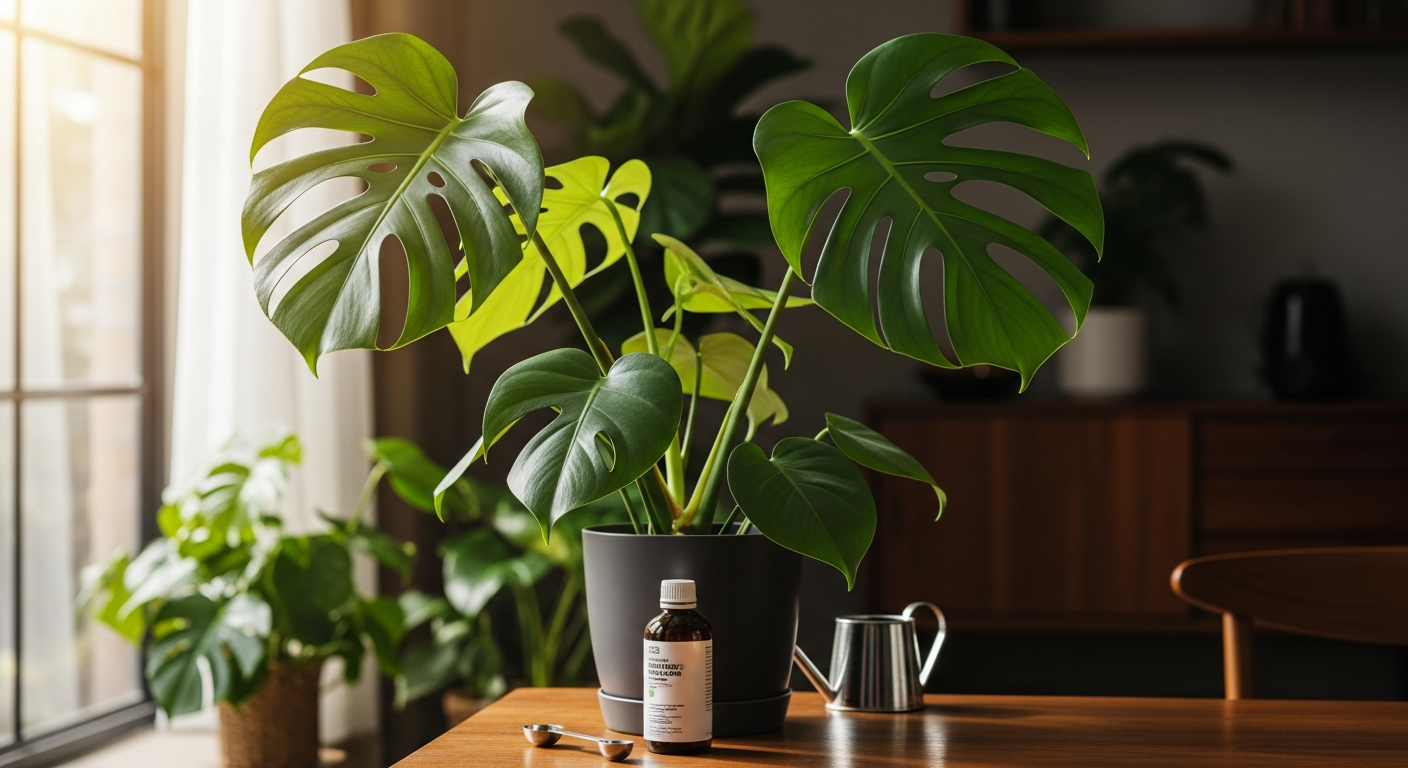
Introduction: Why Your Monstera is Hungry and How to Feed It
Have you ever looked at your beautiful Monstera deliciosa and felt like something was missing? Maybe its growth has slowed, or the new leaves aren't quite as large and impressive as you'd hoped. It’s a common feeling, and the answer often lies in its diet. Think of your Monstera as a growing athlete; it needs the right fuel to perform its best.
In their native rainforest habitat, Monsteras get a constant supply of nutrients from decaying leaves and organic matter on the forest floor. In our homes, however, that potted soil only contains a finite amount of food. After a few months, your plant has likely used up most of the available nutrients, leaving it hungry for more.
This is where fertilizer comes in. It's not just a "nice-to-have"–it's a critical part of long-term health. Understanding the basics of monstera plant care fertilizer is the first step to unlocking those giant, fenestrated leaves we all dream of. The key is to provide a balanced mix of essential macronutrients, which you’ll see listed on fertilizer packages as N-P-K.
So, what do these letters mean for your plant? It's actually quite simple:
- Nitrogen (N): This is all about lush, green foliage. Nitrogen is the primary component for leaf development and vibrant color. A hungry Monstera often shows its nitrogen deficiency with pale or yellowing leaves.
- Phosphorus (P): Think of this as the powerhouse for roots and new growth. Phosphorus supports a strong, healthy root system, which is the foundation for a thriving plant.
- Potassium (K): This is the great regulator. Potassium helps with overall plant function, including water uptake, disease resistance, and stem strength.
Recognizing the signs of a hungry plant is your first clue. If you're providing the right light and water, but growth is still sluggish, it's a clear signal that it's time to introduce a feeding schedule. Choosing the right monstera plant care fertilizer ensures you are replenishing these vital nutrients. Let's explore how to pick the perfect meal plan for your leafy friend.
```htmlUnderstanding the "Why": The Science of Feeding Your Monstera
Have you ever wondered why we even need to fertilize our houseplants? To really get it, we need to think about where your Monstera deliciosa comes from. In its native rainforest habitat, it’s living in a rich, constantly replenishing ecosystem.
Fallen leaves, decaying organic matter, and animal waste continuously break down, creating a nutrient-rich buffet on the forest floor. Your Monstera has an endless supply of everything it needs to thrive and grow to its massive, iconic size.
From Rainforest Floor to Living Room Pot
Now, let's contrast that with its life in your living room. The soil in a pot is a closed system. It starts with a finite amount of nutrients, and with every watering, some of those essential minerals are washed away. Over time, that soil becomes depleted, and your plant essentially runs out of food.
This is where we, as plant parents, step in. Providing a good **monstera plant care fertilizer** isn't just about making it grow faster; it's about replenishing the vital nutrients it can no longer get from its environment. You're recreating that rainforest floor buffet in a bottle.
The Big 3 Nutrients (NPK) and What They Do
When you look at any fertilizer package, you'll see three numbers, like 10-10-10 or 5-2-3. This is the N-P-K ratio, representing the "big three" macronutrients that are the absolute foundation of your plant's health.
Understanding what each one does makes choosing the right **monstera plant care fertilizer** so much easier. Think of it as a balanced meal for your plant:
- Nitrogen (N): This is the engine for green, leafy growth. Nitrogen is a core component of chlorophyll, the molecule that allows plants to convert sunlight into energy. It’s what gives you those big, lush, vibrant green leaves.
- Phosphorus (P): Think of this as the foundation builder. Phosphorus is crucial for developing strong, healthy roots, transferring energy throughout the plant, and supporting flowering and fruiting (though flowering is rare indoors).
- Potassium (K): This is the protector and regulator. Potassium strengthens the plant's overall systems, helping it regulate water, withstand stress, and fight off diseases. It’s vital for all-around vigor and resilience.
A balanced fertilizer ensures your Monstera gets the right proportions of these key building blocks, preventing deficiencies that can lead to yellowing leaves, weak stems, and stunted growth. Getting this part of your **monstera plant care fertilizer** routine right is a game-changer.
```htmlChoosing the Best Fertilizer for Your Monstera
Stepping into the fertilizer aisle can feel overwhelming, but don't worry. Finding the perfect meal for your Monstera deliciosa is simpler than it seems. The key is understanding what those numbers on the package mean and how different types of fertilizer work.
Cracking the Code: The Ideal NPK Ratio
You've probably seen three numbers on fertilizer bags, like 20-20-20 or 10-5-5. This is the NPK ratio, representing Nitrogen (N), Phosphorus (P), and Potassium (K). Think of it as a plant's macronutrients, just like carbs, proteins, and fats for us.
Nitrogen fuels lush, green leaf growth—exactly what we want for a Monstera! Phosphorus supports strong root development and flowering, while Potassium manages overall plant health and resilience. For your Monstera, a balanced, water-soluble fertilizer with a 20-20-20 or 3-1-2 ratio is a fantastic choice, providing everything it needs without overdoing any one nutrient.
Liquid vs. Granular vs. Slow-Release: Which is Right for You?
Now that you know what's in the food, let's talk about how it's served. The delivery method you choose often comes down to your personal routine and how hands-on you want to be. This is a crucial part of your monstera plant care fertilizer strategy.
- Liquid Fertilizer: This is our top recommendation for most indoor gardeners. You dilute it in water and apply it during your regular watering schedule. It offers incredible control, is fast-acting, and reduces the risk of burning the roots. The only downside is you have to remember to do it regularly.
- Slow-Release Pellets: Perfect for the busy plant parent! These are small pellets you mix into the top layer of soil. They gradually release nutrients over several months each time you water. Just be sure to follow the instructions carefully to avoid over-fertilizing.
For most of us, a quality liquid feed, diluted to half-strength during the growing season (spring and summer), is the easiest and most effective monstera plant care fertilizer routine to adopt.
The Rise of Organic Options: Worm Castings & Compost
If you prefer a more natural approach, organic amendments are a wonderful choice. They not only feed your plant but also improve the soil's structure and microbial life over time. They are gentle and it's very difficult to overdo it.
Worm castings (or vermicompost) are a powerhouse of nutrients and beneficial microbes. You can mix a handful into your potting soil when you repot or simply "top dress" your plant by sprinkling a thin layer over the soil surface every couple of months. It's a gentle, slow-release way to enrich the soil naturally.
``````htmlThe Perfect Feeding Schedule: How and When to Fertilize
Figuring out when to feed your Monstera can feel a bit like guesswork, but it's actually quite simple once you learn to listen to the plant's natural rhythms. The goal is to provide nutrients when the plant is actively growing and can actually use them. Over-fertilizing is a common mistake that can do more harm than good, so let's get this part just right.
Mastering Fertilizer Frequency: A Seasonal Approach
Your Monstera deliciosa does most of its growing during the spring and summer. This is its active season, when longer days and warmer temperatures signal it's time to push out those gorgeous, fenestrated leaves. During this period, you’ll want to feed your plant consistently.
We recommend using a balanced, water-soluble fertilizer, such as one with a 20-20-20 NPK ratio (Nitrogen-Phosphorus-Potassium). A good rule of thumb is to fertilize every 2-4 weeks throughout the spring and summer. This steady supply of nutrients will support vigorous growth and deep green foliage. This regular feeding is a key part of any successful monstera plant care fertilizer plan.
Respecting the Dormancy Period: Why You Should Stop Fertilizing in Fall & Winter
As the days get shorter and cooler in the fall and winter, your Monstera’s growth will naturally slow down. Think of this as its rest period or dormancy. During this time, the plant isn't actively seeking nutrients, and its water needs also decrease.
Continuing to fertilize can lead to a buildup of mineral salts in the soil, which can burn the sensitive roots. That's why it's crucial to stop feeding completely from about October through March, or whenever you notice growth has stalled. Let your plant rest; it will thank you for it come spring.
A Step-by-Step Guide to Application
Applying fertilizer correctly is just as important as the timing. Following these steps will prevent shock and ensure the nutrients are absorbed effectively. Using a good liquid monstera plant care fertilizer is often the easiest to manage with this method.
- Always Dilute: Never apply fertilizer at full strength. Read the package instructions carefully and dilute it to half-strength to be safe, especially when you're first starting out.
- Water First: This is the most critical step! Always water your Monstera with plain water before you fertilize. Applying fertilizer to dry soil can scorch the roots. This pre-watering creates a protective buffer.
- Apply the Solution: After watering, pour the diluted fertilizer solution evenly over the soil, allowing it to soak through. Avoid getting the mixture on the leaves.
Remember, this routine is a cornerstone of your overall monstera plant care fertilizer strategy, helping you raise a thriving, happy plant.
```htmlTroubleshooting Common Fertilizer Problems
Even with the best intentions, getting your fertilizer routine right can be tricky, and sometimes our plants show signs of stress. Don't worry, we've all been there! Let's walk through some of the most common issues and how you can get your beautiful Monstera deliciosa back on track.
Help! My Monstera Has Yellowing Leaves
Yellowing leaves are one of the first distress signals a plant sends, but it can be a bit of a puzzle. It could mean you're using too little fertilizer, or surprisingly, too much. A nutrient deficiency often shows up as a pale, uniform yellowing on older, lower leaves first as the plant redirects nutrients to new growth.
On the other hand, over-fertilizing can cause a more sudden, bright yellowing of leaves, often accompanied by brown, crispy tips. The key is to look at the whole picture—your watering schedule, the time of year, and how recently you applied fertilizer.
Telltale Signs of Over-Fertilizing (Fertilizer Burn)
If you’ve been a bit too enthusiastic with your monstera plant care fertilizer, your plant will show more signs than just yellow leaves. This buildup of mineral salts in the soil is often called "fertilizer burn" and can seriously damage the roots. Keep an eye out for these specific symptoms:
- Crispy, brown leaf tips and edges that look scorched.
- A white, crusty salt buildup on the surface of the soil or around the pot's drainage hole.
- Stunted or stalled growth, even during the active spring and summer months.
- Leaves that look limp or wilted, even when the soil is adequately moist. This happens because the damaged roots can no longer absorb water properly.
How to Rescue an Over-Fertilized Plant
Seeing these signs can be alarming, but you can often save your plant with a few quick actions. The goal is to flush the excess salts out of the soil and give the roots a chance to recover.
- Stop Fertilizing Immediately: This is the most crucial first step. Do not add any more fertilizer.
- Leach the Soil: Take your plant to a sink or shower. Slowly and thoroughly pour lukewarm water through the pot for several minutes, allowing it to drain completely. This process flushes out the excess mineral salts from the soil.
- Give It Time to Heal: Move your monstera out of direct sunlight to reduce stress. Hold off on any monstera plant care fertilizer for at least four to six weeks to allow the roots to recover before you slowly reintroduce a heavily diluted solution.
A Holistic Approach: Nutrients Need the Right Environment
Think of it this way: you can offer your Monstera the most gourmet meal in the world, but if its environment is stressful, it simply won’t have the appetite to eat. Effective fertilizing isn’t just about the food itself; it's about creating conditions where your plant can actually use it. Let's break down the three environmental pillars that support a healthy feeding routine.
The Role of Bright, Indirect Sunlight
Sunlight is the engine that drives your Monstera's metabolism. Through photosynthesis, your plant converts light into the energy it needs to grow and function. Without sufficient energy from bright, indirect light, it can't effectively process the minerals and nutrients you provide through fertilizer.
Feeding a plant that's sitting in a dark corner is a recipe for disaster. The unused fertilizer salts can build up in the soil, leading to root burn and damaging your plant. Before you even think about feeding, make sure your Monstera is in a spot where it gets a wide view of the sky without being scorched by direct sun.
Maintaining Proper Humidity Levels for a Healthy Appetite
Next, let's consider the air around your plant. As a tropical species, Monstera deliciosa thrives in high humidity. When the air is too dry, the plant becomes stressed and may close its stomata (tiny pores on the leaves) to conserve water. This defensive move slows down its entire system, making it less receptive to nutrients.
Boosting humidity encourages lush, healthy growth and ensures your plant is in the right state to absorb its food. A comprehensive monstera plant care fertilizer strategy is always supported by adequate moisture in the air. Here are a few simple ways to help:
- Group Plants Together: Plants naturally release moisture through transpiration, creating a small humid microclimate.
- Use a Pebble Tray: Place a tray of pebbles and water beneath the pot, ensuring the pot sits on the pebbles, not in the water.
- Invest in a Humidifier: This is by far the most effective method for maintaining consistent humidity levels around 50-60%.
The Foundation: Choosing the Best Repotting Medium
Finally, the soil is where all the magic happens. The potting mix is the foundation for root health, and healthy roots are essential for nutrient absorption. A dense, heavy soil that retains too much water will suffocate the roots, leading to the dreaded root rot. Rotted roots cannot absorb water or fertilizer, no matter how perfect your feeding schedule is.
Your Monstera needs an airy, chunky, and well-draining medium that mimics its natural environment. A fantastic DIY mix includes equal parts orchid bark, perlite, and a quality potting soil or coco coir. This blend allows oxygen to reach the roots and prevents waterlogging, creating the perfect environment for your monstera plant care fertilizer to work effectively.
```htmlMonstera Myths & Advanced Questions (FAQs)
As you get more comfortable with your Monstera, some trickier questions inevitably pop up. It's totally normal! Let's dive into some of the more advanced topics and clear up a few common points of confusion to help you grow with confidence.
Is Monstera Care Similar to Phalaenopsis Care?
This is a fantastic question, as many of us start our plant journey with a classic Phalaenopsis orchid. While both are tropical beauties, their day-to-day needs are quite different. Orchids are epiphytes, meaning they grow on other trees and need a very airy, bark-based mix that dries out completely.
Your Monstera, on the other hand, is a hemi-epiphyte. It starts on the forest floor and climbs. It needs a well-draining but more traditional soil mix that stays lightly moist. Confusing their care, especially with watering and potting media, is a common misstep.
Should I Be Cutting Yellowing Leaves?
Yes, you absolutely should! Unlike an orchid's flower spike which can sometimes rebloom, a yellowing Monstera leaf will not recover. This is a natural part of the plant's life cycle as it sheds older leaves to divert energy toward new, bigger growth.
Using clean shears, snip the dying leaf off at the base of its petiole (leaf stalk), close to the main stem. This not only keeps your plant looking tidy but also ensures its resources are focused on producing those gorgeous, fenestrated leaves you love.
Can I Fertilize a Sick or Newly Repotted Plant?
This is one of the most important rules to remember: do not fertilize a stressed plant. It’s tempting to think of fertilizer as medicine, but it’s actually more like a protein shake for an athlete—it’s only useful for a healthy system that's ready to perform.
When a Monstera is sick or has just been repotted, its roots are vulnerable and compromised. Applying any monstera plant care fertilizer at this time can overwhelm the delicate roots, causing severe fertilizer burn and potentially killing the plant. Wait at least 4-6 weeks after repotting or until you see clear signs of new, active growth before resuming your regular feeding schedule. Proper monstera plant care fertilizer usage is all about timing for a thriving plant.
```htmlConclusion: Your Recipe for a Thriving Monstera
And there you have it! We've journeyed through the essentials of nourishing your beautiful Monstera deliciosa. What might have seemed like a complex science is really an art of observation and consistent care. You're now equipped with the knowledge to turn feeding time into a confident, rewarding ritual rather than a guessing game.
At its heart, successful care is about understanding your plant's simple needs. You've learned to recognize the signs of hunger, the dangers of overfeeding, and the importance of a seasonal schedule. This responsive approach is what separates struggling plants from truly spectacular ones.
The right monstera plant care fertilizer routine is your secret weapon for encouraging those iconic, fenestrated leaves. By providing the right nutrients at the right time, you're giving your plant the building blocks it needs to grow strong, vibrant, and stunningly beautiful.
To bring it all together, here is your simple, repeatable recipe for success:
- Observe First: Before you do anything, look at your Monstera. Are the leaves vibrant? Is the soil dry? Your plant will give you clues about what it needs.
- Choose Wisely: Select a balanced, water-soluble fertilizer (like a 20-20-20 ratio). Always start by diluting it to half the recommended strength to be safe.
- Timing is Everything: Feed your plant every 4-6 weeks only during the spring and summer growing season. Give it a well-deserved rest in the fall and winter.
- Hydrate Before You Feed: Never fertilize dry soil. Always water your plant thoroughly a day or two before feeding to protect its sensitive roots from fertilizer burn.
Embracing this simple yet effective approach to monstera plant care fertilizer will make all the difference. You're not just following steps; you're building a partnership with your plant. Trust your instincts, enjoy the process, and get ready to watch your Monstera thrive like never before. You've got this!
```