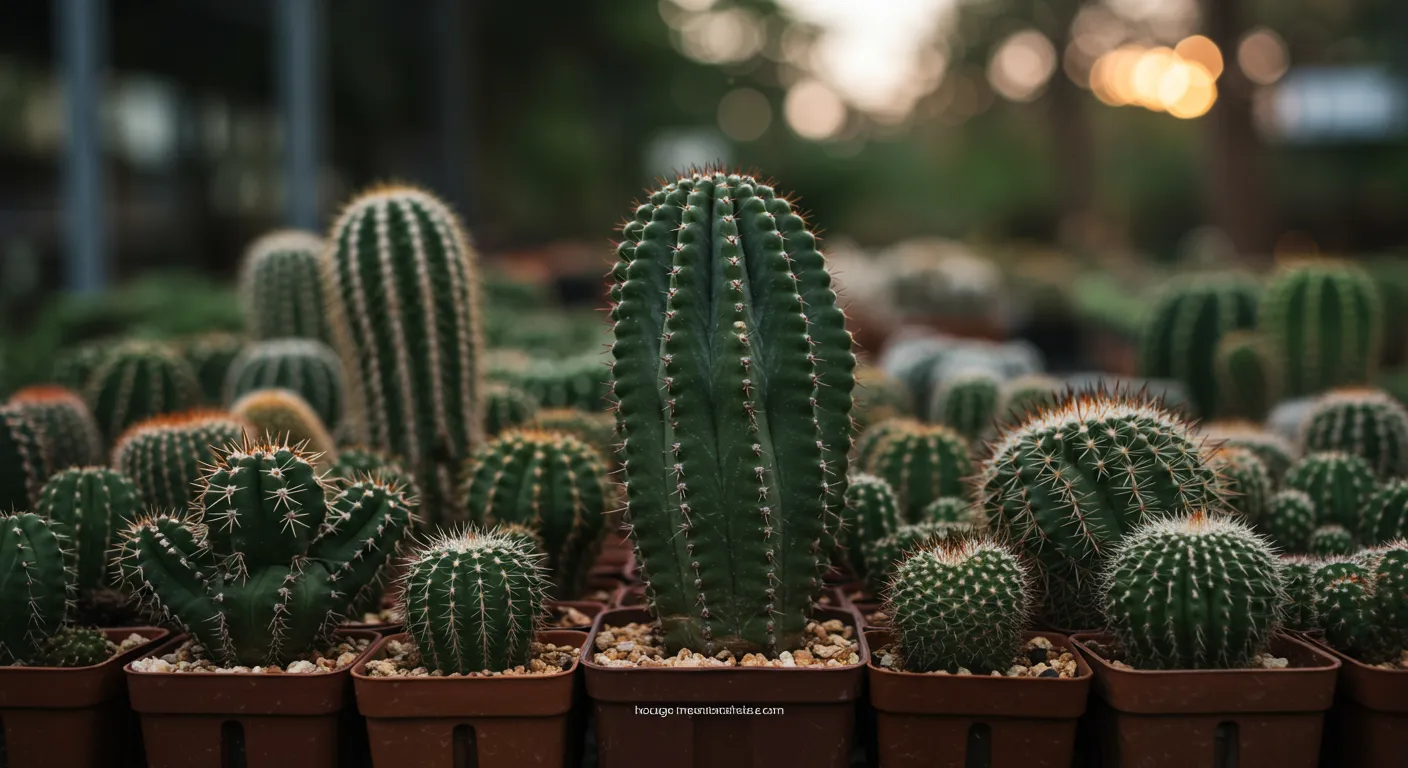
Cactus and Succulent Care: What Actually Kills Them (And How to Stop It)
Most people don’t kill their cacti and succulents from neglect they kill them with love. I know because I did exactly that when I started. I had a gorgeous Echeveria rosette that I watered every few days because the soil “looked dry on top.” Six weeks later it was a pile of mush. The roots had rotted out completely before I even noticed anything wrong on the surface. That one mistake taught me more about caring for cacti and succulents than any beginner article ever did. These plants don’t need attention they need the right conditions, then mostly to be left alone.
Cacti vs. Succulents: The Distinction That Actually Matters
The terms get used interchangeably, but there’s a real difference worth knowing especially when you’re diagnosing problems. Every cactus is a succulent (a plant that stores water in its tissues), but not every succulent is a cactus. The thing that makes a cactus a cactus is a structure called an areole a small, cushion-like bump from which spines, flowers, and new growth emerge. No areoles, not a cactus. Simple as that.
Why does this matter practically? Because true cacti are generally even more drought-tolerant than other succulents and often need a harder dormancy in winter to bloom. Non-cactus succulents like Haworthia, Aloe, and Crassula can be a bit more flexible some will even tolerate shadier spots that would make a cactus sulk.
Good Starter Plants If You’re New to This
With over 300 plants in my collection, I’ve killed plenty of the “easy” ones and thrived with some supposedly difficult ones. If you’re starting out, pick something forgiving that also gives you clear feedback:
- Haworthia (Zebra Plant): One of the few succulents that doesn’t demand a blazing south window it’ll do fine in bright indirect light, making it ideal for less-than-perfect indoor spots. The striped leaves are genuinely striking.
- Mammillaria (Pincushion Cactus): Small, compact, and they throw out rings of tiny flowers in spring if you give them a proper dry winter rest. Among the most rewarding cacti for the effort required.
- Echeveria: The classic rosette shape tells you exactly how it’s doing leaves wrinkle when thirsty and go mushy when overwatered. Great visual feedback for learning what’s normal.
- Gasteria: Underrated and very forgiving. They handle lower light and irregular watering better than most in this category, and they’re nearly impossible to kill with basic care.
The Watering Mistake That Kills More Plants Than Anything Else
Here’s the counterintuitive truth: the soil surface drying out means almost nothing. What matters is whether the soil is dry all the way through. I’ve seen countless plants rotting in pots where the top inch of soil looked bone dry while the bottom half stayed wet for weeks. The roots sit at the bottom. That’s where root rot starts.
The Soak-and-Dry Method Done Properly
The right approach is straightforward but often misunderstood. When it’s time to water, water thoroughly pour until water runs freely from the drainage hole, which tells you the entire root zone is saturated. Then wait. Don’t water again until the soil is completely dry from top to bottom. I use a wooden skewer pushed down to the bottom of the pot; if it comes out with any trace of moisture, I wait longer.
In practical terms, during spring and summer, most indoor succulents and cacti need watering roughly every two to three weeks sometimes less if your home is cool and humid. In winter, I go to once a month, sometimes skipping entirely for dormant cacti. The calendar is only a rough guide; the soil is the actual answer.
Reading What Your Plant Is Telling You
Both overwatering and underwatering show up in the leaves, but they look different. Learning to tell them apart saves plants:
- Overwatered: Leaves feel soft and mushy, may turn translucent, yellow, or black. They fall off at the slightest touch. This is rot in progress act immediately by pulling the plant from its pot and checking the roots.
- Underwatered: Leaves look shriveled, deflated, or wrinkled. The plant feels lighter than normal. This is easy to recover from a thorough soak usually restores the leaves within a few days.
- Bottom leaves yellowing slightly: Often just natural shedding of old growth, not a crisis. If it’s progressing upward, then investigate.
One more thing on water quality: I switched to using collected rainwater for most of my desert plants after I started noticing white mineral crust buildup on my terracotta pots. Tap water works, but if you have hard water, you’ll get salt buildup in the soil over time that affects nutrient uptake. If rainwater isn’t practical, leaving tap water in an open jug overnight helps, or a cheap water filter does the job.
Light: More Than You Think, Positioned Better Than You Probably Have It
A window that looks bright to you is often disappointing to a succulent. Human eyes are remarkably bad judges of light intensity our pupils adjust automatically, making us think a room is well-lit when it might be receiving a fraction of what these plants evolved under. Most cacti and succulents want at least six hours of strong, direct or bright indirect light per day. A south-facing window is the gold standard indoors.
Etiolation: When Your Plant Starts Reaching
If your rosette is stretching upward, spacing between leaves is increasing, and the plant looks tall and gangly that’s etiolation. It’s a slow-motion plea for more light. The stretched sections won’t compress back; that growth is permanent. The fix is to move the plant to a brighter spot gradually (sudden full sun can scorch a plant adapted to indoor conditions), and if the appearance bothers you, you can cut the compact top off, let the cut end callous for a few days, and replant it. The original stump usually sprouts new growth.
I had a little Sedum morganianum (burro’s tail) that spent one winter in a spot I thought was bright enough. By spring it had grown about eight inches of pale, limp new growth trying to reach my east window. Moved it closer, cut it back, and within a few months it was dense and healthy again.
The Stress Colors A Side Benefit of Good Light
One of my favorite things about growing succulents in strong light is the color shift. Many species particularly Echeveria, Sedum, and Crassula flush red, orange, and purple at their leaf tips when exposed to intense light (and often cooler temperatures). This is called “sun stress,” and it’s completely harmless. The plant is producing pigments that act as a natural sunscreen. The result is often stunning. Increase light gradually and let the color develop over a few weeks.
Grow Lights for Low-Light Homes
If you genuinely don’t have a bright window or you’re dealing with short winter days grow lights are a practical solution, not a compromise. I run a few full-spectrum LED bars over my winter succulent trays. Position them six to twelve inches above the plants and run them for about twelve to fourteen hours a day. I use a basic outlet timer so I don’t have to think about it. The Barrina T5 LED strip lights are what I’ve been using for two years inexpensive, low heat, and the plants show no sign of etiolation under them through the darkest months.
Soil and Pots: The Foundation That Most Beginner Guides Underexplain
Standard potting mix holds moisture. That is literally its job. For most houseplants, that’s helpful. For cacti and succulents, it’s the setup for root rot. Their roots evolved in sandy, gritty, fast-draining desert soils they need oxygen around their roots almost as much as they need occasional moisture.
Building a Mix That Actually Drains
You can buy pre-made cactus and succulent soil, but many commercial blends are still too moisture-retentive on their own. My approach is to amend whatever I buy. A reliable mix I’ve used for years:
- Two parts cactus/succulent potting mix: This provides the base organic matter. I use the Miracle-Gro Cactus, Palm & Citrus mix as a starting point nothing fancy, just accessible.
- One part perlite: Lightweight volcanic glass that creates air pockets and speeds drainage dramatically. This is the most important amendment.
- One part coarse grit or pumice: Adds weight (useful for top-heavy plants) and improves drainage further. Avoid fine play sand it actually compacts and makes drainage worse over time.
The Pot Matters as Much as the Soil
A drainage hole is non-negotiable. I’ll say it plainly: decorative pots without drainage holes are plant traps. Water sits at the bottom, invisible, until the roots are already rotting. If you love a pot that has no hole, use it as a cachepot keep the plant in a plastic nursery pot inside it and remove it to water.
Unglazed terracotta is genuinely excellent for beginners because it’s porous it wicks moisture away from the soil and helps the root zone dry out faster. Plastic and glazed ceramic hold moisture longer, which means you need to water even less frequently. Size matters too: don’t jump to a much larger pot when repotting. Excess soil holds excess water. Go up only one pot size at a time.
Fertilizing: Less Drama Than People Make It
These plants evolved in nutrient-poor soil, so their fertilizer needs are modest. But they do benefit from a feed during active growth the pot limits what’s available to them, and soil nutrients deplete over time. The key is using the right product at the right time.
Look for a fertilizer with a low first number (nitrogen) and higher second and third numbers (phosphorus and potassium). Something like a 3-7-7 or 5-10-10 N-P-K ratio is ideal. High nitrogen pushes leafy, soft growth exactly what you don’t want. Succulents fed too much nitrogen become puffy and prone to rot. I feed my collection once a month from April through August, always watering with plain water first so I’m not applying fertilizer to dry roots.
Stop feeding entirely in fall and don’t resume until you see new growth pushing in spring. Fertilizing a dormant plant is at best pointless and at worst stressful for the roots.
When Things Go Wrong: Pests, Rot, and Recovery
Mealybugs and Spider Mites
The two most common pests I encounter in my collection are mealybugs and spider mites. Mealybugs look like tiny pieces of white cotton they hide at leaf joints and in the center of rosettes. Spider mites are harder to see but leave fine webbing, usually on the undersides of leaves or in tight crevices.
Isolate the plant immediately to stop spread. For mealybugs, a cotton swab dipped in 70% isopropyl alcohol applied directly to each bug kills them on contact tedious, but effective. For a larger infestation or spider mites, spray the whole plant with diluted neem oil solution, making sure to coat the undersides of leaves. Repeat every five to seven days for three weeks to catch newly hatched insects the first treatment missed.
Rescuing a Plant With Root Rot
If the base of your plant feels soft and brown, or mushy leaves are progressing downward, you may be dealing with root rot. Unpot the plant completely and examine the roots. Healthy roots are white or pale tan and firm. Rotted roots are black, brown, or gray and fall apart when touched. Cut away everything that looks compromised with clean scissors, leaving only healthy material. Let the plant sit bare-rooted in a dry, bright spot for two to three days so the cuts callous. Then repot in fresh, dry soil and wait a full week before watering.
Catching rot early usually means the plant can be saved. The tricky part is that symptoms often don’t show above the soil until rot is well advanced. The best prevention is always good drainage and resisting the urge to water on a schedule.
Propagation: New Plants From What You Already Have
Propagating succulents is one of the more genuinely magical things about growing them and it costs nothing. Most rosette-forming succulents like Echeveria and Sedum can be grown from a single leaf.
Gently twist a healthy, plump leaf off the stem with a clean break right at the base a partial break won’t work. Lay the leaf on top of dry cactus mix in a bright spot, and do nothing for the first week or two. Eventually you’ll see small pink roots emerge from the base, followed by a tiny new rosette. Once the roots appear, a light misting of the soil surface every few days encourages them to establish. The original leaf will slowly shrivel as it transfers its stored energy to the new plant that’s normal.
For stem cuttings (jade plant, echeveria with a stem, columnar cacti), cut with a clean, sharp blade and let the cut end callous completely before planting this can take a few days to over a week depending on the stem’s thickness. Plant the calloused end about an inch into dry soil and wait a week before any water. The dry soil encourages root growth as the cutting searches for moisture. If you want to read more about this process, our guide on propagating succulents walks through each method in detail.
Seasonal Adjustments That Make a Real Difference
Winter Dormancy: Do Less, Not More
Most cacti and succulents slow down significantly in fall and winter. Growth stalls, water needs drop sharply, and fertilizer should stop entirely. In my collection, I cut watering frequency roughly in half starting in October, and by December many of my cacti go four to six weeks between waterings. Some desert cacti I barely water at all from November to February.
They still need light in winter don’t move them away from windows to make room for other things. And bring outdoor plants inside well before the first frost. Most succulents handle light cold fine, but frost will damage cell tissue and often kills them outright.
Repotting in Spring: How to Do It Without Causing Setbacks
Spring, when plants are waking up and roots are starting to grow again, is the ideal repotting window. Signs it’s time: roots emerging from the drainage hole, soil drying out unusually fast, or the plant becoming unstable in its pot. Move up only one pot size. Remove as much old compacted soil from the roots as you can without tearing them. Repot into fresh mix, and then and this is the step most people skip wait a week before watering. This gives any damaged roots time to callous before moisture introduces the risk of infection.
Common Questions Worth Answering Directly
Should I mist my succulents?
No. Succulents absorb water through their roots, not their leaves. Misting creates humidity on the leaf surface, which encourages fungal growth, and it doesn’t provide the deep drink the roots actually need. Water at soil level, thoroughly, and infrequently.
Why are my succulent’s leaves turning yellow?
Bottom leaves occasionally yellow and drop as a natural part of the growth cycle nothing to worry about. But if it’s spreading upward and the leaves feel soft or mushy, that’s overwatering. Check your drainage, reduce watering frequency, and if necessary unpot and inspect the roots. If the leaves are yellowing and feel firm or are slightly shriveled, it may actually be underwatering or insufficient light.
How do I get my cactus to bloom?
Most desert cacti need a cool, dry winter to set flower buds. Move the plant to a cooler spot (around 50–60°F / 10–15°C) with good light and cut back watering significantly from late autumn through winter. When spring arrives and temperatures warm, resume normal watering. The shift from dormancy to active growth is often what triggers flowering. Without that rest period, many cacti just grow but never bloom.
Are these plants safe around pets?
Some are, some aren’t. Haworthia and most Echeveria are generally considered non-toxic to cats and dogs. But Jade Plants (Crassula ovata) and Kalanchoe are toxic if ingested, and any plant in the Euphorbia genus produces a caustic white sap that can irritate skin, eyes, and internal tissue. Always check a specific plant against the ASPCA’s database before bringing it home if you have curious animals.
The One Thing to Actually Focus On
If you take nothing else from this: check your drainage before anything else. Wrong soil and pots without holes cause the vast majority of the problems I see root rot, yellowing, slow decline. Get that foundation right, find a bright window, water less than you think you need to, and the rest largely takes care of itself. These plants are genuinely tough. They just need you to resist the urge to fuss over them.
