Easter Cactus vs Christmas Cactus: 5 Real Differences Every Plant Owner Should Know
For two years I had what I thought was a Christmas cactus sitting on my windowsill. It bloomed in spring, not December, and I kept blaming the light cycle. Turns out I had an easter cactus the whole time — a completely different plant with different needs — and I’d been caring for it all wrong. If your “Christmas cactus” stubbornly blooms around Easter, or you bought something labeled vaguely as a “holiday cactus,” keep reading. These two plants are easy to mix up at the nursery, but once you know what to look for, you’ll never confuse them again.
- Why This Confusion Actually Matters for Your Plant
- How to Tell Them Apart by Appearance
- Easter Cactus Care: What It Actually Needs
- Common Mistakes When Caring for Holiday Cacti
- Side-by-Side Comparison: Easter vs Christmas Cactus
- The One Thing to Do Right Now
Why This Confusion Actually Matters for Your Plant
Both plants get lumped under the “holiday cactus” label at garden centers, and nurseries don’t always help. I’ve seen Easter cacti sold as Christmas cacti as late as March. The mix-up isn’t just a naming quirk — it affects when you trigger blooming, how much water you give in summer, and how you handle the dormancy period.
The Easter cactus (Hatiora gaertneri, formerly Rhipsalidopsis gaertneri) and the Christmas cactus (Schlumbergera bridgesii) are both tropical epiphytes from Brazil. But they grow in different microhabitats and bloom at different times of year, which shapes everything about how you care for them.
Get it wrong and you’ll have a plant that sulks all year and barely flowers. Get it right and both are genuinely easy, long-lived houseplants. My oldest Christmas cactus is over 14 years old. My first identified-correctly Easter cactus — a deep coral variety I picked up at a farmers market in 2021 — bloomed for six straight weeks.
How to Tell Them Apart by Appearance
The most reliable method is looking at the stem segments, called phylloclades. This takes about ten seconds once you know what to check.
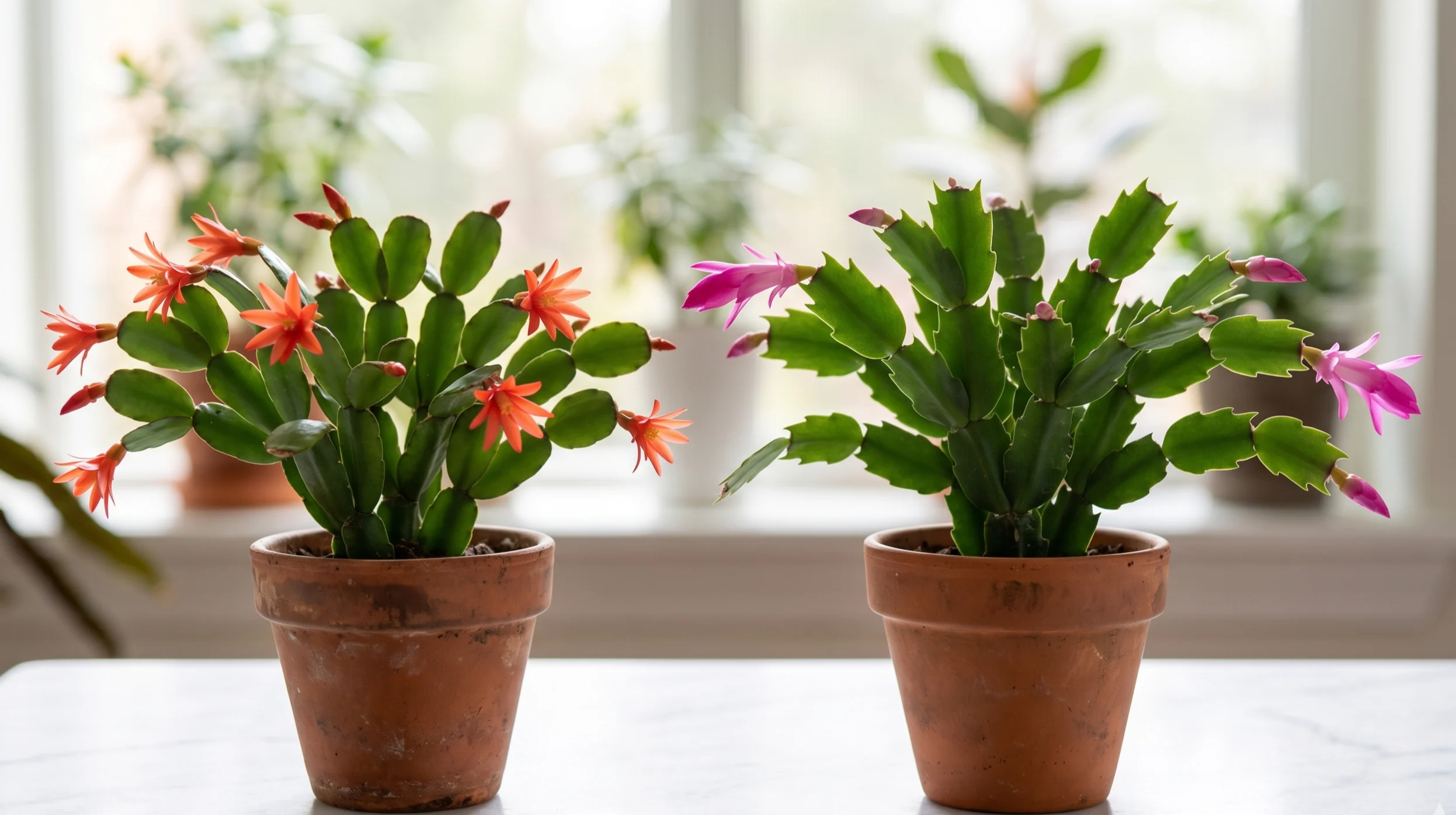
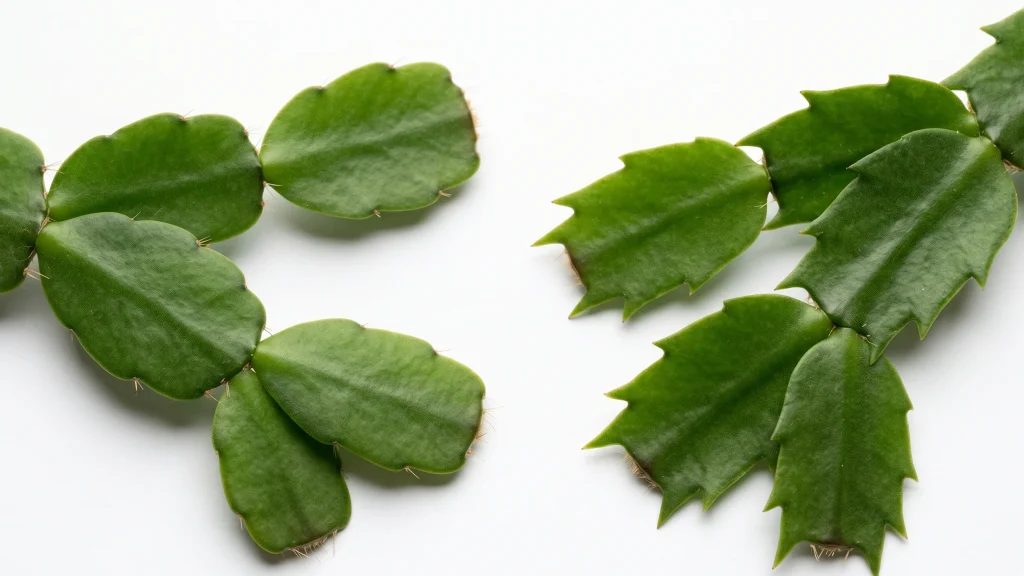
- Easter cactus stem segments are rounded with small, hairy bristles (called areoles) at the edges. The margins are smooth and scalloped, almost like a series of gentle bumps. If you run your finger along the edge, it feels soft and slightly fuzzy at the notches.
- Christmas cactus segments have pointed, claw-like projections on the edges. They’re more angular — you can actually feel the sharp corners. Some people describe them as “crab claw” shaped, which is why the genus is sometimes called crab cactus.
- Flower shape is the clearest tell of all. Easter cactus blooms are star-shaped and symmetrical, with petals that spread out evenly in all directions. Christmas cactus flowers are asymmetrical and tube-shaped, hanging downward with a slight twist.
The bloom color range overlaps — both come in red, pink, white, and orange — so color alone won’t help you. Stick to the stem edges and flower shape.
The stem segment edges are the fingerprint of holiday cacti. Rounded and bristly = Easter. Pointed and claw-like = Christmas. Check those edges before anything else.
According to the Missouri Botanical Garden’s plant records, Hatiora gaertneri naturally blooms from March through May in its native habitat in the mountains of southeastern Brazil — which is why it stubbornly won’t bloom in December no matter what you do.
Easter Cactus Care: What It Actually Needs
Once you’ve confirmed you have an easter cactus, the care approach shifts slightly from what you’d do for its Christmas cousin. Not dramatically — but enough that it’s worth knowing.
- Light: bright indirect is ideal, but Easter cacti tolerate slightly less than Christmas cacti. Mine does well 3–4 feet from an east-facing window. Direct afternoon sun will bleach the segments and cause reddish discoloration — not a disease, just sun stress.
- Watering: more in spring and summer, much less in fall. Unlike Christmas cacti, Easter cacti have a more pronounced dry dormancy period from late summer through autumn. I let the top inch of soil go dry before watering from September through November. That dryness, combined with cooler nights, is what sets the flower buds.
- Humidity matters more than people expect. These are epiphytes from humid cloud forests. A pebble tray with water underneath the pot makes a real difference if your home is dry in winter.
Soil should drain fast. I use a mix of regular potting soil cut with about 30% perlite. For a deeper dive into Easter cactus care indoors, I’ve written a full guide covering soil mixes, repotting timing, and propagation.
Temperature is the trigger for blooming. Easter cacti need a cool period — nights around 50–55°F (10–13°C) — for six to eight weeks in late fall to set buds. A spare bedroom, a cool sunroom, or even a sheltered porch (not freezing) works well for this. Don’t skip this step and then wonder why the plant won’t bloom.
Common Mistakes When Caring for Holiday Cacti
I’ve made most of these myself at some point, so no judgment here.
- Overwatering in winter is the most common killer. Both holiday cacti are semi-dormant in winter, and their roots sit in wet soil far longer than during the growing season. I’ve lost two Christmas cacti to root rot from well-intentioned December watering. Let the soil dry out more than feels natural.
- Moving the plant when buds are set. Once you see bud development, don’t rotate the pot, move it to a different window, or shift the light source. Flower buds are phototropic — they’re angled toward the light they grew in. Move the plant and buds drop. This applies to both species.
- Treating an Easter cactus like a desert cactus. Because it has “cactus” in the name, people underwater it in summer. During active growth (spring and summer), water regularly when the top inch dries. Drought stress in summer weakens the plant and reduces blooming the following spring.
One thing I feel strongly about: don’t bother with “bloom booster” fertilizers for holiday cacti. I used a phosphorus-heavy fertilizer for a season on my Easter cactus and saw zero difference compared to a standard balanced feed. The cool temperature and dry period do far more work than any fertilizer. A half-strength balanced fertilizer monthly during spring and summer is plenty. Skip it from fall through winter entirely.
For anyone also caring for a Christmas cactus indoors, the dormancy and bud-set process is similar but timed about four months earlier — target cool nights in September and October rather than January and February.
The Royal Horticultural Society’s plant database notes that Schlumbergera species are among the most commonly mislabeled plants in commercial horticulture — so if your plant’s tag says one thing but the bloom timing says another, trust the plant.
Side-by-Side Comparison: Easter vs Christmas Cactus
| Feature | Easter Cactus | Christmas Cactus |
|---|---|---|
| Scientific name | Hatiora gaertneri | Schlumbergera bridgesii |
| Bloom time | March–May | November–January |
| Stem segment edges | Rounded, with bristly areoles | Pointed, claw-like projections |
| Flower shape | Star-shaped, symmetrical | Tubular, asymmetrical |
| Dormancy period | Late summer–autumn | Late spring–summer |
| Bud set trigger | Cool nights (50–55°F) + dry period in fall | Cool nights (55–60°F) + shorter days in autumn |
| Summer watering | Regular (top inch dry between waterings) | Moderate (similar approach) |
| Difficulty | Easy–moderate | Easy |
The Easter cactus is slightly more particular about its dormancy conditions. It’s not hard to grow, but it won’t forgive a skipped cool period the way a Christmas cactus sometimes will. Give it the temperature drop and it will reward you reliably every spring.
The One Thing to Do Right Now
Check your plant’s stem segments today. Run your finger along the edge of one segment — smooth and rounded with tiny bristles means Easter cactus, sharp and pointed means Christmas cactus. Write it on a piece of masking tape and stick it to the pot if you have to.
Once you know which one you have, look up when its dormancy period starts and mark it on your calendar. That cool, dry rest is the single most important thing you can do for either plant. Everything else — fertilizer, soil mix, pot size — is secondary. The dormancy is what makes them bloom. Don’t skip it.
