Easter Cactus Care Indoors: What This Plant Actually Needs (And What I Got Wrong First)
Most people kill their Easter cactus by treating it like a cactus. That sounds obvious when you say it out loud, but it’s the single most common mistake I see and one I made myself when I first brought home a Hatiora gaertneri years ago. I stuck it on a sunny south-facing windowsill, watered it sparingly like a desert plant, and watched its segments slowly shrivel and turn reddish-purple. The problem? Easter cactus is a rainforest plant. It comes from the shaded canopy of the Brazilian jungle, not a dry canyon floor. Once I understood that, caring for it indoors became genuinely intuitive and it’s bloomed for me reliably every spring since.
Wait Is That Actually an Easter Cactus?
Before anything else, it’s worth confirming what you actually have. The Easter cactus (Hatiora gaertneri, sometimes listed as Rhipsalidopsis gaertneri) is routinely mixed up with its holiday cousins Christmas cactus and Thanksgiving cactus. They look similar and sell in the same section of the garden center, but their blooming triggers and care rhythms differ enough that knowing which one you own actually matters.
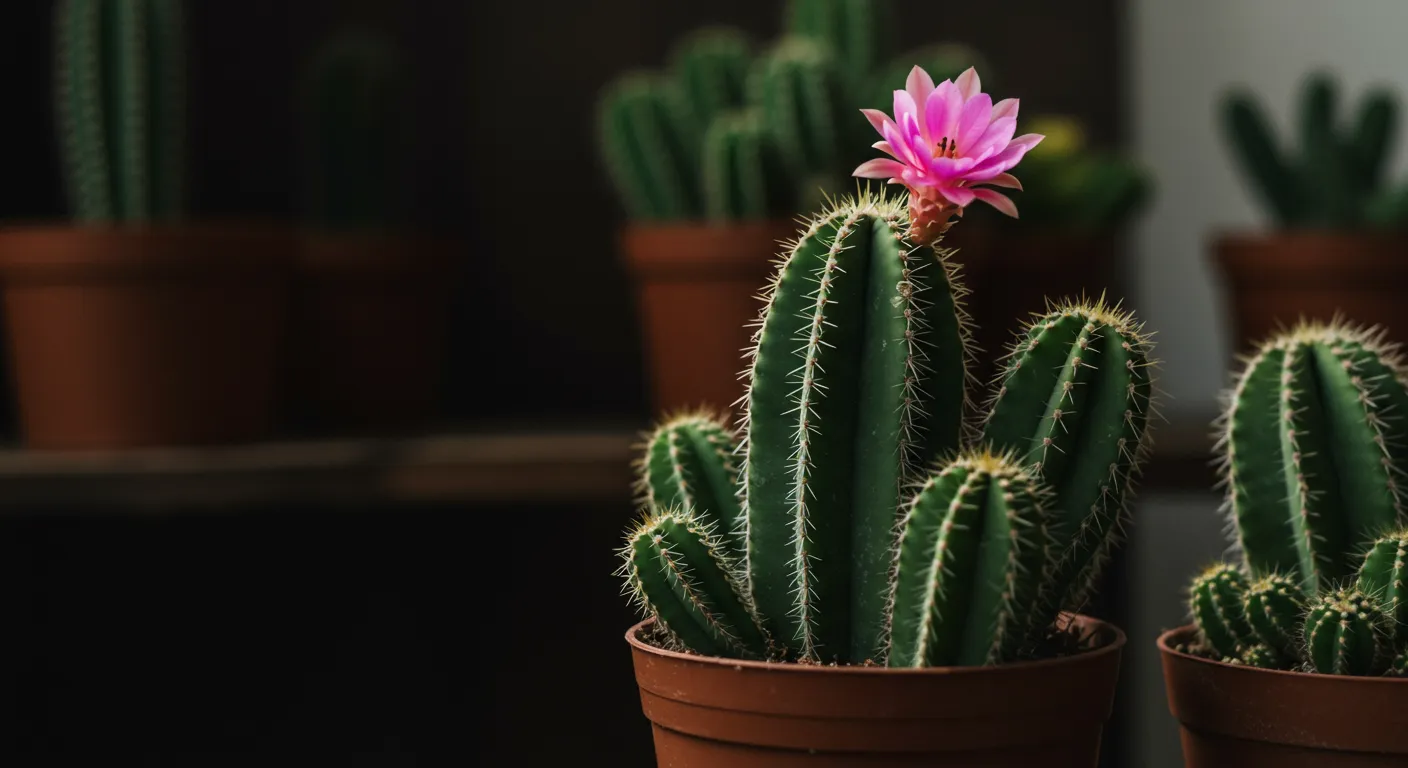
The easiest way to tell them apart is the stem segments. Easter cactus has rounded, scalloped edges with tiny, hair-like bristles sitting in the notches run your thumb along the edge and it feels almost velvety. Thanksgiving cactus has sharp, claw-like teeth along the edges. Christmas cactus falls in the middle: smooth, rounded edges without the bristles. The flowers are also distinct Easter cactus produces wide, open, star-shaped blooms, not the dangling tubular flowers on the other two. If yours blooms in spring (March to May), you’ve almost certainly got the right plant.
Light: The Single Biggest Lever You Have
Since this plant evolved under a forest canopy, direct sun is actively harmful to it not just unhelpful. Full afternoon sun will bleach and scorch the segments, turn them reddish (a stress response, not a health signal), and eventually cause them to drop. What the plant wants is bright but filtered light.
In my collection, the best spot I’ve found for Easter cactus is about three to four feet back from a south-facing window, or directly in an east-facing window where it only gets gentle morning sun. Behind a sheer curtain works well too. I’ve had readers write to me saying their plant has been “doing fine” in a dim corner and it might be surviving, but fine and thriving aren’t the same thing. Dim light is one of the top reasons these plants refuse to bloom, even after a proper dormancy period.
One counterintuitive thing worth knowing: in summer, you can put your Easter cactus outside in a shaded spot under a tree or on a covered porch. The higher humidity and natural temperature swings do it real good. Just keep it out of any direct sun and bring it back inside before nighttime temperatures drop below 50°F (10°C).
How to Water Without Wrecking the Roots
Here’s where the “it’s a cactus” instinct leads people astray. Easter cactus doesn’t want to dry out completely between waterings the way a true desert cactus does. Being an epiphyte a plant that grows on tree branches in the wild it’s accustomed to moisture cycling through quickly but being present fairly regularly. The goal is evenly moist soil, not wet, not bone-dry.
My actual routine: I water when the top inch of soil is dry to the touch. I use a moisture meter (the Sustee ones from Japan are my favorite they change color and remove all the guesswork) and water when it reads “dry” in the top layer. I give it a thorough soak, let it drain completely, and never let it sit in standing water in the saucer. That last part is non-negotiable. Root rot is devastatingly fast in these plants I lost a beautiful specimen once because I left it sitting in about a half-inch of water for four days while traveling. The segments looked fine on the outside; the roots were already gone.
During the active growing season in summer, you’ll water more frequently. During dormancy in fall, you’ll cut back dramatically. More on that below.
Temperature and Humidity
Average room temperatures between 60–70°F (15–21°C) work well for most of the year. What these plants really dislike is fluctuation a heating vent blowing on them, a drafty window in winter, or a cold snap from an open door. Stability matters more than hitting a specific number.
For humidity, the drier your home, the more you’ll notice the segments looking slightly puckered or dull. A pebble tray with water underneath the pot works well passively. I also keep my Easter cactus grouped with a few other tropical plants the collective transpiration keeps the immediate microclimate noticeably more humid, and none of them have to work as hard.
Soil Mix and Potting Why Standard Cactus Mix Is Wrong
Most commercial cactus mixes are formulated for desert succulents, which means they’re very fast-draining and mineral-heavy. Easter cactus needs something different: well-draining, yes, but also organic enough to hold a bit of moisture and give the roots something to anchor into.
My go-to mix is two parts standard indoor potting soil, one part perlite, and one part orchid bark. The perlite keeps drainage sharp; the orchid bark improves aeration and mimics the loose, organic material that accumulates in the cracks of tree bark in its native habitat. It’s a small thing, but planting into the right medium makes consistent watering far easier because the soil behaves more predictably.
On repotting: these plants genuinely bloom better when they’re slightly root-bound. Don’t rush to size up the pot. I repot every two to three years, or when I see roots coming out of the drainage holes. Always repot in spring, right after blooming, and choose a new pot only one to two inches wider than the current one. After repotting, wait about a week before watering to let any stressed roots heal.
Feeding Through the Growing Season
During spring and summer, I feed every two to four weeks with a balanced, water-soluble fertilizer diluted to half strength. I use Jack’s Classic 20-20-20 at half the recommended dose it’s affordable, consistent, and I use it across most of my tropicals. Full-strength fertilizer on these roots will cause tip burn and stress; less is genuinely more here. Once September arrives, I stop completely and don’t start again until after the following year’s bloom.
The Dormancy Period: This Is What Makes or Breaks Blooming
If your Easter cactus makes lush green growth but never flowers, this is almost certainly the part you’re missing. The plant needs a period of cool temperatures and reduced watering in fall and early winter roughly 8 to 12 weeks to trigger bud formation. Without this, it just keeps growing vegetatively and never switches into bloom mode.
I typically start the process in October. I move my Easter cactus to our spare bedroom, which sits around 55–60°F (13–15°C) and gets minimal light in the evenings. I cut watering back to just enough to keep the segments from shriveling usually every three to four weeks instead of every one to two. No fertilizer at all. The plant looks slightly sad during this period, and that’s okay. It’s not dying; it’s doing exactly what it’s supposed to do.
The other trigger is darkness. The plant needs 12 to 14 hours of uninterrupted darkness each night. If the cool room it’s in gets ambient light from streetlights, lamps, or someone switching on the light to grab something that counts as interruption. If that’s unavoidable, a dark cloth draped over the plant after 6pm works fine.
After 8 to 12 weeks of this, watch the segment tips closely. You’ll start to see tiny reddish nubs forming those are your flower buds. That’s your cue to bring it back to its normal spot, resume regular watering gradually, and just wait. Don’t fertilize yet; wait until after the blooms have fully faded.
One important warning: once buds have set, don’t move the plant around or expose it to sudden temperature swings. Bud drop is heartbreaking and it happens fast when the plant gets stressed at this stage. Find it a spot and leave it there until it finishes blooming.
After the Flowers Fade: What to Do Next
When blooming is finished, usually by late May, give the plant about three to four weeks of reduced watering to recover. Flowering is energetically expensive for any plant, and this short rest helps it transition smoothly into the summer growing season.
You don’t need to prune anything after blooming. The spent flowers drop off on their own, and the segments they came from are perfectly healthy. The only time I trim mine is to shape it slightly or remove a segment that looks damaged. If you want to propagate which is very easy with Easter cactus summer is the time to do it. Twist off a Y-shaped cutting of two to four segments at a joint, let the cut end callus over for two to three days in a dry spot, then plant it shallowly in moist, well-draining soil. New roots typically form within four to six weeks.
Common Problems and What They’re Actually Telling You
Most issues with Easter cactus come down to water. Yellowing, mushy, or falling-off segments almost always mean overwatering or roots sitting in standing water. Check the drainage situation first before assuming anything else is wrong.
- Segments turning reddish or purple: This is a stress signal, not a normal color variation. It usually means too much direct sun, cold drafts, or significant temperature swings. Move the plant and the color should slowly return to green over several weeks.
- Segments shriveling or looking deflated: Unlike the mushy texture of overwatered rot, shriveled segments usually mean underwatering or very low humidity. Give it a thorough watering and consider moving it somewhere more humid.
- Buds forming and then dropping before opening: This almost always comes down to sudden changes moved the plant, turned a heater on nearby, let it get cold near a window at night. Stability during bud development is everything.
- No buds forming at all despite a rest period: The most likely culprits are the room wasn’t cool enough, the darkness was being interrupted, or the rest period wasn’t long enough. Aim for at least eight full weeks under those conditions.
- Mealybugs or spider mites: Easter cactus isn’t particularly pest-prone, but it can happen. Mealybugs show up as cottony white clusters in the joints between segments remove them with a cotton swab dipped in rubbing alcohol. For spider mites, I use a diluted neem oil spray (Garden Safe brand works well for me) applied weekly for three weeks.
The Seasonal Care Rhythm, Simplified
It helps to think of the year in four phases rather than trying to remember a fixed schedule:
- Spring (March–May) Bloom and recovery: Maintain consistent moisture while in flower, then ease off watering for a few weeks after blooms drop. No fertilizer during this phase.
- Summer (June–August) Active growth: Water regularly when the top inch dries out, feed every two to four weeks at half strength. This is prime time for propagation and optional outdoor placement in shade.
- Fall (September–November) Begin dormancy: Move to a cool room, cut watering way back, stop feeding entirely. Ensure long dark nights.
- Winter (December–February) Bud set and transition: Watch for bud formation, then gradually bring the plant back to warmth and more regular watering once buds appear. Hold fertilizer until after blooming is done.
If you want to go deeper on the care calendar for its holiday cactus relatives, this guide on Christmas cactus care covers a very similar seasonal rhythm and the two are useful to read together.
The One Thing Worth Taking Away From All of This
If I had to distill Easter cactus care indoors into a single piece of advice, it’s this: give it a proper cool, dark rest period in fall, and it will almost always bloom for you in spring. Every other element of care light, water, soil matters, but that dormancy period is the thing most people skip because it feels counterintuitive to neglect a plant on purpose. It’s not neglect. It’s exactly what the plant needs. Start it in October, be patient through the winter, and come March you’ll understand why people keep these plants for decades.
