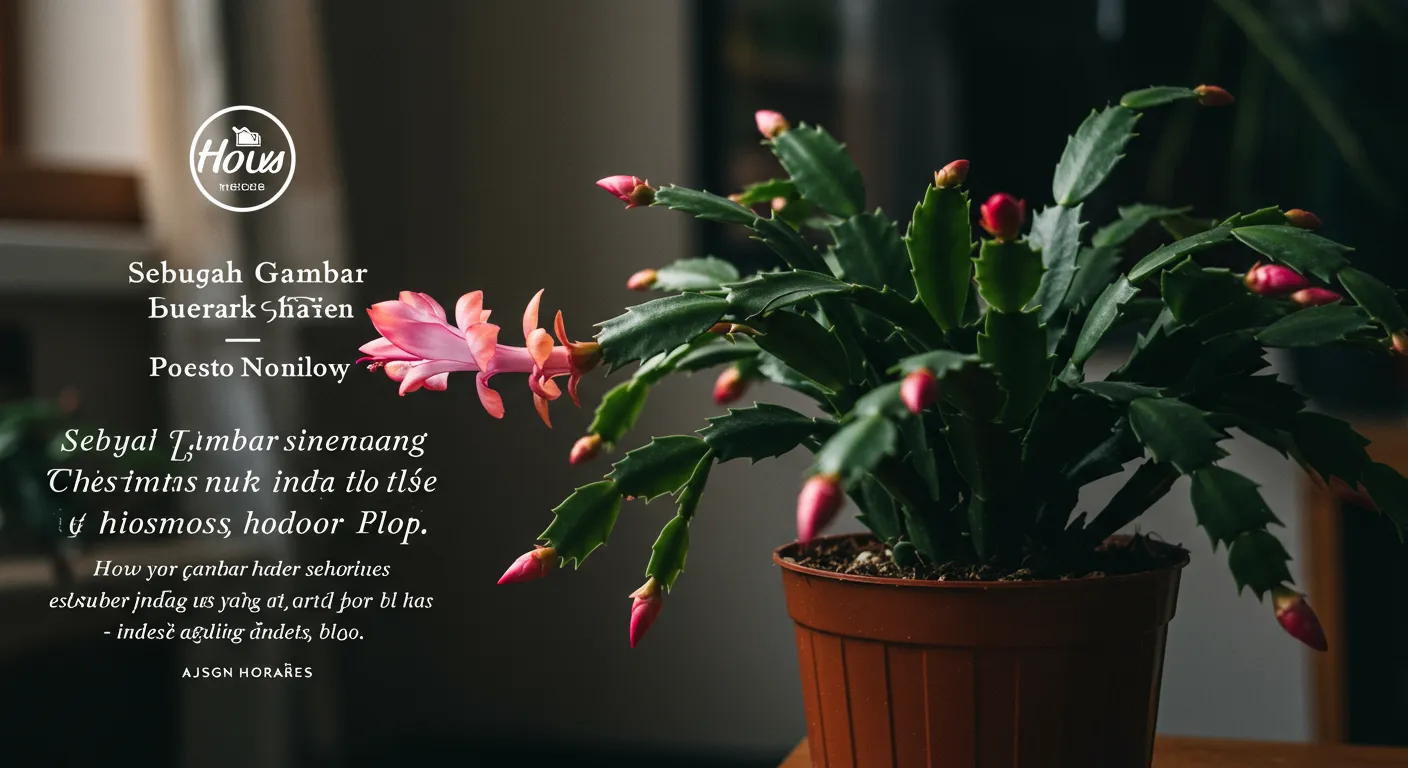
Christmas Cactus Care Indoors: What Actually Makes It Bloom (And What Kills It)
Most people kill their Christmas cactus by being too nice to it watering on a regular schedule, keeping it warm and cozy all year, and wondering why it never blooms again. I did the exact same thing with my first one. A gorgeous magenta-flowered Schlumbergera that a neighbor gave me, and I slowly loved it to death over two years by treating it like every other houseplant I owned. The truth is, this plant needs a little neglect built into its calendar and once you understand why, caring for it gets remarkably straightforward.
Why Christmas Cactus Is Nothing Like Other Cacti
The name is genuinely misleading. Unlike the spiny desert plants you’re picturing, Schlumbergera is a tropical epiphyte native to the cloud forests of southeastern Brazil, where it spends its life perched on tree branches, tucked into pockets of decomposed organic matter, shaded by the canopy above. It never touches desert soil. It never gets baked in direct sun. It lives in a world of dappled light, consistent humidity, and distinct seasonal shifts.
That backstory isn’t just trivia it completely reshapes how you approach its care. When you understand that this plant evolved to handle cool, dry falls followed by bursts of humidity and warmth, the whole “how do I get it to bloom” mystery starts to make sense. It’s not a stubborn plant. It’s just waiting for the right seasonal cue.
The Difference Between Christmas, Thanksgiving, and Easter Cactus
Before going further there’s a decent chance the plant you have isn’t actually a Christmas cactus. Garden centers lump all three holiday cacti together, but they bloom at different times and have slightly different leaf shapes. True Schlumbergera bridgesii (Christmas cactus) has smooth, rounded leaf segments. Schlumbergera truncata (Thanksgiving cactus) has pointy, claw-like edges and usually blooms 3–4 weeks earlier. Easter cactus (Hatiora gaertneri) is a different genus entirely and blooms in spring.
For practical indoor care, the three are close enough that most of what follows applies across the board. Just know that if your “Christmas cactus” consistently blooms in November, you’ve probably got a Thanksgiving cactus and that’s completely fine.
Light, Placement, and the Scorch Mistake I Keep Seeing
Bright, indirect light is the target. An east-facing window is nearly perfect gentle morning sun, no harsh afternoon exposure. A few feet back from a south or west window works too. What you want to avoid is direct midday or afternoon sun hitting those flat green segments directly. In my own collection, I’ve had two Christmas cacti develop reddish, almost sunburned-looking leaves from sitting too close to a south-facing window in summer. It’s not fatal, but it does stress the plant at exactly the time you want it putting energy into bud development.
One counterintuitive thing I’ve noticed: these plants tolerate lower light better than most people expect, as long as you scale back watering to match. I keep one in a north-facing bathroom not ideal, but it gets enough indirect light to stay healthy. It blooms, just less prolifically than the ones near brighter windows. Don’t let imperfect light stop you from trying.
Seasonal Light Shifts Matter More Than You Think
The plant’s bud-triggering mechanism is photoperiodic meaning it responds to day length, not just temperature. As days shorten in fall, the plant reads that as a signal to shift into flowering mode. This is why leaving a nearby lamp on in the evening can genuinely prevent blooming. One late-night reading lamp, a hallway light, even a streetlight through a sheer curtain any consistent light source during what should be the plant’s dark hours can interrupt the process. I learned this the hard way one year when I moved a plant into the living room in October and it sat next to the TV stand. Beautiful, healthy plant. Zero buds.
Watering: The Part Most People Get Chronically Wrong
Here’s the rule I follow: water thoroughly when the top inch or two of soil is dry, let it drain completely, and never let it sit in standing water. That last part matters more than people realize. I use saucers under all my pots, but I drain them within an hour of watering. Sitting water at the base is one of the fastest paths to root rot in this species.
The seasonal variation is where things get interesting. During spring and summer active growth the plant drinks more and you’ll water more frequently. As fall approaches and you start the bud-triggering process, you ease off. After blooming, you ease off again for a month or two while it rests. Then the cycle starts over. It’s not complicated, but it does require paying attention to what time of year it is rather than just watering on autopilot.
What Overwatering Actually Looks Like
Limp, slightly translucent segments are usually overwatering, not underwatering even though they can look similar at first glance. The distinction: underwatered plants look shriveled and slightly wrinkled. Overwatered plants look swollen, soft, and may have a yellowish tinge at the base. If you press a segment gently and it feels mushy rather than firm, check the roots immediately. Catching root rot early trimming affected roots, letting them dry briefly, repotting in fresh mix can save a plant that looks like it’s on its way out.
Soil, Pots, and Why Standard Potting Mix Isn’t Enough
Standard potting mix holds too much moisture for these plants. I’ve had the best results mixing roughly equal parts regular potting soil, perlite, and coco coir. The perlite keeps things airy; the coco coir retains just enough moisture without compacting. You want water to move through fairly quickly when you pour it, not pool on the surface.
For pots, I’ve switched almost entirely to terracotta for my holiday cacti. It breathes, which helps the soil dry at a more appropriate pace. Plastic pots work fine if you’re disciplined about not overwatering, but terracotta gives you a bit more margin for error and honestly, the slightly rough texture just looks right with these plants.
Repotting: Less Often Than You’d Guess
Christmas cacti genuinely prefer being a little root-bound. I repot mine every 2–3 years, only when I see roots circling out of drainage holes or the plant is drying out noticeably faster than usual. When I do repot, I go up just one pot size 1 to 2 inches larger in diameter. Going too big invites root rot by leaving too much wet soil around the roots. Spring, after the rest period, is the best time. Wait a few days after repotting before watering to give any damaged roots time to heal.
Temperature and Humidity: Getting the Seasonal Contrast Right
During active growth in spring and summer, room temperature (65–75°F / 18–24°C) is ideal. Keep the plant away from heating vents, air conditioners, and drafty windows not because the plant is delicate, but because sudden temperature swings are one of the primary causes of bud drop. Consistency matters more than hitting any particular number.
Where temperature becomes really powerful is in fall, during bud induction. Cooler nights ideally 50–55°F (10–13°C) combined with those long dark periods are the two-part trigger that reliably sets buds. A cool spare room, an enclosed porch, or even a basement corner can work well for this 6–8 week period starting in mid-September. Once you see tiny buds forming, the hard work is done. Move it back to its regular spot, resume normal watering, and enjoy the show.
Humidity Without a Humidifier
These plants like humidity above about 50%. In dry climates or heated winter homes, that can be hard to maintain. My go-to method is a pebble tray a shallow dish filled with pebbles and water, with the pot sitting on top of the pebbles (not in the water). As the water evaporates, it raises humidity right around the plant. Grouping plants together also helps, since they release moisture through their leaves. I use a small Levoit humidifier in my main plant room during winter, but pebble trays work fine if you don’t want the extra equipment.
Fertilizing: Feed It When It’s Working, Rest It When It’s Not
I feed my Christmas cacti from roughly March through August with a balanced water-soluble fertilizer I use Jack’s Classic 20-20-20 diluted to half the recommended strength, every 2–3 weeks. Nothing fancy required. The goal is supporting leaf growth during the active season, not pushing the plant hard.
Stop fertilizing in late August or early September. At that point, you want the plant shifting its energy toward bud formation, not putting out new segments. Resume feeding again in spring once you see new growth. One year I forgot to stop feeding in fall and kept going through September the plant produced a lot of new growth but noticeably fewer buds. Lesson learned.
Getting Buds Every Year: The Two-Part Trigger
This is the section most people need most, because getting a Christmas cactus to rebloom consistently is where care instructions usually fall short. There are two levers that work together: darkness and cool temperatures.
Starting around mid-September, your plant needs 13–15 hours of uninterrupted darkness every day for about 6–8 weeks. That means moving it to a room where no lights come on after dark, or covering it with a dark cloth or box each evening and uncovering it each morning. Yes, this sounds like a lot of effort, but it genuinely takes only about two minutes a day and after a couple of years, you’ll have a system down.
Pair that darkness with cooler nighttime temperatures (50–55°F) and you’ve created the two conditions the plant evolved to respond to. Most people who complain that their Schlumbergera “never blooms anymore” simply haven’t given it either of these triggers. The plant isn’t broken it’s just waiting to be convinced that autumn has arrived.
Once Buds Appear: Don’t Move Anything
This is critical and often overlooked. Once you see tiny flower buds forming little rounded bumps appearing at the tips of the segments stop moving the plant. Even rotating it slightly can cause bud drop. The plant has oriented itself to the light it’s been receiving, and disrupting that orientation stresses it enough to abort the buds. I mark mine with a small piece of tape on the pot so I always know which side faces the window, even when I’m not thinking about it.
Pruning for a Fuller Plant
About a month after blooming finishes, I pinch back the tips removing 1–2 segments from the end of each stem. You don’t need scissors; the segments snap off cleanly at the joints with a gentle twist. This encourages branching, which means more stem tips, which means more places for buds to form the following year. A plant that’s never been pruned tends to get leggy and produce fewer flowers relative to its size.
Don’t throw those cuttings away. Let them sit out for a day to callus, then push the cut end about an inch into a small pot of barely moist soil. New roots form within a few weeks. If you want to learn the full process, our guide on propagating holiday cacti from cuttings walks through it step by step it’s one of the easiest ways to multiply your collection or share plants with people who’ll actually appreciate them.
Troubleshooting the Most Common Problems
Bud Drop Before They Open
Bud drop is almost always caused by one of three things: a sudden temperature change, inconsistent watering (either drying out completely or getting overwatered), or moving the plant after buds have set. If your buds are dropping, don’t move the plant, water carefully to keep soil lightly but consistently moist, and check that it’s not near a heat vent or drafty window. Unfortunately, buds that drop won’t come back but if you stabilize conditions, the remaining buds usually hold.
Yellow or Limp Segments
Yellow, limp, or translucent segments: overwatering, almost certainly. Let the soil dry out more between waterings and check that drainage is working properly. If the base of the plant looks dark or mushy, investigate the roots. Shriveled, wrinkled segments that feel dry to the touch: underwatering or very low humidity. Give it a thorough watering and consider whether its spot is too warm and dry.
Segments Turning Red
Reddish or purplish discoloration in the segments usually signals too much direct sun, though it can also indicate root crowding or a slight magnesium deficiency. Start by moving the plant away from direct light. If that doesn’t help within a few weeks, consider whether it’s due for a repot or a light feeding with a fertilizer that includes micronutrients.
Pests
The most common pest I see on holiday cacti is mealybugs white cottony clusters at the segment joints. A cotton swab dipped in isopropyl alcohol, applied directly to each visible cluster, clears most infestations. For heavier cases, I use diluted neem oil as a follow-up spray. Check new plants carefully before introducing them near your existing collection that’s almost always how pests arrive.
The One Thing to Start Doing This Week
If your Christmas cactus is sitting in a room where lights are on in the evening, move it somewhere darker before mid-October. That single change giving it long, uninterrupted nights from late September onward is the difference between a plant that blooms reliably every year and one that just sits there looking healthy but never quite performing. Everything else in this guide matters, but that’s the lever most people are missing. Get the darkness right, and the blooms tend to follow.
