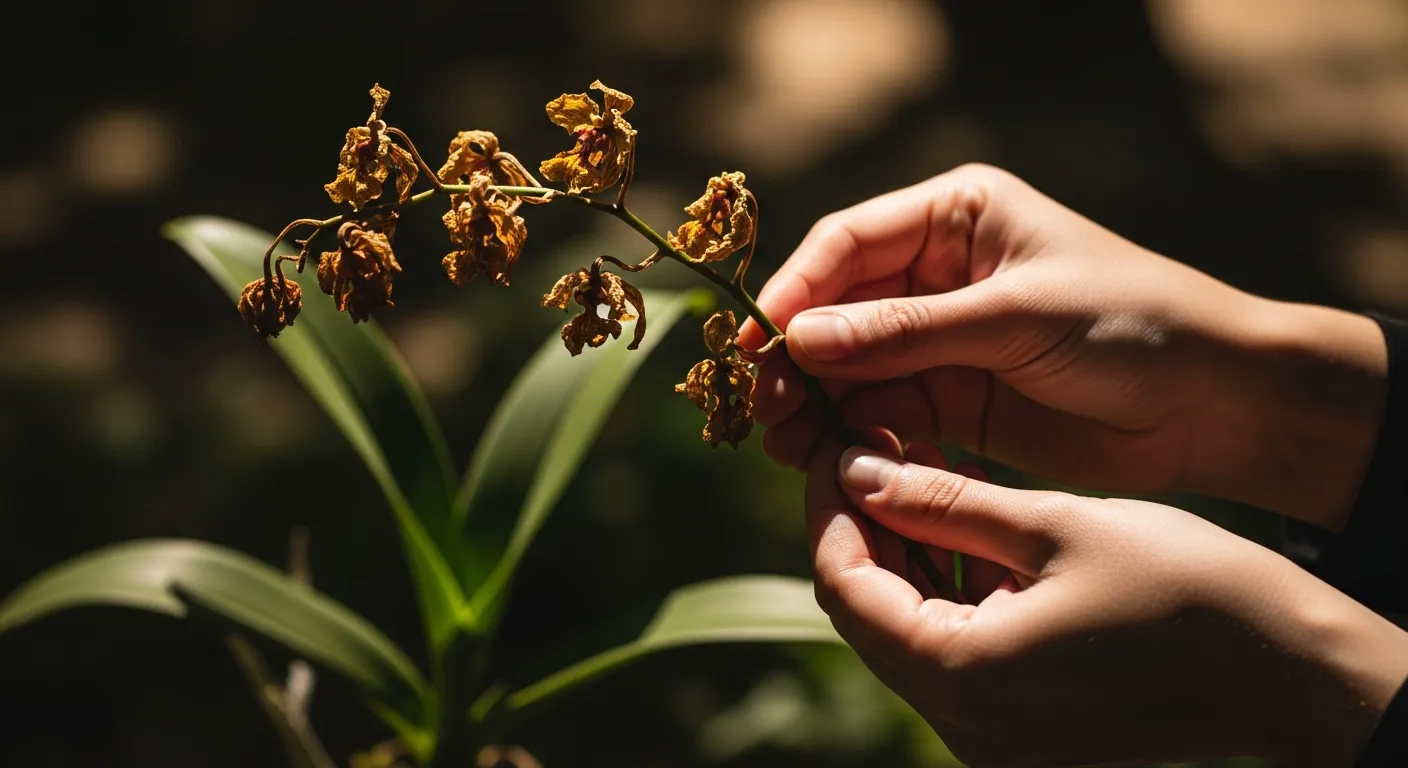
What Really Happens After Orchid Flowers Drop And How to Respond Correctly
Most orchid owners do the exact wrong thing when their flowers drop and I was no exception. My first Phalaenopsis finished blooming and I, determined to “help,” promptly cut the spike all the way down and moved the plant to a sunnier windowsill. It sat there, looking smug and rootbound, for eleven months without producing a single new bloom. Turns out I’d skipped the one step that would have triggered reblooming in a matter of weeks. Knowing how to care for orchids when flowers die isn’t complicated, but it does require understanding what the plant is actually doing and resisting the urge to intervene in the wrong way.
Why the End of Blooming Isn’t Bad News
Here’s the counterintuitive part: a Phalaenopsis that drops all its flowers is not struggling. It’s finished a physiologically expensive process and is now doing something far more useful for its long-term survival resting and consolidating resources. The blooming period costs the plant enormously. What comes after it is recovery, not decline.
New orchid parents tend to read the bare spike as a failure signal. But if your plant’s leaves are firm and green, and the roots visible through the pot look silvery-grey when dry or bright green after watering, your orchid is in excellent shape. It’s doing exactly what it should. This is the phase where real, sustainable growth happens stronger roots, new leaves, and the energy reserves needed for the next flowering cycle.
The Difference Between Resting and Actually Dying
A healthy, resting orchid will show specific signs that are easy to read once you know what to look for. A dying one looks quite different. Understanding the gap between the two saves a lot of unnecessary intervention and unnecessary panic.
- Firm, upright leaves with consistent color are a reliable indicator of a healthy plant. Limp or heavily wrinkled leaves usually point to a root problem, not the end of blooming.
- Plump, active roots are your best evidence of plant health. Press gently on a root it should feel firm, not hollow or papery. Mushy roots are root rot; hollow, shriveled roots point to chronic underwatering.
- New growth appearing anywhere on the plant a fresh leaf emerging from the crown, or bright green root tips pushing out of the drainage holes confirms the orchid is in active recovery, not decline.
If you see all three of these things, your plant is simply resting between performances. That’s the situation for the vast majority of post-bloom orchids.
The Spike Decision This Is Where It Actually Matters
The flower spike is the stem the blooms grew on, and what you do with it after the last flower drops will determine how quickly your orchid cycles into its next bloom. This is the most consequential decision in the whole post-bloom process, and there’s no single “right” answer it depends on the spike’s condition and what you want from the plant.
Before you pick up any scissors, look at the spike. Is it still green and firm along its length? Or has it started going yellow and brittle from the tip downward? That visual check splits your options in two completely different directions.
When the Spike Is Still Green: Two Viable Paths
A green, healthy spike on a Phalaenopsis has the potential to branch and produce a second flush of flowers sometimes within six to ten weeks. To trigger this, find the nodes on the spike (small triangular bumps spaced along its length), and using a clean, sharp blade, cut the spike about one centimeter above a healthy-looking node roughly two-thirds of the way down.
The trade-off is real: the secondary bloom will typically be smaller and have fewer flowers than the original. If you want a quick win, this works well. If you want a more spectacular display next season, the better move even with a green spike is to cut it all the way down to the base. This redirects the plant’s energy entirely into vegetative growth, and the resulting bloom cycle tends to be much more impressive.
I’ve done both approaches across my collection. My personal preference now is to cut to the base unless I’m specifically trying to extend a display for a particular reason, like keeping flowers going through the holidays. The plants I let rest fully almost always come back stronger.
When the Spike Has Gone Brown or Yellow
If the spike is yellowing, drying out, or has turned completely brown, the decision is simple: cut it at the base. The plant is already withdrawing nutrients from it, and leaving it attached serves no purpose. Use clean scissors or pruning shears I keep a pair of Fiskars micro-tip snips specifically for plant work and make a clean cut as low as you can go without nicking the base of the plant itself.
One thing that surprises people: you don’t need to sterilize the cut. Orchids are reasonably resistant to infection at the spike cut site. That said, if you’re moving between multiple plants, wiping your blade with rubbing alcohol between cuts is sensible practice.
Adjusting How You Care for the Plant During Rest
Once you’ve handled the spike, the plant enters what’s effectively a rebuilding phase. Your job during this period is to support that work without smothering it. The most common mistake here and I’ve made it is continuing to care for a resting orchid exactly as you did when it was in bloom. The plant’s needs have genuinely changed.
Water Less, but Water Well
During bloom, orchids pull a lot of moisture. In the resting phase, that demand drops significantly. Continuing to water on the same schedule is one of the fastest ways to develop root rot in an otherwise healthy plant.
For most Phalaenopsis in bark-based mix, I let the medium dry out almost completely before watering again. The practical check: push a finger about two centimeters into the bark. If it feels even slightly moist, wait. When you do water, soak the pot thoroughly I use the sink, run water through the bark for about 30 seconds, then let it drain fully before putting it back in its cache pot. Never let the base sit in standing water.
Keep Light Consistent, but Avoid Direct Sun
Bright, indirect light remains important during rest this is how the plant photosynthesizes and stores the energy it will eventually use for flowering. What changes is that a resting orchid is somewhat more vulnerable to heat stress, since it’s not channeling energy into bloom production.
An east-facing windowsill is close to ideal for most Phalaenopsis. If you only have south or west exposure, a sheer curtain diffusing the light makes a real difference. The leaves should be a medium grassy green if they’re darkening toward forest green, the plant isn’t getting enough light; if they’re yellowing or developing bleached patches, it’s getting too much direct sun.
Pull Back on Fertilizer But Don’t Stop Entirely
Heavy feeding during dormancy does more harm than good. Fertilizer salts accumulate in the potting medium and can burn roots that aren’t actively absorbing nutrients at their usual rate. I cut my feeding frequency in half during rest: from every two weeks down to once a month, using a balanced orchid fertilizer at half the label-recommended strength. I’ve been using Dyna-Gro Grow for years and it’s never let me down but any balanced formulation works fine here.
Don’t stop feeding entirely. The plant is still growing (just leaves and roots, not flowers), and trace nutrients keep that process healthy. The goal is steady, gentle support not the intensive feeding that makes sense during bloom season.
Repotting: Read the Signals Before You Act
The post-bloom phase is the best time to repot if it’s needed the plant isn’t under the stress of flowering, and it has time to recover before needing to put energy toward a new spike. But “best time” doesn’t mean “do it automatically.” Repotting an orchid that doesn’t need it causes unnecessary stress.
Three Signs It’s Actually Time to Repot
- Roots are pushing out of the drainage holes or lifting the plant upward a few aerial roots wandering over the rim is normal, but if the plant is being physically raised out of the pot by root pressure, it’s genuinely cramped.
- The potting medium has broken down into a fine, soil-like texture fresh orchid bark is chunky and well-aerated. When it decomposes into something dense and moisture-retentive, it starts suffocating the roots. Most bark mix needs replacing every one to two years.
- The plant is wobbly and unstable if your orchid rocks around freely in its pot, the root structure holding it in place has deteriorated. This usually means significant root loss that needs investigating.
When you do repot, choose a pot only slightly larger than the current one about 2.5 cm wider in diameter is enough. Orchids bloom more reliably when their roots are slightly snug. Use a pre-made orchid bark mix, or a combination of medium fir bark, perlite, and charcoal. Never use regular potting soil. After repotting, wait about a week before watering to let any trimmed root ends callous over.
Getting a New Spike to Appear
After several months of healthy resting new leaves developing, roots looking plump and active, plant generally looking like it’s thriving you can start nudging it toward its next bloom cycle. This is the part most people find frustrating, because the trigger isn’t more water or more fertilizer. It’s temperature.
Phalaenopsis orchids need a consistent temperature drop between night and day to initiate a new flower spike. Specifically, nighttime temperatures about 8–10°C cooler than daytime for three to four weeks is usually enough. In practice, moving the plant near a window where it gets slightly cooler air on autumn and winter nights often does this naturally. A windowsill in a room that cools down overnight not drafty, just slightly cooler is the classic setup.
Once a spike begins, you’ll need to distinguish it from a new root. New roots have rounded, smooth tips and tend to grow sideways or downward. New flower spikes emerge from between the leaves near the crown, have a slightly flattened, mitten-like tip, and grow upward toward light. When the spike reaches about 10 cm and is still flexible, stake it loosely with a thin bamboo stake and an orchid clip to give it direction as it grows. Don’t bind it tightly the spike needs to flex slightly.
Once a spike is confirmed and growing, switch from your balanced fertilizer to a bloom-booster formula higher in phosphorus. This gives the plant the specific nutrients it needs for flower production rather than vegetative growth.
Diagnosing the Common Problems That Come Up Post-Bloom
Limp or Wrinkled Leaves
This almost always indicates a root issue, but the cause can go either way: too much water or too little. Damaged roots from overwatering can’t absorb water even when it’s available, so the plant looks dehydrated despite wet soil. Check the roots before adjusting your watering. Firm, well-colored roots mean the plant needs more water. Brown, mushy roots mean you need to trim the rot, repot into fresh medium, and dial back watering going forward.
Multiple Leaves Turning Yellow at Once
The bottom leaf yellowing on its own is normal the plant is cycling out old tissue. If two or more leaves are yellowing simultaneously, especially leaves that aren’t the oldest ones, this usually points to root rot from overwatering. It can also indicate that the plant has been sitting in direct sun. Check roots first, then reassess the light situation.
Healthy Leaves, No Spike After Many Months
A plant that grows lush leaves but refuses to flower is almost always lacking either light or temperature contrast. Increase light exposure first move closer to the window, or add a grow light if your space is dim. If the light is already good, focus on creating that night temperature drop. Some plants hold out stubbornly until the conditions are exactly right. For those that really stall, a thorough review of your overall indoor orchid setup can help identify what’s missing.
The One Thing That Makes the Biggest Difference
If I had to condense everything here into a single, actionable principle for caring for orchids after the blooms die: let the plant rest fully before trying to push it toward the next bloom. That means cutting the spike appropriately, backing off on water and fertilizer, giving it consistent indirect light, and then hardest of all being patient.
The orchids in my collection that bloom most reliably every year are the ones I’ve resisted over-managing during their dormant phase. They get steady, moderate care, a cool autumn window, and they reward that patience without fail. The ones I’ve fussed over, moved around, and fed aggressively during rest are the ones that have taken eighteen months to rebloom. The plant knows what it’s doing. Your main job is to not get in the way.
