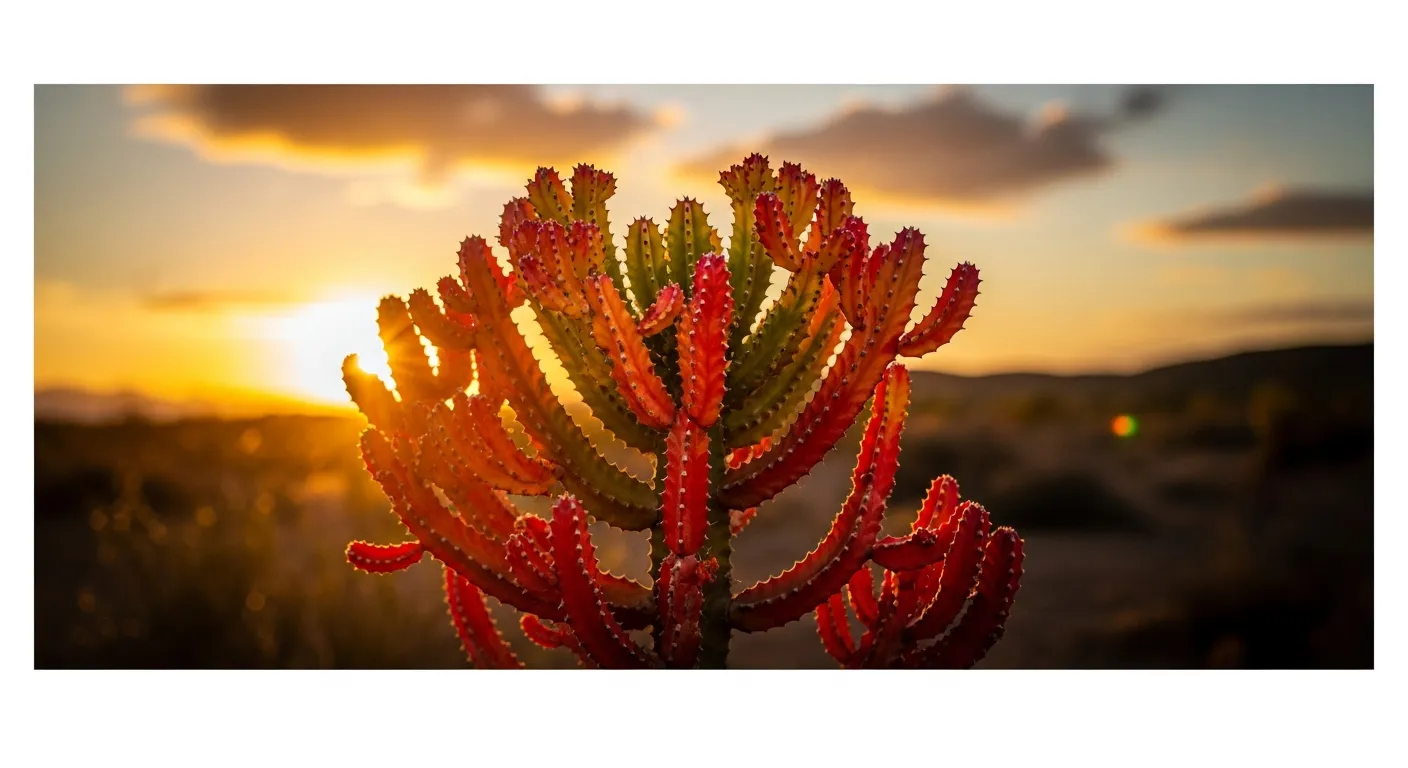
Firestick Cactus Care: How to Keep It Alive, Safe, and Actually Red
The first time I pruned a firestick cactus without gloves, I found out exactly why that’s a terrible idea. The milky white sap got on my forearm, and within about twenty minutes I had a raised, burning welt that lasted three days. I tell this story not to scare you off the plant Euphorbia tirucalli ‘Rosea’ is genuinely one of the most striking succulents you can grow indoors but because most care guides bury the toxicity warning somewhere in the middle, and it belongs at the top. Once you know how to handle it safely and what it actually needs to thrive, it’s one of the easiest plants in my collection.
First Things First: This Plant Is Not a Cactus (And Its Sap Can Seriously Hurt You)
Despite being sold everywhere as a “firestick cactus” or “pencil cactus,” Euphorbia tirucalli isn’t a cactus at all. It’s a succulent from the Euphorbiaceae family, originally from semi-arid parts of Africa and India. True cacti belong to the family Cactaceae different genus, different family, totally different plant. The confusion comes from the shared aesthetic: lots of stems, very few leaves, a sculptural look that reads as “cactus-ish.” But the care and the handling rules are different enough that the distinction matters.
What makes Euphorbia tirucalli genuinely different from a cactus and from most houseplants is that caustic latex sap. Every part of the plant contains it. Break a stem, nick it while repotting, prune it carelessly, and the sap weeps out immediately. Skin contact causes burning, redness, and blistering. Eye contact can cause temporary blindness and requires immediate flushing with water, then a trip to the doctor. Keep it away from children and pets who might snap a stem out of curiosity.
Safe Handling Every Single Time
I keep a dedicated pair of nitrile gloves hanging next to my firestick specifically so I never talk myself out of wearing them. The three non-negotiables:
- Nitrile or rubber gloves, every time you touch the plant. Fabric gardening gloves aren’t enough the sap soaks through. Nitrile creates a proper barrier, and they’re cheap enough to keep a box on hand.
- Safety glasses or goggles when pruning. Even a small snip can flick a droplet of sap. This isn’t overcaution it’s the one scenario where a small mistake has serious consequences.
- Long sleeves when working close to the plant. Stems can brush against bare arms, especially in a bushy, mature specimen, and you won’t always notice until the irritation starts.
If sap does get on your skin, wash the area immediately with soap and water. Don’t touch your face or eyes before washing. If it gets in your eyes, flush with clean water for 15–20 minutes and seek medical attention.
What Makes a Firestick Actually Turn Red
Here’s the thing most people don’t realize: a green firestick isn’t a sick firestick. It’s a comfortable one. The red, orange, and yellow tips that give this plant its name are a stress response specifically, a response to high-intensity direct sunlight and cooler temperatures. The plant produces pigments called anthocyanins to protect itself from intense UV exposure, and those pigments are what creates the color. A plant sitting in low or medium light will stay green because it doesn’t need that protection. It’s healthy; it’s just not stressed in the right way.
This means achieving that spectacular coloration is partly about intentional stress management. In my experience, the two most reliable triggers are a south-facing window with hours of direct sun daily, and cooler fall temperatures either outdoors or near a cool window. My most vividly colored specimen lives in a south-facing sunroom where it gets unfiltered direct sun from morning through early afternoon. The one I keep in my east-facing bedroom stays mostly green. Same watering, same soil, totally different appearance.
Indoor Light Requirements That Actually Deliver Color
If you’re growing a firestick cactus indoors and want color rather than just a green plant, a south-facing window isn’t a preference it’s the baseline. Aim for at least 6 hours of direct sun. If the best you have is an east or west window, the plant will survive and stay healthy, but manage your expectations about the color. Supplementing with a full-spectrum grow light can help, though in my experience it rarely produces the same intensity of red as genuine direct sunlight.
One counterintuitive thing: if you move a green firestick to a suddenly sunnier spot, acclimate it gradually over one to two weeks. The stems can actually sunburn turning pale, bleached, or developing brown patches if they’re not used to the intensity. Stress that produces color is good; sunburn stress is just damage. Increase light exposure slowly and watch the stems rather than following a rigid timeline.
Soil, Pots, and the One Thing That Kills Most Firesticks
Root rot from overwatering or poor drainage kills more firestick cacti than any other cause. The plant comes from semi-arid regions where rainfall is infrequent and soil drains fast. It has no tolerance for sitting in wet soil, and its roots will begin to rot surprisingly quickly if drainage is inadequate.
I mix my own soil for all my euphorbias: roughly equal parts standard potting mix and perlite, sometimes with a handful of coarse sand added. The goal is a mix that water moves through quickly when you pour it not one that holds moisture for days. Pre-made cactus and succulent mixes work, but check the texture; some are heavier than they should be and benefit from added perlite.
For pots, I use terracotta almost exclusively for this plant. Terracotta is porous, which means it breathes and helps the soil dry out faster exactly what a drought-tolerant euphorbia needs. Plastic pots hold moisture longer, which is forgiving for plants that like consistent moisture but works against this one. Whatever pot you use, make sure the drainage hole is large and unobstructed. A single small hole at the bottom of a plastic nursery pot is often not enough; I repot immediately when I bring a new firestick home.
Watering: The “Drench and Forget” Method
The approach that’s worked best for me is simple: water thoroughly until it drains freely from the bottom, then completely ignore the plant until the soil is dry several inches down. In summer, that might be every two to three weeks depending on your climate, pot size, and how much sun the plant is getting. In winter, I sometimes go a full month between waterings.
What doesn’t work is watering on a fixed schedule. The soil needs to dictate the timing, not the calendar. Push your finger two inches into the soil if there’s any moisture at all, wait. If the soil feels completely dry and the pot feels light when you lift it, water thoroughly. The “lift the pot” method is one I rely on heavily: a dry pot is noticeably lighter than a wet one, and after a few rounds you develop a feel for it without needing to dig into the soil every time.
Seasonal Adjustments Matter More Than Most People Think
During fall and winter dormancy, growth slows dramatically and the plant’s water needs drop significantly. This is the period when overwatering does the most damage, because the roots aren’t actively growing and absorbing moisture. I cut my watering frequency roughly in half from late October through February, and I stop fertilizing entirely. When spring arrives and I start to see new growth, I gradually return to the summer schedule.
Temperature, Humidity, and Where to Keep It
The firestick’s comfort range indoors is 65–80°F (18–27°C) essentially the same range most people keep their homes. What it doesn’t tolerate is cold: anything below 50°F (10°C) damages the stems, and frost kills it. If you put yours outside for summer (which it loves), bring it back in well before your first expected frost date I bring mine in when nighttime temperatures start consistently dropping below 55°F.
Humidity is refreshingly straightforward: low is fine. Average household humidity suits this plant perfectly. No misting, no humidifiers, no pebble trays. In fact, elevated humidity combined with poor air circulation is more likely to cause problems than to help. This is a plant that genuinely prefers being left alone in dry air.
Pruning Safely and Propagating from Cuttings
Pruning serves two purposes with firesticks: controlling size (these can become large shrubs over time) and encouraging a denser, more branched shape. The best time is spring, at the start of the active growing season. Always have your gloves and eye protection on before you make a single cut.
Use clean, sharp shears or scissors a blunt cut crushes the stem and creates a messier wound. After each cut, a small amount of water misted directly onto the cut end can help slow the sap flow. Some people use powdered charcoal to seal the wound; I usually just let it dry naturally in a few minutes. Keep cut stems out of reach of pets and children until the sap has dried.
Rooting Cuttings Without Rot
Those pruned stems can become new plants, and propagation is genuinely simple if you follow one rule: let the cut end callous completely before planting. I place cuttings on a paper towel in a dry, shaded spot for five to seven days. The end should look dry and slightly sealed. Plant it about an inch deep in dry cactus mix, wait a week before watering, then water very lightly. Roots typically form within three to four weeks. Planting a fresh cut directly into moist soil almost always leads to rot at the base before roots have a chance to form.
Feeding: Minimal but Timed Correctly
I fertilize my firestick twice a year once in early spring when new growth begins, and once in midsummer. I use Jack’s Classic 20-20-20 at half the recommended strength. That’s it. This plant doesn’t need heavy feeding, and over-fertilizing pushes soft, weak new growth that’s more susceptible to pests. Stop all fertilizing by early fall and resume in spring when you see growth resuming.
Diagnosing the Most Common Problems
Stems Going Green
Almost always a light problem. Move the plant to a sunnier spot gradually over one to two weeks. If you’re already in the sunniest window you have and it’s still staying green, accept that your space may not provide enough intensity for vivid coloration the plant is healthy, just not stressed enough to produce pigment.
Yellowing or Mushy Stems
Yellow, soft, or translucent stems at the base typically signal overwatering and root rot. Stop watering immediately. Unpot the plant, inspect the roots, and cut away anything that’s dark, soft, or mushy with sterile scissors. Repot in fresh dry mix, let it sit unwatered for a week, then resume watering very sparingly. Caught early, firesticks recover from root rot surprisingly well.
Pests
Mealybugs are the most common pest I see on euphorbias look for white cottony clusters at stem joints. Dabbing each cluster with a cotton swab soaked in 70% isopropyl alcohol handles most infestations. Spider mites show up occasionally, identifiable by fine webbing between stems; diluted neem oil applied thoroughly to all surfaces, repeated every five to seven days for two to three rounds, clears them up reliably. I use Bonide Neem Oil it’s been consistent for me across multiple plant types.
The Single Most Useful Habit to Build
If you take one thing from this: put a pair of nitrile gloves somewhere you’ll grab them automatically before touching your firestick. The sap hazard is the one part of caring for a Euphorbia tirucalli that has real consequences if you get lazy about it, and the habit takes about two weeks to form. Everything else the watering, the light, the soil is forgiving enough that you’ll learn through small mistakes. The sap isn’t. Protect yourself first, then enjoy one of the most architecturally dramatic plants you can keep indoors.
If you’re enjoying drought-tolerant plants with bold structure, our guide on caring for desert cacti indoors covers a whole range of species with similarly low-maintenance personalities.
