Monstera Burnt Leaves: What’s Actually Causing It and How to Fix It
Burnt Monstera leaves are one of those problems where the obvious diagnosis is almost always wrong. When I saw crispy brown edges spreading across my biggest Monstera deliciosa a few years back, I assumed sunburn immediately moved it away from the window, bought a sheer curtain, waited. The damage kept coming. Turned out the real culprit was fertilizer salt buildup from months of overfeeding, and I’d completely wasted three weeks chasing the wrong fix. The shape and location of the damage tells you almost everything you need to know, but only if you know what you’re reading.
Reading the Damage: Not All Brown Leaves Are the Same Problem
Before you change anything about how you’re caring for your plant, spend two minutes actually looking at where and how the damage is appearing. This is the step most people skip, and it’s why they end up solving the wrong problem. Monstera leaf damage from different causes has genuinely distinct visual signatures.
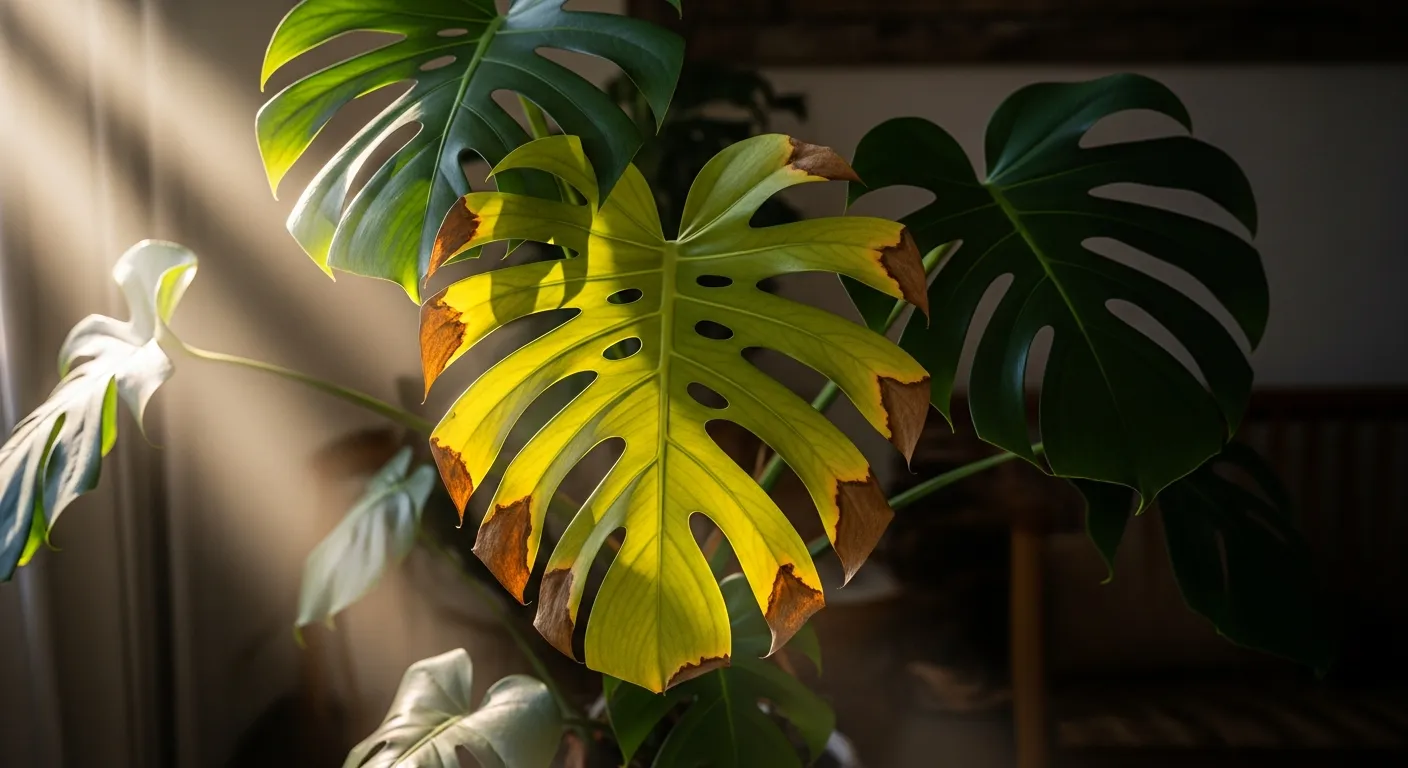
Sun scorch produces large, dry, bleached-out patches often yellowish or pale brown that appear on the portions of the leaf most directly facing the light. The damage tends to be diffuse and irregular, not concentrated at the edges. If your Monstera sits close to a south or west-facing window, or if it was recently moved somewhere brighter, sun exposure is your first suspect.
Fertilizer and mineral salt burn looks completely different: it shows up as crispy, brown tips and edges, often with a faint yellow band separating the dead tissue from the healthy green. The pattern is consistent across multiple leaves, not random. Cold damage presents differently again the affected tissue turns dark, almost black, and feels soft and waterlogged rather than dry and papery.
The Difference Between a Burnt Leaf and a Yellowing One
It’s worth separating burnt leaves from yellowing leaves because they usually point to different problems entirely. A burn whether from sun, chemicals, or cold kills the leaf tissue outright. The damage is dry and permanent, and it tends to happen relatively quickly in response to a specific stressor.
Yellowing is slower and usually systemic, spreading from older leaves upward. Overwatering is the most common cause, followed by root rot, nutrient deficiency, and natural leaf senescence at the end of a leaf’s lifespan. If your lowest leaves are gradually going yellow from the bottom of the plant up, that’s a watering or root issue not a burn and the approach to fixing it is completely different.
The Four Most Common Causes of Scorched Monstera Leaves
Too Much Direct Sun
Monsteras are rainforest understory plants in the wild. They grow beneath a canopy, receiving bright but filtered light not direct sun streaming through glass for hours. The frustrating thing about sunburn is that it doesn’t always happen immediately. A plant can tolerate a window position for weeks before the cumulative exposure starts showing up as bleached patches, which is why people often don’t connect the damage to the light source.
Glass also intensifies UV radiation compared to outdoor shade, so a spot that feels pleasantly bright to you can be genuinely harsh for the plant. If your Monstera is within about a meter of a south or west-facing window and you’re seeing pale, dry, washed-out patches particularly on leaves that unfurled recently move it back or add a sheer curtain. Bright, indirect light is the target: enough that you could comfortably read a book without turning on a lamp, but no direct sun rays hitting the leaves.
Fertilizer Salt Buildup
This is the one I underestimated for years. When you fertilize regularly, salts from the fertilizer accumulate in the potting medium over time. They don’t flush out on their own. As the concentration builds up, those salts draw moisture out of the roots essentially a chemical burn that works from the ground up, showing as crispy brown edges and tips on the foliage.
Monstera plant care with burnt leaves caused by fertilizer is extremely common in the growing season, when people get enthusiastic about feeding. I’ve seen it most often in plants that get fed every two weeks at full label strength which is almost always too much. The fix is to flush the soil thoroughly (more on that below) and dial back your feeding schedule. A balanced liquid fertilizer at half-strength every four to six weeks during spring and summer is genuinely enough for most Monsteras.
Water Quality and Mineral Accumulation
Even if you haven’t been overfeeding, hard tap water does the same thing more slowly. Chlorine, fluoride, and dissolved minerals in municipal water build up in the soil with every watering and gradually burn the root tips and leaf edges. The symptoms look almost identical to fertilizer burn: brown, crispy tips that slowly expand inward.
Leaving tap water in an open container overnight helps with chlorine it off-gasses reasonably well but does nothing for fluoride or other minerals. If your tap water is particularly hard, switching to filtered water or collected rainwater makes a real, noticeable difference over a few months. Alternatively, flushing the soil every two to three months with a generous amount of water (enough to run through the pot several times) keeps mineral accumulation from reaching damaging levels.
Dry Air Stripping Moisture from the Leaf Edges
Low humidity is one of the less obvious causes of Monstera leaf burn, and it’s particularly common in winter when heating systems are running. What happens is fairly straightforward: when the air is very dry, the plant loses moisture through its leaves faster than it can absorb it through the roots. The edges and tips which are the furthest from the plant’s water supply desiccate first and die back.
The resulting damage looks similar to mineral burn: brown, crispy margins on otherwise healthy-looking leaves. The key diagnostic clue is timing if it’s getting worse through winter and improving in summer, humidity is very likely a factor. Monsteras are happiest somewhere between 50–70% relative humidity. A basic hygrometer (mine is an AcuRite, about ten dollars) tells you exactly what you’re working with, which saves a lot of guesswork.
How to Actually Fix the Damage
Pruning: When to Cut and How Much
The burned tissue will not recover or turn green. That’s not a reason for despair it’s just biology. Dead cells don’t repair themselves, and keeping heavily damaged leaves on the plant doesn’t serve the Monstera any useful purpose. The question is how much to remove.
For minor tip or edge burn covering less than a quarter of the leaf, you can simply trim the dead portion with clean, sharp scissors and follow the natural shape of the leaf as closely as possible. The result looks better than a blunt straight cut and is less visually jarring. For leaves that are more than half dead, removing the whole leaf is usually the better call trace the petiole back to the main stem and cut cleanly about two centimeters from the stem. This is not dramatic surgery; Monsteras replace damaged leaves readily when the underlying conditions are right.
One thing I’ve learned from doing this with my own collection: sterilize your scissors between plants, especially if any of them have shown signs of fungal or bacterial issues. A quick wipe with isopropyl alcohol takes two seconds and prevents cross-contamination.
Flushing the Soil After Salt Damage
If fertilizer or mineral buildup caused your Monstera’s burnt leaves, the most important step is clearing those accumulated salts from the potting medium before you do anything else. Pruning the leaves without addressing the root cause just means more leaves will burn.
Take the plant to a sink or shower and water it slowly and continuously for several minutes, letting the water run freely through the drainage holes. You want to use roughly three to four times the volume of the pot in water this is enough to dissolve and carry away the accumulated salts. Let the pot drain completely, then don’t water again until the top few centimeters of soil are dry. Hold off on fertilizing for at least four to six weeks afterward to let the root system recover.
Adjusting the Environment Going Forward
Once you’ve dealt with the immediate damage, the goal is eliminating the stressor so it doesn’t happen again. For sun scorch: move the plant back from the window or add a diffusing curtain. For humidity issues: group plants together, place a pebble tray with water beneath the pot, or run a small humidifier in the room during dry months. For watering quality: switch to filtered or standing water. These aren’t complicated changes, but they need to be consistent to actually work.
Building a Care Routine That Prevents This From Repeating
Getting the Soil Mix Right
Soil that stays too wet is one of the most reliable paths to recurring leaf problems in Monsteras not just root rot, but the stress responses that show up as brown edges and tips. A dense, standard potting mix that holds moisture for a long time is the wrong medium for this plant. What you want is something chunky, well-aerated, and fast-draining.
My current mix is one part quality potting soil, one part perlite, and one part orchid bark. It drains quickly, doesn’t compact, and keeps roots oxygenated between waterings. The plant I’m most proud of a Monstera deliciosa that’s now over a meter wide has been in a variation of this mix for three years and has never had a root rot issue.
Watering by Feel, Not by Calendar
A fixed watering schedule is one of the most common mistakes with Monsteras, and it leads directly to either overwatering or chronic underwatering depending on the season. The plant’s water needs change significantly with light levels, temperature, and whether it’s actively pushing out new growth. A schedule that works perfectly in July will be completely wrong in January.
The check is simple: push a finger about five centimeters into the soil. Dry at that depth means it’s time to water; still moist means wait another few days. When you do water, go thoroughly water until it runs freely from the drainage holes, then let the pot drain completely. Never let it sit in standing water. For a deeper look at getting this balance right, the guide on how often to water a Monstera deliciosa covers the seasonal adjustments in detail.
Fertilizing With Restraint
Less is genuinely more here. Half-strength balanced liquid fertilizer every four to six weeks during the growing season is sufficient for vigorous growth. I use Dyna-Gro Grow during spring and summer it’s well-balanced, gentle on roots at half-strength, and I’ve had consistently good results with it across multiple aroids. In autumn and winter, I stop fertilizing almost entirely, since the plant isn’t actively growing and the salts just accumulate without being used.
Frequently Asked Questions
Can burnt leaves ever recover and turn green again?
No once the tissue is dead, it stays dead. The cells that were scorched or dried out cannot regenerate. What you can do is remove the damaged portions (or the whole leaf if it’s heavily affected) and focus on giving the plant the conditions it needs to push out new, healthy growth. Monsteras replace leaves surprisingly quickly when they’re happy a well-cared-for plant in the growing season can put out a new leaf every three to four weeks.
What do brown spots in the middle of the leaf mean?
Distinct spots in the interior of the leaf rather than edge and tip browning usually point to a fungal or bacterial issue rather than sun or salt damage. This type of damage typically results from water sitting on the leaves for extended periods, poor air circulation, or consistently waterlogged soil. Check your watering routine first: ensure the soil is drying adequately between waterings and that there’s reasonable airflow around the plant.
Will the plant recover after I remove all the damaged leaves?
Yes, and often faster than you’d expect. Monsteras are resilient, and as long as the root system is healthy, removing damaged foliage actually helps recovery by letting the plant redirect energy toward new growth. After a major prune, give the plant consistent care appropriate light, correct watering cadence, no fertilizer for a month and be patient. New leaves emerging after leaf removal are usually a good sign that the underlying stressor has been resolved.
The One Thing Worth Doing Today
If your Monstera has burnt leaves right now, skip the guesswork and start by actually looking at the damage pattern where it is on the leaf, whether it’s dry or soft, whether it’s on one leaf or many. That visual diagnosis takes two minutes and tells you more than anything else. Get that right first, and the fix usually becomes obvious. Brown edges on multiple leaves after a period of regular feeding? Flush the soil today. Bleached patches on a plant near a sunny window? Move it back a meter. The plant is telling you what it needs it just requires a little translation.
