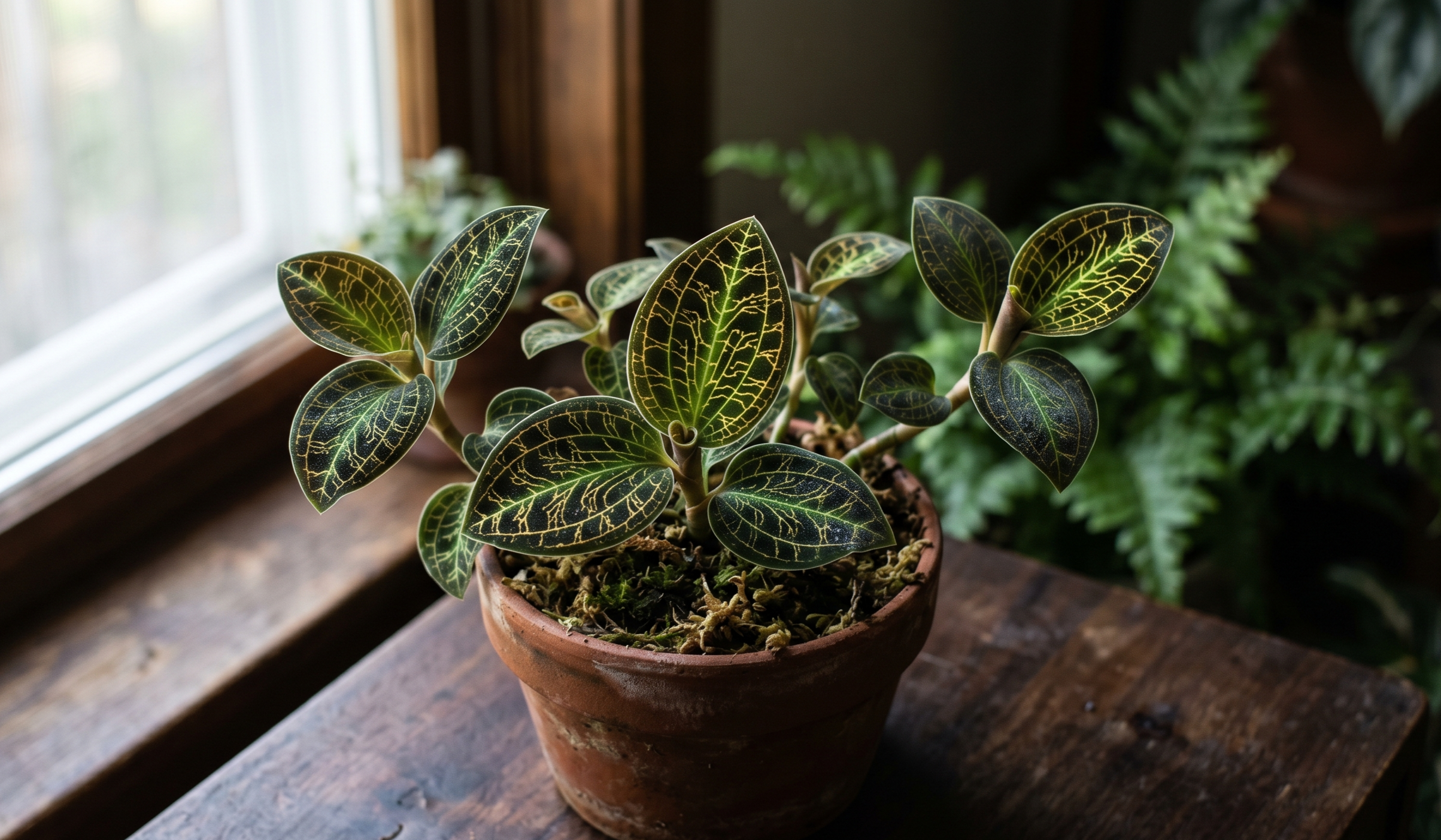
Macodes Petola Care: 7 Steps to Thriving Lightning Jewel Orchids
My first macodes petola died in about six weeks. It was March 2021, the plant came from a specialty seller in Jakarta, and I killed it by putting it three feet from a south-facing window. The leaves those extraordinary gold-veined leaves turned crispy at the edges within days. I thought I was doing it a favor with “bright indirect light.” I wasn’t. Macodes petola is not a typical orchid, and treating it like one is the fastest way to lose it.
- What Makes Macodes Petola Different From Other Orchids
- Light, Humidity, and Temperature: Getting the Environment Right
- Watering and Soil: The Two Things People Get Most Wrong
- How to Propagate Macodes Petola (Step by Step)
- Quick Care Reference
- The One Thing to Do Right Now
What Makes Macodes Petola Different From Other Orchids
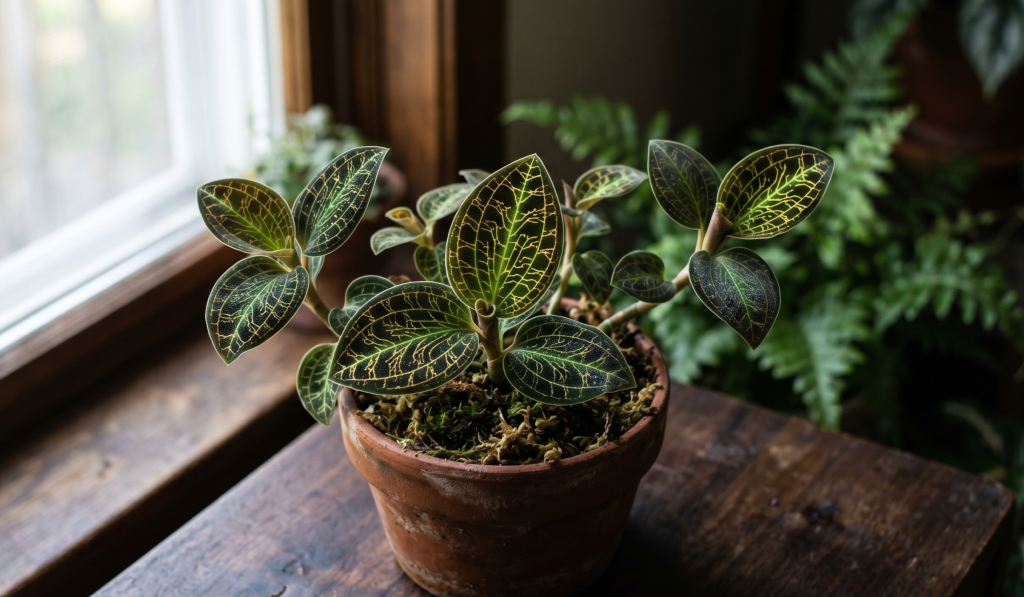
Most orchids are grown for their flowers. Macodes petola is grown for its leaves and not just any leaves. The dark green surface is threaded with a grid of luminous gold veins that genuinely look like lightning frozen in plant tissue. That’s the whole point. The blooms, when they come, are small and unremarkable.
This plant belongs to a group called jewel orchids, which are terrestrial rather than epiphytic. That means it grows in the forest floor, not on trees. It comes from the humid understory of Southeast Asian rainforests Borneo, Sumatra, the Philippines. So it’s adapted to deep shade, constant moisture, and air that’s almost always above 70% humidity.
That background matters because it explains every care decision. This isn’t a plant that forgives dry spells or bright light or cold drafts. If you’ve been keeping regular orchids successfully, reset your expectations. Jewel orchid care in general follows a completely different logic than Phalaenopsis or Cattleya culture.
Macodes petola doesn’t want orchid conditions it wants terrarium conditions. Thinking of it as a high-humidity fern with extraordinary leaves will serve you better than thinking of it as an orchid.
Light, Humidity, and Temperature: Getting the Environment Right
Here’s the counterintuitive part: macodes petola needs less light than most houseplants you own. We’re talking 50–200 foot-candles, which is the level of light you’d find several feet back from a north-facing window, or under a loose canopy of other plants. Direct sun, even briefly, scorches the leaves. Too much indirect light fades the vein color.
Humidity is non-negotiable. Below 60%, this plant starts struggling. Below 50%, you’re watching it die slowly. Most people who keep macodes petola successfully do one of two things: they put it in a sealed or semi-sealed terrarium, or they run a dedicated humidifier right next to it. Pebble trays and misting won’t cut it misting can actually cause fungal spots on the leaves.
Temperature should stay between 65°F and 80°F (18–27°C). It can handle a brief dip but doesn’t tolerate cold drafts from air conditioning vents or windows in winter. Keep it away from both this is a plant that needs stable, warm, humid air around it at all times.
- North window placement: Set it 1–2 feet from a north-facing window in summer. In winter, it may need a grow light on a 12-hour timer I use a low-intensity LED panel set to about 30% brightness.
- Terrarium setup: A closed or lightly vented terrarium is genuinely the best long-term home for this plant. It solves the humidity problem permanently and keeps temperature stable.
- Grow light alternative: If a terrarium isn’t possible, a low-output grow light 18–24 inches above the plant, running 10–12 hours a day, works well. Don’t use high-output LEDs at close range.
Watering and Soil: The Two Things People Get Most Wrong
The biggest watering mistake is using the same logic as with other orchids that is, letting it nearly dry out between waterings. Macodes petola wants consistently moist substrate, but not waterlogged. Think “damp sponge,” not “wet sponge.” The roots rot fast in standing water, but the plant wilts just as fast when the substrate dries out completely.
I water mine every 4–5 days in summer, every 7–8 days in winter. But I’m not following a schedule blindly I’m checking the substrate with my finger each time. If it still feels slightly moist an inch down, I wait. Use room-temperature water, and if your tap water is heavily chlorinated, let it sit overnight or use filtered water. This plant is sensitive to fluoride and salt buildup.
Soil is where most commercial potting mixes fail completely. Standard potting soil stays too wet for too long and compacts around the roots. What macodes petola needs is something that holds moisture but drains freely and stays airy. My go-to mix is two parts fine orchid bark, one part perlite, and one part sphagnum moss. Some growers use straight sphagnum that works too, especially in terrariums. What doesn’t work: cactus mix (too dry), regular potting soil alone (too dense), or chunky orchid bark alone (dries too fast).
Fertilize lightly quarter-strength balanced liquid fertilizer once a month during the growing season is enough. I’ve seen people over-fertilize this plant chasing faster growth, and the result is salt damage on the roots. More fertilizer doesn’t make the veins brighter; that’s entirely genetic.
How to Propagate Macodes Petola (Step by Step)
The good news: macodes petola is genuinely easy to propagate once you know the method. The bad news: it’s not what most orchid growers expect. You’re not dividing pseudobulbs or collecting keikis. You’re taking stem cuttings.
As the plant grows, the lower stem becomes bare leaves drop from the bottom as new growth appears at the top. That bare stem section is your propagation material. Here’s the method I use:
- Cut the stem: Use a sterile blade to cut the stem into sections, each with at least one node. You don’t need leaves on the cutting nodes are what matter.
- Let it callous briefly: Give the cut end 30–60 minutes to dry slightly. This reduces the chance of rot at the cut site.
- Place on moist sphagnum: Lay the cutting horizontally on damp sphagnum moss, or press it lightly into the surface. Don’t bury it. The node needs contact with moisture, not submersion.
- Cover and wait: Put it in a clear container or bag to maintain high humidity 80%+ is ideal for rooting. Place it somewhere warm with very low light.
- Check for roots in 3–6 weeks: Small roots and a new growth point will emerge from the node. Once roots are 1–2 cm long, pot normally.
For a more detailed walkthrough of the cutting method, this guide on growing jewel orchid cuttings covers the process step by step with troubleshooting notes.
The Missouri Botanical Garden’s plant profile for Macodes petola confirms it as a terrestrial species native to tropical Asia, which is useful context for understanding why the propagation environment needs to be so warm and humid. Also worth checking is the RHS plant database for cultivation notes aligned with temperate climate growing.
Quick Care Reference
| Care Factor | What It Needs | Common Mistake |
|---|---|---|
| Light | Very low indirect light (50–200 fc); north window or shaded grow light | Too much light fades veins, scorches leaves |
| Watering | Consistently moist substrate; every 4–8 days depending on season | Letting it dry out completely, or keeping it waterlogged |
| Humidity | 60–90%; terrarium or dedicated humidifier | Relying on pebble trays or occasional misting |
| Temperature | 65–80°F (18–27°C); no cold drafts | Placement near AC vents or cold windows in winter |
| Soil | Orchid bark + perlite + sphagnum; well-draining but moisture-retentive | Regular potting soil, which compacts and holds too much water |
| Fertilizer | Quarter-strength balanced liquid, monthly in growing season | Over-fertilizing, which causes salt burn on roots |
| Propagation | Stem cuttings on moist sphagnum, high humidity, 3–6 weeks to root | Burying cuttings in soil, which causes rot |
Common Problems and What They Mean
- Crispy leaf edges: Almost always a humidity or light problem check both before assuming it’s watering. Move it away from any light source and get humidity above 60%.
- Yellow leaves on the lower stem: This is natural senescence as the plant grows upward. It’s not a sign of disease just the plant aging out its older leaves.
- Mushy stem at the base: Root rot, usually from waterlogged soil. Unpot immediately, trim any black or mushy roots, let the healthy stem dry briefly, and repot in fresh airy mix.
- Faded, washed-out vein color: Too much light. Move it to a darker spot and the new growth should come in with stronger color.
- No new growth for months: Check temperature if it’s below 65°F consistently, growth stalls. Also check if the roots are completely pot-bound; macodes petola actually prefers slightly snug pots but not completely root-locked.
The One Thing to Do Right Now
If you already own a macodes petola and it’s sitting on a windowsill or shelf, move it today. Put it somewhere with genuinely low light and get a humidity meter not a guess, an actual meter and put it next to the plant. If humidity is below 60%, either move the plant into a covered container or get a small humidifier running within a foot of it. That single change fixes more macodes petola problems than anything else.
And if you’re thinking about buying one: get it, but go straight to a terrarium setup. Don’t experiment with open-air growing first. The terrarium isn’t a crutch it’s actually how this plant is meant to live.
