Orchid Care After Flowers Fall Off: 6 Proven Steps to Get Them Blooming Again
My first orchid dropped every single bloom within a week of me bringing it home and I did what most people do: panicked, then did nothing. I left it on the same windowsill, watered it the same way, and waited. Eight months later, still no flowers. Turns out, orchid care after flowers fall off is where most people completely lose the plot, and the plant just sits there, alive but going nowhere.
- Why Orchid Flowers Fall Off (And What It Actually Means)
- The First Thing You Should Do After Blooms Drop
- Light, Water, and Feeding During the Rest Phase
- How to Trigger Reblooming The Step Most People Skip
- Orchid Post-Bloom Care: Quick Reference
- The One Thing to Do Right Now
Why Orchid Flowers Fall Off (And What It Actually Means)
Here’s the thing people don’t realize: flowers falling off a Phalaenopsis orchid is completely normal. It’s not a sign you failed. The bloom cycle on most moth orchids lasts anywhere from 8 to 16 weeks, and then the plant sheds its flowers to conserve energy. That’s just biology.
But sometimes the drop happens faster than it should. If all your flowers fell off within the first two weeks, stress is usually the culprit a sudden temperature change, a draft from an AC vent, or even just the shock of moving from the nursery to your home. Orchids are sensitive to ethylene gas too, so keeping them next to a fruit bowl can trigger early petal drop.
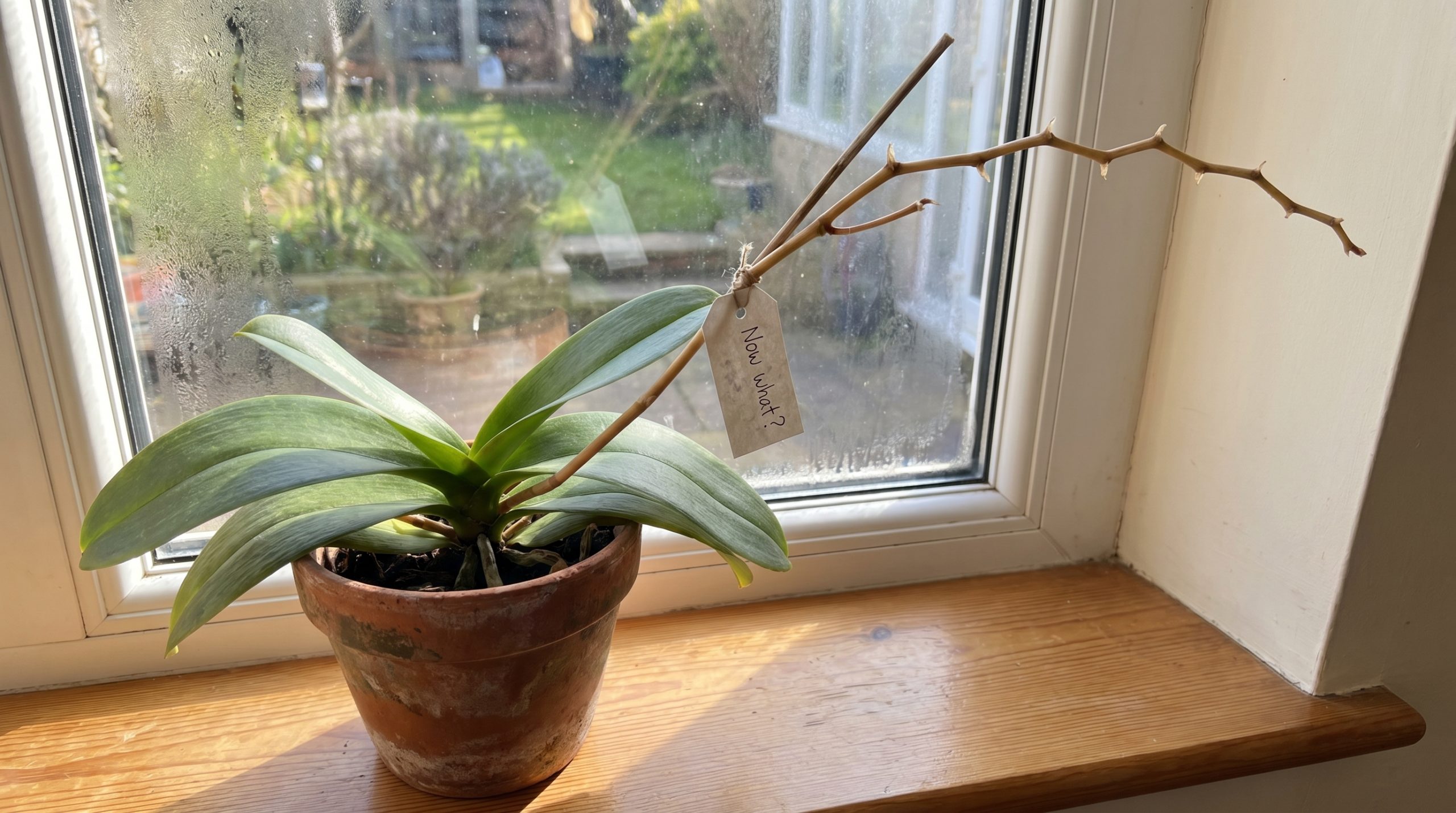
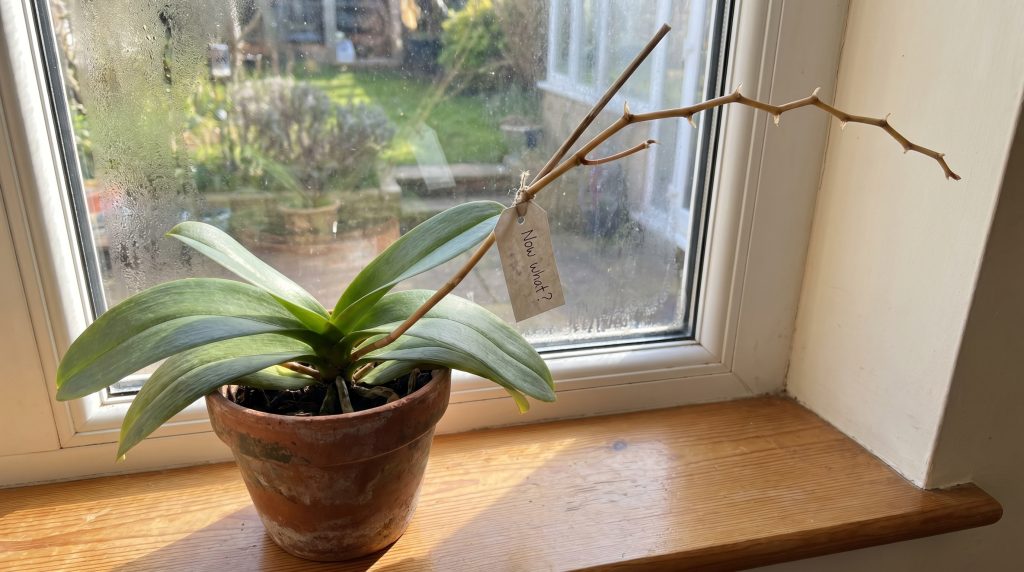
The bare spike left behind isn’t dead wood. It’s actually one of the most important things to understand about post-bloom care, and what you do with it will determine whether you get flowers again in three months or never.
The First Thing You Should Do After Blooms Drop
Look at the flower spike that long green or brownish stem the blooms were attached to. If it’s still green and firm, don’t cut it all the way down. That spike can produce a secondary bloom from a node lower on the stem. I had a Phal called “Violet” (yes, I name my orchids) rebloom twice from the same spike over six months just by leaving it intact and trimming above a healthy node.
Here’s the general rule I follow:
- Spike is green and healthy: Trim it back to just above the lowest visible node that little brown bump on the stem. New flower buds can emerge from there within 8–12 weeks if conditions are right.
- Spike is yellow or brown all the way down: Cut it off at the base, about an inch above the leaves. The plant is telling you it’s done with that spike and needs to redirect energy to root and leaf growth.
- Spike has already branched once: Let it be. Branched spikes are often still actively producing, and cutting them early is one of the most common mistakes I see.
Use sterile scissors or a clean blade when you cut. Orchids are surprisingly vulnerable to bacterial infections through cut stems, and I’ve lost a few to rot that started exactly that way.
The spike is not just leftover stem it’s the orchid’s next opportunity. Whether you cut it or keep it depends entirely on what the plant is telling you, not what a generic care card says.
For a deeper look at what happens during and after the bloom cycle, this guide on caring for orchids after they bloom covers some of the nuances I don’t have room for here.
Light, Water, and Feeding During the Rest Phase
Once the flowers are gone, the orchid enters what’s loosely called a rest phase. It’s not dormant exactly roots are still active, leaves are still photosynthesizing but the plant isn’t putting energy into blooms. Your job is to keep it healthy without pushing it too hard.
Light: Keep it in bright, indirect light. East-facing windows work really well for Phalaenopsis. Direct afternoon sun will scorch the leaves, and too little light means you’ll wait forever for reblooming. I’ve found that the RHS orchid growing guide has one of the clearest breakdowns of light requirements by species worth bookmarking.
Watering: This is where most people go wrong in one of two directions. Either they forget about the plant because it’s “not doing anything” and let it dry out completely, or they overwater out of guilt. During the rest phase, water every 7–10 days for most indoor conditions. Stick your finger an inch into the bark mix if it feels dry, water thoroughly and let it drain completely. Never let roots sit in standing water.
Feeding: I use a balanced 20-20-20 fertilizer at quarter strength every other watering during the rest phase. Some growers stop feeding entirely I think that’s a mistake. The plant still needs nutrients for root development and leaf production, which directly supports the next bloom cycle.
How to Trigger Reblooming The Step Most People Skip
This is the part that actually makes orchids rebloom, and almost nobody mentions it on care tags. Phalaenopsis orchids need a temperature drop to initiate a new flower spike. Specifically, they need nighttime temperatures around 55–60°F (13–16°C) for about four weeks.
In practice, this means moving the plant near a window in early fall, where it’ll feel the cooler nights through the glass. Don’t let it freeze that’s a hard no but that 10–15°F difference between day and night is the trigger. NC State Extension’s Phalaenopsis profile confirms this temperature differential as the key driver of spike initiation.
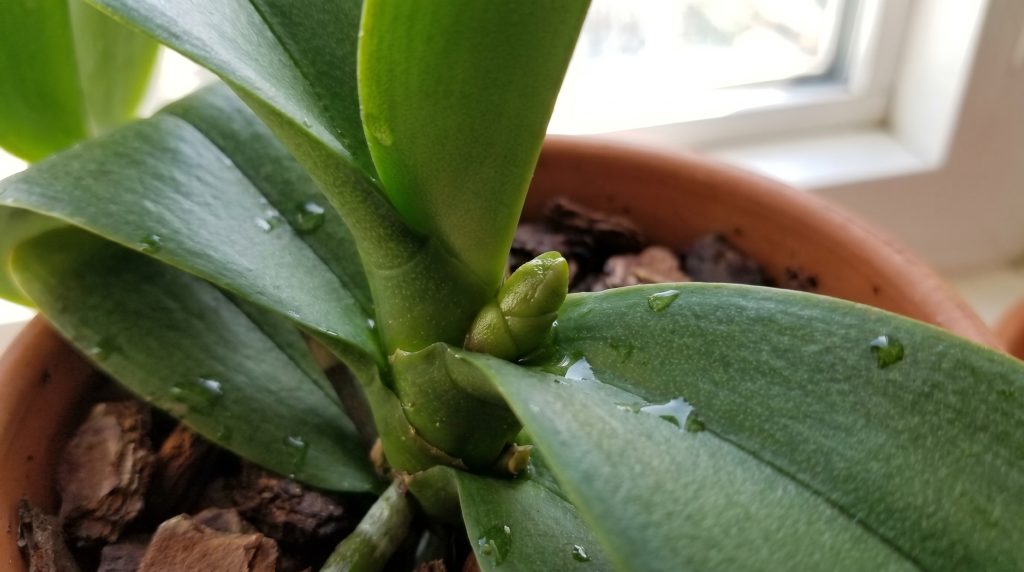
Once you spot a new spike emerging from between the lower leaves it looks like a tiny green nub pointing upward move the plant back to its regular spot and stop messing with the temperature. New spikes are fragile and any major change at that stage can cause bud blast, where the buds form but drop before opening.
Also worth mentioning: if you’re dealing with a Phalaenopsis that has babies (called keikis) growing off the spike, that’s a whole separate situation. Check out this guide on caring for baby orchids keikis can be detached and grown as separate plants once they have their own roots.
Orchid Post-Bloom Care: Quick Reference
Here’s a side-by-side of what to do versus the most common mistakes I see:
| Situation | Right Move | Common Mistake |
|---|---|---|
| Spike is still green after blooms drop | Trim above lowest node, leave in place | Cutting the entire spike off at the base |
| Spike turns yellow or brown | Cut at the base, 1 inch above leaves | Leaving dead spike on, risking rot |
| Watering during rest phase | Every 7–10 days, let it drain fully | Overwatering because the plant “looks sad” |
| Triggering new spike | Expose to cooler nights (55–60°F) for 4 weeks | Keeping plant in the same warm spot year-round |
| Fertilizing after bloom | Balanced feed at quarter strength, every other watering | Stopping fertilizer entirely during rest phase |
| New spike spotted | Stop temperature manipulation, leave plant alone | Moving plant around, causing bud blast |
One more thing that’s worth knowing: repotting. If your orchid hasn’t been repotted in two or more years, the bark mix may be breaking down and retaining too much moisture. The rest phase right after bloom is actually the best time to repot. Fresh bark improves drainage and gives roots room to grow before the next cycle.
The One Thing to Do Right Now
Go look at your orchid’s spike today. Is it still green? Then don’t cut it to the base trim just above the lowest node and give it a chance. That single decision is probably the difference between seeing new flowers in three months versus starting over from scratch.
If the spike is already brown and dead, cut it clean, move the plant somewhere it’ll get cooler nights in the next few weeks, and start a light feeding routine. Proper orchid care after flowers fall off isn’t complicated, but it does require you to actually pay attention to what the plant looks like not just follow a generic schedule blindly.
Do that one check today. The plant will tell you what it needs.
