Fishbone Cactus Care: What Most Guides Get Wrong About This Jungle Plant
The fishbone cactus has the word “cactus” in its name, and that single fact has probably killed more of these plants than anything else. I know because it nearly killed mine. When I first brought home a Disocactus anguliger three years ago, I treated it like a succulent gritty dry soil, infrequent watering, full sun. Within six weeks the stems were shriveling and going yellow at the base. The problem wasn’t neglect. It was the wrong mental model entirely. This plant is a tropical epiphyte from Mexican rainforests. It grows on trees, not in sand. Once I understood that, everything clicked.
What Kind of Plant You’re Actually Dealing With
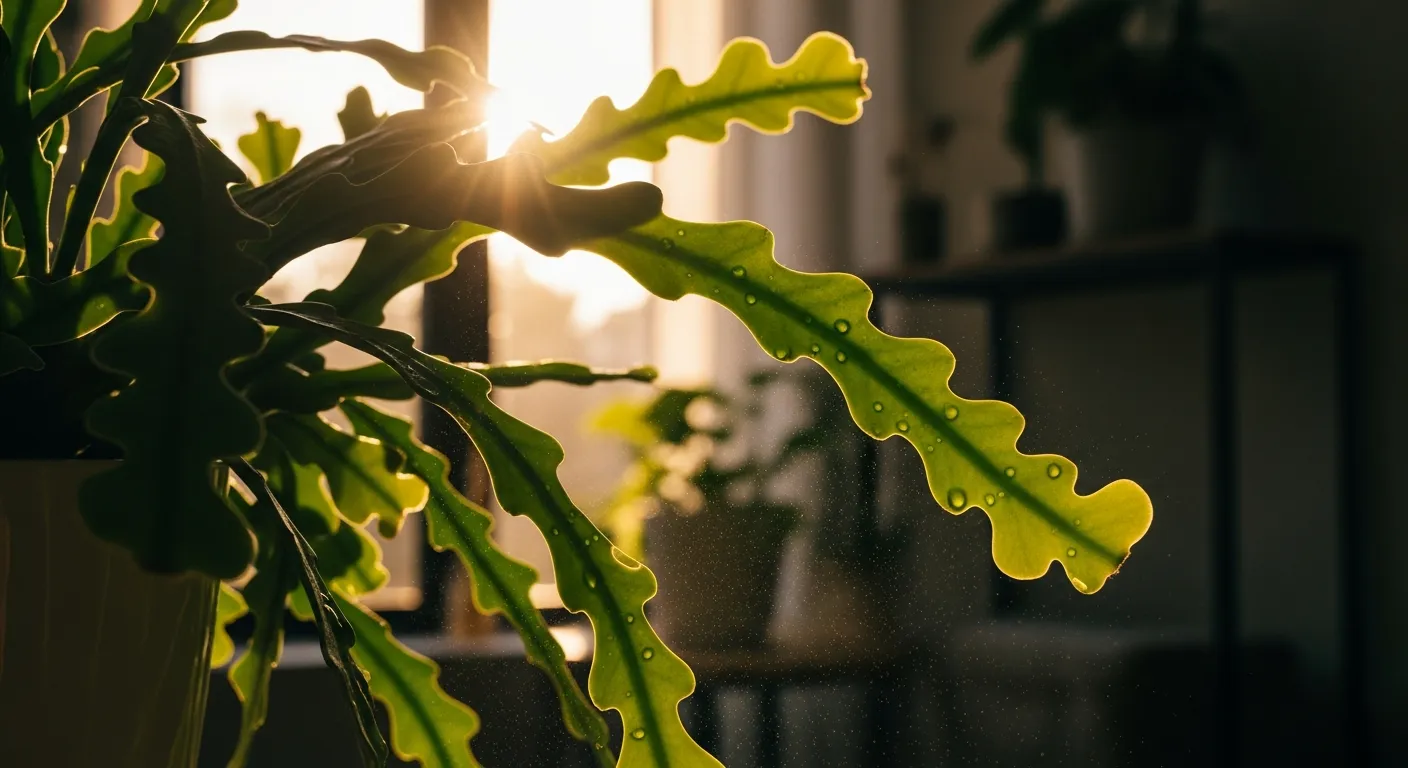
The fishbone cactus also called ric rac cactus or zig-zag cactus gets its name from those flat, notched stems that zigzag out in both directions like a fish skeleton. It’s genuinely one of the most architecturally interesting plants you can grow indoors, and it cascades beautifully from a hanging basket.
But its jungle roots (literally) are what define its care needs. In the wild, Disocactus anguliger anchors itself to tree branches in humid Mexican forests, absorbing moisture from rain and mist rather than drawing water up from the ground. Its roots need air around them. Dense, water-retentive soil is almost as harmful as no water at all. Think of it less like a cactus and more like an orchid with an unusual silhouette that mindset will serve you far better.
Light: Where Most People Place It Wrong
Bright indirect light is the standard advice, and it’s correct but “indirect” is doing a lot of heavy lifting in that sentence. Many people interpret it as “a few feet back from a north-facing window,” and that’s not enough. Your fishbone cactus wants genuinely bright conditions, like the kind of dappled, high-intensity light that filters through a forest canopy. An east-facing window with direct morning sun is close to perfect. A south- or west-facing window where the plant is shielded from harsh afternoon rays by a sheer curtain works beautifully too.
The counterintuitive part: a little direct morning sun won’t hurt this plant at all. I have mine hanging in an east window where it catches about two hours of direct sun each morning, and it’s produced more new growth than when I had it in a “safe” bright spot further back in the room. What it genuinely cannot tolerate is harsh midday or afternoon sun that will bleach or redden the stems.
Signs your plant needs more light: new stems emerge thin, pale, and stretched-looking (a process called etiolation). Signs of too much direct sun: stems turning yellow, red, or developing dry, papery patches.
Watering a Plant That’s Neither Thirsty Nor Waterlogged
This is where fishbone cactus care gets genuinely nuanced. Because of its epiphytic nature, it needs a watering rhythm that’s different from both regular houseplants and true desert cacti. You’re not trying to keep it consistently moist, and you’re not trying to run it bone-dry for weeks at a time.
The rule I follow: water thoroughly when the top 1–2 inches of soil are dry, and ensure every drop drains freely from the pot. No sitting water in the saucer. The goal is a cycle of wet, then adequately dry not wet, then damp forever.
In practice, during summer I’m watering mine about once a week. In winter, that drops to every two to three weeks. Pot weight is actually a more reliable indicator than a soil check pick up the pot right after watering so you know what “heavy and wet” feels like, then water again when it feels noticeably light.
The one mistake that does the most damage: a pot without drainage holes. No amount of careful watering saves a fishbone cactus in a pot that traps water at the bottom. Use a pot with drainage, always.
Soil Mix: Why the Bag of Cactus Mix Isn’t the Answer
Standard cactus and succulent mixes are formulated for desert plants they drain quickly but they’re often still too dense for an epiphyte’s roots. Your fishbone cactus needs something even chunkier and more aerated.
The mix I’ve settled on after some trial and error: roughly one part regular indoor potting soil, one part perlite, and one part orchid bark. The orchid bark is the key ingredient most guides skip. It creates air pockets that mimic the loose, bark-covered surface of a tree branch exactly what this plant’s roots evolved to grow in. I use Espoma Organic Potting Mix as my base because it’s not too dense and doesn’t compact badly over time.
Repotting: do it every two to three years, or when you see roots circling the pot or pushing out the drainage holes. Go up only one pot size at a time too large a pot holds more moisture than the roots can use, increasing rot risk. Spring is the ideal window for repotting.
Temperature, Humidity, and Making Peace with Your Home Environment
The good news: fishbone cacti are far less finicky about humidity than most tropical plants. They’re comfortable in average household humidity typically 40–60% without any intervention. Mine sits in my living room with no humidifier and no pebble tray, and it’s perfectly content.
That said, if your home is very dry in winter (forced-air heating does this), the stem tips may start going brown and crispy. A small humidifier nearby, or grouping this plant with a few others, usually solves it. I’d skip misting it provides a momentary humidity bump but leaves water sitting on the flat stems, which can encourage fungal spots if air circulation is poor.
Temperature-wise, keep it between 60–80°F (15–27°C) and away from cold drafts, air conditioning vents, and windowpanes that drop below 50°F in winter. Anything below 50°F risks chilling damage to those flat stems.
Feeding Without Overdoing It
During the active growing season roughly March through September feed your fishbone cactus with a balanced liquid fertilizer at half the recommended dose, every four to six weeks. I use a diluted 10-10-10 liquid fertilizer and have had good results, though any balanced formula works. Half-strength matters: these plants are used to lean conditions in the wild, and heavy feeding tends to produce soft, weak growth.
Stop fertilizing entirely in fall and winter. The plant slows down significantly, and feeding it during dormancy can push leafy growth at the expense of the flower buds it’s quietly preparing.
Getting It to Bloom The Part Nobody Tells You
The fishbone cactus produces some of the most extraordinary flowers of any houseplant: large, fragrant, orchid-like blooms that open at night and last only a day or two. Getting them requires understanding that blooms don’t happen randomly they’re triggered by specific conditions you have to create deliberately.
Why Your Plant May Never Flower Without a Rest Period
The trigger is a period of cooler temperatures and reduced water in late fall and winter. From around October through January, move your plant to a cooler spot ideally 50–60°F (10–15°C). An unheated spare room or a cool hallway works well. At the same time, cut back watering drastically: once every four to six weeks is sufficient. No fertilizer during this period at all.
This mimics the plant’s natural dry-season experience and signals it to shift energy from stem growth to flower bud development. When you bring it back into warmth in late winter and gradually resume normal watering, those buds appear along the margins of mature stems. The first time I did this intentionally, I got seven buds on a single stem an embarrassingly exciting evening.
One More Thing: Age Matters
A young plant needs to reach maturity before it’ll flower, typically two to three years. If your plant is still in its first or second year, the rest period will still benefit it but don’t be discouraged if buds don’t appear yet. Keep the care consistent and the flowering will come.
Troubleshooting: Reading What the Stems Are Telling You
The fishbone cactus is actually quite communicative once you know the signs. Here’s what the most common symptoms mean:
- Yellow stems: Overwatering is the most likely cause check that the soil isn’t staying wet for too long. Less commonly, it can indicate a nutrient deficiency if you haven’t fertilized in over a year during growing season.
- Limp, wrinkled stems: The plant is genuinely thirsty. Give it a thorough deep watering and it should plump back up within a day or two. This often happens after a long dry winter.
- Mushy base with an unpleasant smell: Root rot from chronic overwatering. Remove the plant from its pot, cut away any black or soft roots with clean scissors, and repot in fresh dry mix. Catch it early enough and the plant can recover fully.
- Thin, pale, elongated new growth: The plant isn’t getting enough light. Move it somewhere significantly brighter the difference between adequate and insufficient light is often more dramatic than people expect.
- Brown, crispy stem tips: Usually low humidity or inconsistent watering. Check both before assuming the worst.
Propagation: Free Plants From Cuttings
Propagating a fishbone cactus is one of the easier wins in plant parenting. Take a healthy stem cutting of four to six inches, let the cut end sit open to the air for 24–48 hours until it forms a dry callous, then place it in a small pot of lightly moist, well-draining mix. Keep it in warm, bright indirect light and resist the urge to water too frequently just enough to keep the mix barely damp.
Roots typically develop within three to four weeks. A gentle tug on the cutting that meets resistance is a good sign roots have formed. From there, treat it like a mature plant and let it grow on. Cuttings make excellent gifts, and sharing them is genuinely one of the better things about keeping this plant.
A Quick Note on Toxicity and Aerial Roots
Good news for pet owners: the fishbone cactus is considered non-toxic to cats and dogs. Ingesting large amounts of any plant matter can cause mild stomach upset, but this one won’t send you to the emergency vet.
If you notice thin, wiry roots growing directly from the stems, don’t panic those are aerial roots, a completely normal expression of this plant’s epiphytic heritage. In the wild they’d anchor onto bark. Indoors they’re harmless and can actually be directed into the soil if you like, where they’ll develop into regular feeding roots.
Frequently Asked Questions
How often should I water my fishbone cactus in winter?
During winter dormancy, once every two to three weeks is usually sufficient or even less if you’re keeping the plant in a cool spot to encourage blooming. Always check the soil before watering rather than going by a fixed schedule.
Can I keep my fishbone cactus outside in summer?
Yes, and many plants thrive with an outdoor summer. Place it somewhere with bright shade direct sun outdoors is far more intense than indoors and will scorch the stems quickly. Bring it back inside before temperatures drop below 50°F.
My fishbone cactus has aerial roots should I remove them?
No need to remove them. They’re a natural and healthy trait. You can tuck them into the soil if they bother you aesthetically, and the plant will use them as regular roots.
What’s the difference between a fishbone cactus and a Christmas cactus?
Both are jungle epiphytes with similar care philosophies, but they’re different species. The fishbone cactus (Disocactus anguliger) has deeply notched, flat stems and produces night-blooming flowers. The Christmas cactus has smoother, scalloped segments and blooms reliably in winter with smaller tubular flowers. If you’ve had success with one, you’ll find the other fairly intuitive to manage.
The One Thing That Makes the Biggest Difference
If there’s a single thing to take away from all of this, it’s to stop treating the fishbone cactus like a desert plant. The “cactus” label is genuinely misleading. Give it bright indirect light, fast-draining soil with real air in it, and let it dry partially between waterings. Do that consistently, and this plant will reward you with years of wild, sculptural growth and eventually, if you push it through a proper winter rest, those extraordinary night blooms that make the whole effort feel completely worth it.
