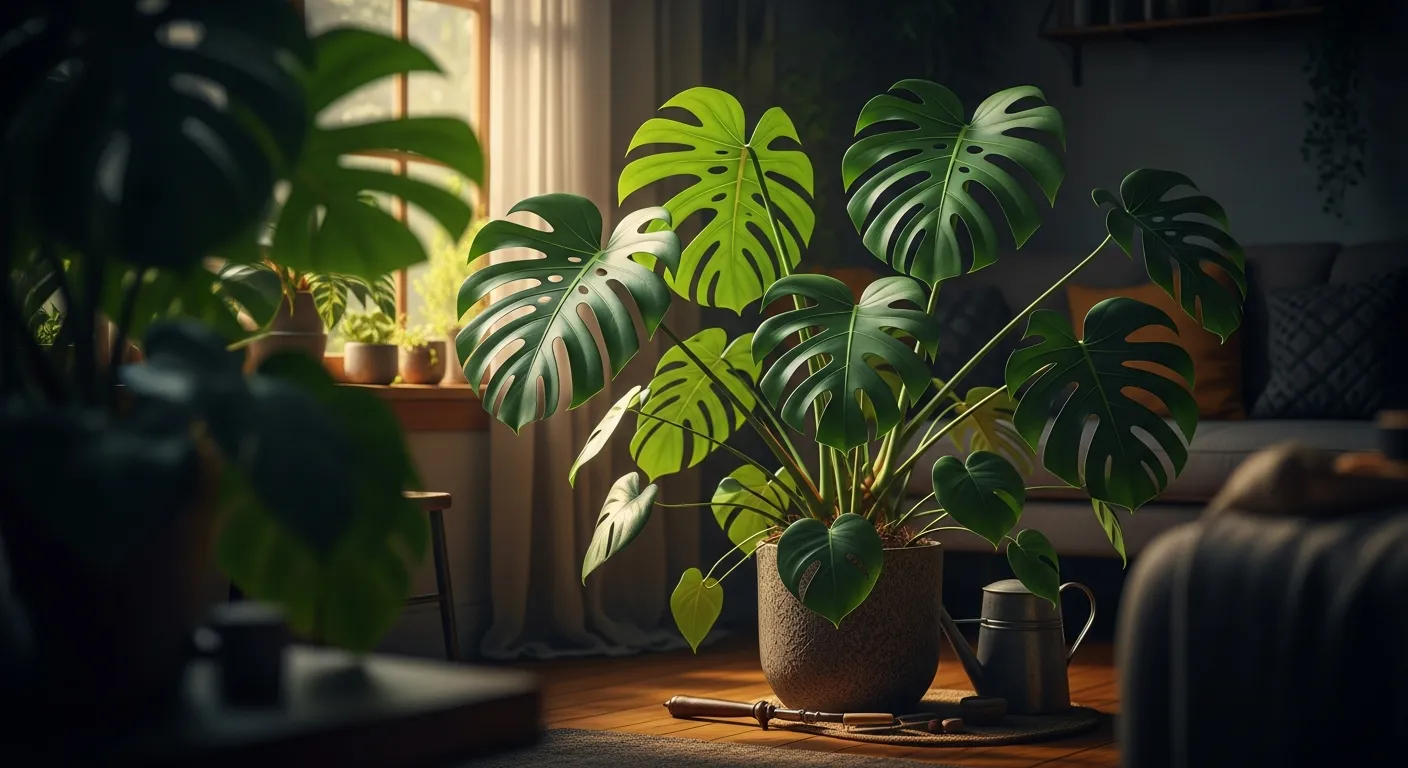
Monstera Deliciosa Care Level: Honest Take From Someone Who’s Killed One (And Now Has 12)
Most people kill their first Monstera by loving it too much. I know because I did exactly that overwatered mine into a soggy, root-rotted mess within three months of bringing it home, feeling pretty smug about my “thriving tropical plant.” The truth about caring for a Monstera deliciosa is that it’s genuinely easy to keep alive, but it rewards attentiveness in a way that some so-called beginner plants don’t. Get a few things right consistently, and this plant will pay you back with leaves so big and dramatic your non-plant friends will assume you’re growing something illegal.
So What Is the Actual Difficulty Level Here?
I’d put the Monstera deliciosa care level somewhere between easy and intermediate and I think the “totally beginner-friendly” label does new owners a quiet disservice. It sets the expectation that you can basically ignore this plant and it’ll thrive. That’s not quite right.
What “Forgiving” Actually Means for This Plant
What makes a Monstera forgiving isn’t that it tolerates neglect it’s that it tells you clearly when something’s wrong, and it does so before things get critical. A thirsty Monstera droops gently. An unhappy Pothos just silently suffers until it’s too late. That feedback loop is what makes the Monstera deliciosa so learnable for people still building their plant intuition.
Where it’s not forgiving: consistently wet soil. If you’re the type who waters plants on a fixed schedule regardless of what the soil feels like, a Monstera will eventually punish you for it. Root rot sets in quietly, and by the time you notice the leaves going yellow and limp, you’ve often already lost a significant portion of the root system. That’s the real ceiling on the beginner-friendliness of this plant.
Who This Plant Is Actually Right For
A Monstera deliciosa is ideal if you’ve successfully kept a Pothos or ZZ Plant alive and you’re ready for a plant that offers more visual drama in exchange for slightly more attention. It’s also a strong choice if you have a room with good natural light because without that, you’ll keep the plant alive but never see those iconic split leaves that make the whole thing worthwhile.
Light: The Variable That Changes Everything
Here’s something most care guides skim over: the amount of light your Monstera receives doesn’t just affect growth speed it fundamentally changes what kind of plant you end up with. In genuinely bright indirect light, you get large, fenestrated leaves with deep splits and holes. In dim light, you get small, solid, heart-shaped leaves on long leggy stems. Same species, wildly different results.
Finding the Right Spot Without a Light Meter
A bright indirect light spot means you can comfortably read a book there during the day without turning on a lamp, and there’s no direct sun hitting the leaves (which will scorch them, leaving bleached patches that don’t recover). East-facing windows are often ideal gentle morning sun, then shade. North-facing rooms are generally too dim. South or west-facing windows work well if the plant is set back a few feet from the glass or filtered through a sheer curtain.
I’ve got one of my Monsteras about four feet back from a south-facing window in my grow room, and it pushes out a new leaf every three to four weeks in summer. The one I tried in my north-facing bathroom stayed alive for a year but never developed a single split. I eventually moved it and it came back to life but that’s a year I’ll never get back.
Watering: The Single Skill That Separates Success From Failure
I use a simple method that took me too long to adopt: I push my finger two to three inches into the soil. If it feels damp at all, I walk away. Only when it feels dry at that depth do I water and then I water thoroughly, until it drains freely from the bottom holes. That’s it. No schedule. No guessing. The soil tells you.
Why Overwatering Is So Sneaky
The counterintuitive thing about overwatering is that it looks exactly like underwatering in the early stages. Yellowing leaves, wilting, slow growth these are the symptoms of both too much and too little water. The difference is in the soil: soggy and compacted means overwatered; dry and pulling away from the pot edges means thirsty. Always check before drawing conclusions.
One scenario I see constantly: someone notices their Monstera looking a bit limp, assumes it’s thirsty, waters it and actually makes the root rot worse. If you’re ever unsure, wait another day or two and check the soil again. A slightly underwatered Monstera bounces back within hours of a good drink. A root-rotted one is a much harder situation to fix.
Pot Choice Matters More Than People Think
If you’re keeping your Monstera in a pot without drainage holes, you’re making the watering equation significantly harder. There’s no reliable way to gauge how much water is accumulating at the bottom. Terracotta pots are genuinely helpful here they’re breathable, which helps the soil dry more evenly and reduces the risk of root rot. I’ve switched most of my aroids to terracotta and noticed a real difference in how the soil behaves between waterings.
Soil, Repotting, and the Roots Nobody Thinks About
Standard potting mix straight from the bag is too dense for a Monstera long-term. It holds moisture well, which sounds good but actually creates pockets of stagnant wet soil around the roots. What you want is something chunkier that drains quickly but still holds some nutrients.
A Simple Soil Mix That Actually Works
My current go-to is roughly equal parts standard potting mix, perlite, and orchid bark. The perlite improves drainage and aeration, the bark adds structure and mimics the loose, organic material these plants grow in naturally. I use FoxFarm Happy Frog as my base potting mix it has good nutrient content without being so heavy that drainage suffers. You don’t need to buy a specialist aroid mix (though those work too) this combination is easy to put together yourself and costs less.
Repot when you see roots circling the bottom of the pot or pushing through drainage holes not on a fixed schedule. When you do repot, go up just one pot size (about two inches wider in diameter). Jumping to a dramatically larger pot gives the roots too much soil volume to sit in between waterings, which ironically increases root rot risk.
Humidity, Temperature, and the Environment Question
Monsteras are tropical plants, but they’re more adaptable than most people assume. Standard indoor temperatures between 65–85°F (18–29°C) are perfectly fine. They don’t like drafts or sitting near air conditioning vents, but they’re not as sensitive to temperature variation as, say, orchids or calatheas.
Do You Actually Need to Boost Humidity?
Probably less than you’ve been told. Most homes with standard humidity levels (40–60%) are fine for a Monstera. Where humidity really matters is if your home runs very dry in winter below 30% in which case you might notice brown, crispy leaf edges. A small humidifier near your plant collection in winter is genuinely useful. Misting the leaves is better than nothing but dries out too quickly to make much real difference. Grouping plants together does help, since plants collectively transpire and raise local humidity around themselves.
Feeding Your Plant Without Overdoing It
During the active growing months roughly spring through early fall I feed my Monsteras with a balanced liquid fertilizer diluted to half-strength, about once a month. I use Dyna-Gro Foliage Pro, which is a well-balanced formula that works well for aroids generally. The key word is “diluted.” Concentrated fertilizer on roots that are even slightly dry can cause chemical burn, so I always water first and fertilize second.
In fall and winter, I stop fertilizing entirely. Growth slows significantly during shorter days, and feeding a dormant or slow plant just builds up salt residue in the soil without actually benefiting the plant. Flushing your soil with plain water two or three times a year helps clear out that buildup regardless of season.
Moss Poles, Aerial Roots, and Why Climbing Actually Matters
Here’s something genuinely counterintuitive: giving your Monstera something to climb doesn’t just make it look tidier it directly influences leaf size and fenestration. In the wild, Monstera deliciosa climbs trees to reach the forest canopy, and as it climbs, it produces progressively larger and more split leaves. Replicating that vertical growth indoors with a moss pole or coco coir pole triggers the same response.
I added moss poles to three of my Monsteras about two years ago and the difference in new leaf size was noticeable within a few growth cycles. The aerial roots will eventually attach to a damp moss pole on their own you can gently guide them initially, but don’t force them. If you want to encourage attachment, keep the moss pole lightly moist.
Reading the Distress Signals: What Each Symptom Actually Means
Once you know what to look for, a Monstera becomes surprisingly readable. Most problems have clear visual signatures that point to a specific cause.
- Yellow leaves with damp soil: Almost always overwatering or root rot. Stop watering immediately, check the roots if you can, and let the soil dry out fully before resuming your normal watering routine. If the roots look brown and mushy rather than white and firm, you may need to trim them and repot into fresh, dry mix.
- Yellow or pale leaves with dry soil: Underwatering, or possibly a nutrient deficiency if watering has been consistent. Give it a thorough drink and reassess after a week if color doesn’t improve, a half-strength feed might help.
- Brown crispy edges or tips: Low humidity or inconsistent watering the leaf cells at the margins are drying out. This damage is permanent, but new growth will come in clean once conditions improve.
- Small leaves, no splits, long leggy stems: Not enough light. The plant is stretching toward whatever light source it can find. Move it somewhere brighter and the next leaves will begin to show improvement, though existing leaves won’t change.
- Tiny webs or sticky residue on leaves: Spider mites or scale insects. Isolate the plant immediately, wipe down all leaf surfaces (top and bottom) with a cloth dampened with diluted neem oil, and repeat weekly for a month. Pests spread fast among grouped plants.
FAQ: The Questions I Get Asked Most Often
How quickly will my Monstera grow?
In good light with consistent care, expect a new leaf every four to six weeks during the growing season. In lower light or during winter, growth slows significantly sometimes pausing entirely for a few months. That’s normal, not a sign that something is wrong. I’ve had plants produce nothing from November through February, then push out four new leaves in rapid succession once spring arrived.
Is Monstera deliciosa toxic to pets?
Yes all parts of the plant contain insoluble calcium oxalate crystals, which cause immediate oral irritation, drooling, and vomiting in cats and dogs if ingested. It’s not typically fatal, but it’s unpleasant enough that the plant should be kept well out of reach of pets who like to chew on things. High shelves, hanging planters, or a room pets don’t access are your best options.
Why isn’t my Monstera developing leaf splits?
Two main reasons: insufficient light, or the plant is too young. Very young Monsteras (under a year or two old) naturally produce solid, unsplit leaves regardless of conditions fenestrations develop as the plant matures. If your plant is more established and still producing solid leaves, the answer is almost always brighter light. Check out our guide on indoor Monstera care for a deeper look at setting up the ideal growing environment.
Can I grow a Monstera in water long-term?
You can propagate cuttings in water for months, and some people maintain plants in water indefinitely but without added nutrients, growth becomes stunted over time and the plant won’t reach anything like its full potential. Water propagation is a great way to root a cutting before moving to soil. For mature plants, soil (or a chunky aroid mix) is always the better long-term home.
The One Thing Worth Getting Right From the Start
If I had to give you just one piece of advice to act on today, it’s this: stop watering on a schedule and start watering by feel. Check the soil with your finger before every watering, and only water when the top two to three inches are genuinely dry. That single habit adjustment will prevent the most common and most damaging mistake most new Monstera owners make. Everything else about caring for this plant is learnable as you go. But getting the watering right from day one saves you a lot of grief.
