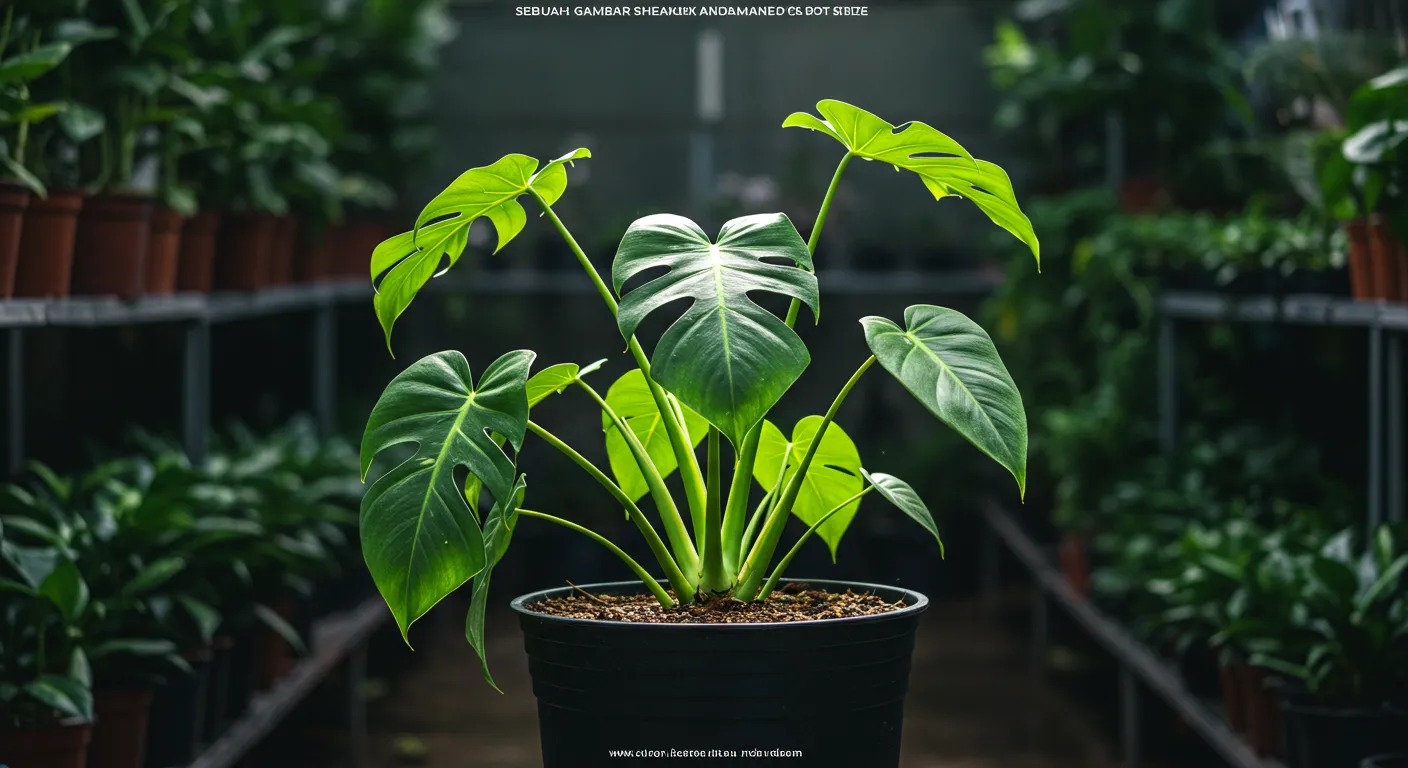
Monstera Pot Size: What Most Plant Owners Get Completely Wrong
Bigger pot, happier plant I believed that for years. When my first large Monstera started looking sad, I immediately moved it into a massive ceramic planter that had been sitting empty in my garage. Within six weeks, the lower leaves went yellow, the stems got soft at the base, and I’d killed a plant I’d spent two years growing. The culprit wasn’t pests, underwatering, or bad light. It was too much soil holding too much water around roots that couldn’t keep up. Getting Monstera pot size wrong is one of the fastest ways to lose an otherwise bulletproof plant.
Why the Container Size Actually Matters This Much
Most houseplant advice focuses on light and water schedules and yes, those matter but the pot is the invisible factor that controls everything else. The volume of soil around your Monstera’s roots determines how long moisture lingers after watering. Too much unused soil acts like a sponge that never fully dries, and that’s where root rot begins. Too little soil, and the roots run out of room, nutrients deplete fast, and the plant hits a wall.
Here’s the counterintuitive part: a Monstera that looks like it needs more space often actually needs less. I’ve seen plenty of stunted, struggling plants that were already in pots far too large for their root system. The yellowing, the drooping, the lack of new growth all classic signs that got blamed on everything except the oversized container quietly drowning the roots.
What a Root-Bound Plant Is Actually Telling You
A Monstera becomes root-bound when its roots have filled the pot and have nowhere left to expand. At that point, the plant is essentially sitting in a mass of roots with almost no actual soil. Water pours straight through without being absorbed. Growth stalls. The plant gets top-heavy and tips over in a light breeze.
Look for these signs before assuming something else is wrong:
- Roots growing out of the drainage holes this is the most obvious signal, but by the time roots are escaping at the bottom, the plant has usually been cramped for a while.
- Water runs straight through the pot when soil gets displaced by dense roots, it can no longer hold moisture, so water disappears immediately without actually hydrating the plant.
- No new leaves despite good conditions if your Monstera has bright light, regular water, and still isn’t pushing out new growth during spring or summer, a crowded root system is a serious suspect.
- The plant lifts out of the pot in one solid mass if you can pull the entire root ball out and it holds its shape like a mold, you’re well overdue for a new container.
The Real Cost of Going Too Large Too Fast
When I made my mistake with that big ceramic planter, my Monstera’s root system was maybe the size of a cantaloupe. I’d put it in a pot closer to the size of a bucket. All that extra soil stayed wet for days after watering I was essentially keeping the roots in a permanently damp environment with no airflow.
Root rot sets in quietly. By the time you see yellow leaves, the roots have often been rotting for weeks. The fungal damage spreads fast in those conditions, and pulling a plant back from advanced root rot is genuinely hard. Prevention meaning choosing a correctly sized pot in the first place is far easier than the cure.
Picking the Right Pot: Size, Material, and the Drainage Non-Negotiable
The rule that has actually held up across hundreds of repots in my collection: go up by one size at a time, which in practice means a new pot that’s roughly 1–2 inches wider in diameter than the current one. That’s it. That modest increase gives the roots fresh room to expand without creating an excess of wet, airless soil.
For a young Monstera coming out of a 4-inch nursery pot, move it to a 6-inch pot. When it outgrows that, go to an 8-inch. Gradual upgrades keep the root-to-soil ratio healthy at every stage. Skipping sizes because a pot “looks big enough” is how I’ve seen people repeat my exact mistake myself included, more than once.
Pot Material Changes How You Water
This doesn’t get mentioned enough: the material your pot is made from affects how quickly soil dries out, which changes your entire watering rhythm.
- Terracotta pots are porous and breathe through the walls, which means the soil dries out faster. For Monsteras especially ones that are prone to overwatering this is genuinely helpful. I use terracotta for most of my aroids, including my larger Monsteras, precisely because it gives me a buffer against wet soil sitting too long.
- Plastic and glazed ceramic pots hold moisture longer since there’s no evaporation through the walls. They work fine, but you need to water less frequently and be more careful about drainage.
- Self-watering pots can work, but I’d avoid them for Monsteras until you know the plant’s habits well they keep the soil consistently moist in a way that’s risky if your mix isn’t very well-draining.
Drainage Holes Aren’t Optional
I know decorative pots with no drainage holes are beautiful. I own several. But I never plant directly into them. A pot without drainage is a water trap, and a Monstera sitting in pooled water at the bottom of a sealed container will rot. What I do instead: keep the plant in a plain plastic nursery pot with good drainage, then drop that nursery pot inside the decorative one as a cachepot. You get the aesthetic, the plant gets proper drainage. Everyone wins.
The Soil Question: Why Standard Potting Mix Isn’t Enough
Even with the perfect pot size, the wrong soil will undo all of it. I learned this the hard way with a juvenile Monstera that kept getting soggy roots despite being in an appropriately sized terracotta pot. The problem was plain potting mix straight from the bag it was too dense, too moisture-retentive, and it compacted over time until the roots were basically suffocating.
Monsteras in the wild are hemiepiphytes. They start on the ground but climb up trees, and their roots are used to a loose, chunky environment with plenty of air. The mix you use indoors should try to replicate that. I’ve been using a blend of Fox Farm potting soil, perlite, and orchid bark for a few years now, and the difference in root health is dramatic compared to straight potting mix.
A Mix That Actually Works
Here’s roughly what I use for every Monstera repot:
- Standard potting soil (about 40%) provides some moisture retention and structure; I use Fox Farm Happy Frog because it’s well-aerated out of the bag compared to heavier brands.
- Perlite (about 30%) improves drainage and keeps the mix from compacting; this is the single most important amendment if you tend to overwater.
- Orchid bark or coco chips (about 30%) creates air pockets that mimic the loose, chunky forest substrate these plants climb through in nature.
The result is a mix that holds enough moisture to hydrate the roots between waterings, but drains fast enough that it never stays soggy. When combined with the right Monstera container size, this is genuinely the foundation that separates a thriving plant from a struggling one.
When and How to Actually Repot
Timing matters more than most guides admit. Repotting a Monstera in the middle of winter when it’s dormant adds stress to a plant that’s already operating at low capacity. I’ve done it out of necessity and the plant just sat there sulking for months, barely recovering before spring. The best window is late spring to early summer the plant is actively growing, roots establish faster, and you’ll usually see a new leaf within a few weeks of a well-executed repot.
The Repotting Process Step by Step
The actual mechanics are straightforward once you’ve done it a few times. Water the plant a day or two before repotting moist roots are more flexible and less prone to snapping during handling. Then lay the plant on its side, ease it out of the old pot gently, and spend a few minutes actually looking at the roots before you do anything else.
Healthy roots are white or light tan and firm to the touch. Rotten roots are brown or black, often mushy, and may smell faintly unpleasant. If you see rot, trim it back with clean scissors until you’re into healthy tissue. It’s better to remove compromised roots than to bury them in fresh soil where the rot can spread. Once the roots look clean, settle the plant into your new pot with fresh mix, water it in gently, and put it back in its usual spot. Skip fertilizer for at least four weeks fresh roots are sensitive and you don’t need to push growth immediately after the stress of repotting.
The Other Factors That Affect How Fast You’ll Need to Repot
A Monstera’s repotting frequency isn’t fixed it depends on how fast the plant is actually growing, which is driven by light, temperature, and how well you’re feeding it. A Monstera in a bright spot with regular fertilizing during the growing season might need a new pot every 12–18 months. The same plant parked in a dim corner might stay comfortable in the same container for three years.
Light and Feeding Affect Root Growth Too
More light means more photosynthesis, which means more energy available for both leaf and root growth. Plants in genuinely bright spots grow faster in every direction including underground. If you’ve moved your Monstera closer to a window and suddenly it seems to need water more often and the roots are pushing out of the drainage holes faster than before, the improved light is probably why.
During spring and summer, I fertilize my Monsteras every four weeks with a balanced liquid fertilizer diluted to half-strength. Full-strength fertilizer can burn roots, especially in a fresh potting mix. I stop fertilizing entirely from around October through February when growth has slowed naturally. This rest period is normal it’s not a sign that something is wrong. If you’ve been wondering why your Monstera has stopped producing new leaves in winter, that’s simply the seasonal rhythm of the plant. You can read more about managing that shift in our guide on Monstera care through winter dormancy.
Humidity and Temperature Play a Supporting Role
Warm temperatures and higher humidity encourage faster growth overall. Our homes tend to be significantly drier than a Monstera’s native environment, especially with heating and air conditioning running. If you’re seeing crispy brown leaf edges, low humidity is likely the cause. A small humidifier near your plant collection is the most reliable fix pebble trays and misting help at the margins, but they don’t move the needle much in a genuinely dry room.
Keep your Monstera away from cold drafts, air conditioning vents, and heating registers. Temperature swings stress the plant and slow root development, which means it’ll sit in the same pot longer without making good use of the soil around it.
The One Thing to Get Right Before Anything Else
If you take one thing from all of this, make it the sizing rule: when you repot, go up just one size 1 to 2 inches wider than the current pot and make sure that pot has drainage holes. That single habit will protect your Monstera from the most common and most preventable cause of decline. You don’t need a perfect soil mix, an expensive pot, or an ideal humidity setup to keep a Monstera healthy. But you do need a container that fits. Get that right, and the plant will do most of the work itself.
