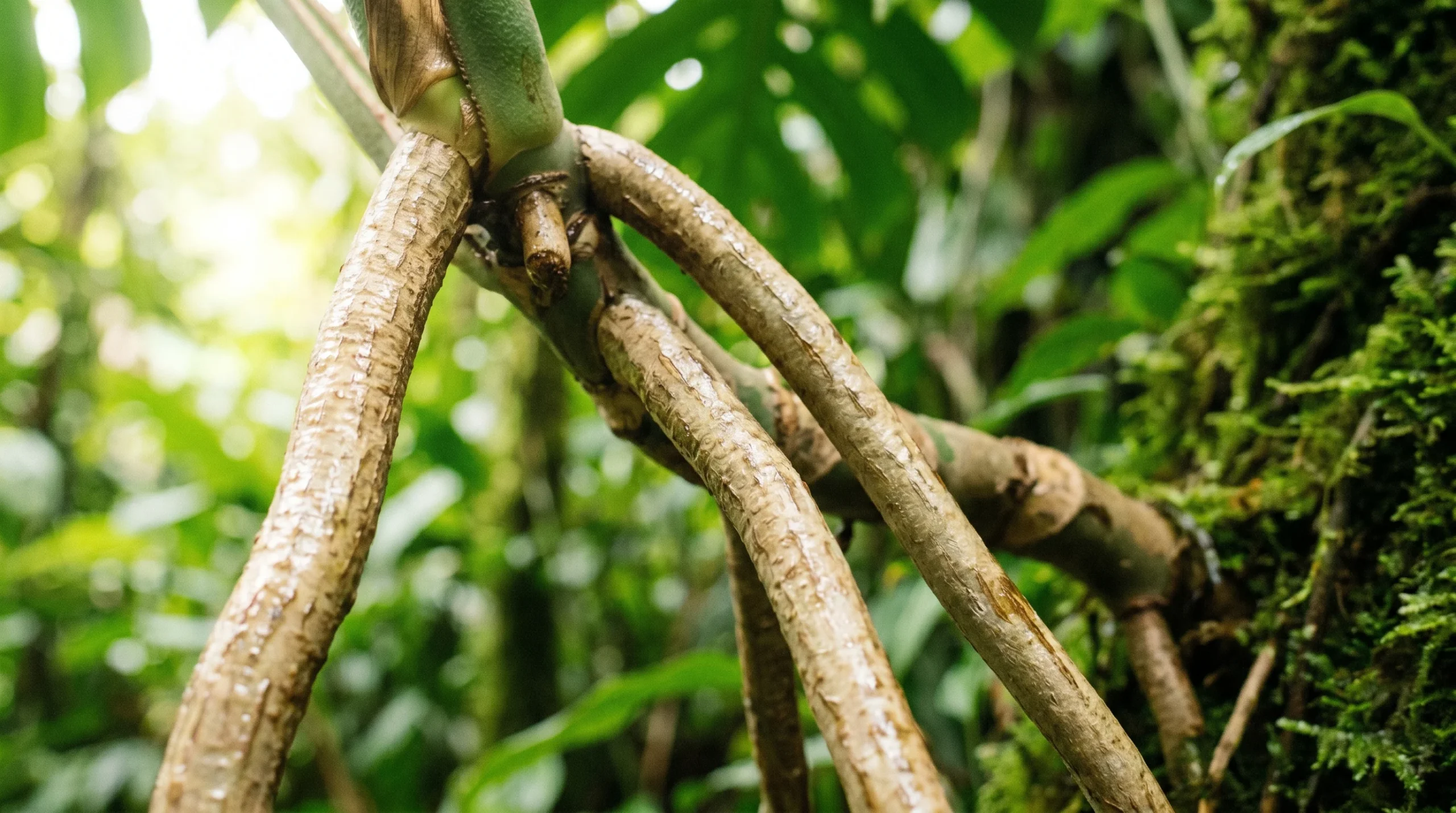
Monstera Aerial Roots: What They Actually Are and What to Do With Them
If you’ve been growing Monstera for any length of time, you’ve probably stared at those thick, rope-like roots creeping out of the stem and wondered: what am I supposed to do with these? I’ve asked myself the same question more times than I can count over the past decade of growing these plants.
Here’s the honest answer: there is no single “right” move. Monstera aerial roots are a normal, healthy part of how this plant functions and depending on your setup, your aesthetic preferences, and what your specific plant needs, the best approach will be different. This guide covers everything: what these roots actually are, the real pros and cons of each option, and step-by-step instructions so you can make a confident decision.
For a faster summary, see our quick decision guide for cutting vs redirecting. But if you want the full picture, keep reading.
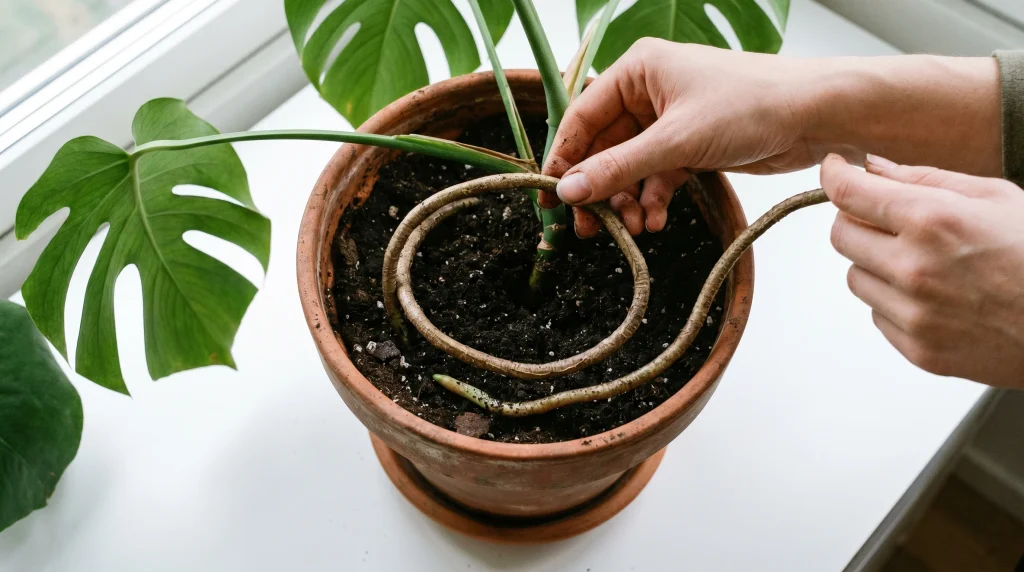
What Are Monstera Aerial Roots? (And Why Do They Exist)
Monstera are hemiepiphytes plants that spend part of their life cycle as ground-dwellers and part as climbing epiphytes. In their native rainforest habitat across Central and South America, they sprout from the forest floor and use aerial roots to latch onto and climb up tree trunks, eventually reaching the forest canopy where light is abundant.
Aerial roots serve two primary purposes in the wild:
- Anchoring and climbing: They grip bark and rough surfaces to support the plant’s weight as it ascends.
- Moisture and nutrient absorption: They absorb water and trace nutrients directly from humid air, rain runoff, and decomposing organic matter on tree bark.
In your home, that same biological drive is still running. The plant doesn’t know it’s in a pot on your windowsill. It’s still doing what its DNA tells it to do reach, climb, anchor. So when you see those roots pushing out from a stem node, that’s not a problem. That’s a healthy, vigorous plant doing exactly what it evolved to do.
That said, in a domestic setting they can become unwieldy and knowing your options is worth the time. monstera care overview
Are Monstera Aerial Roots Normal?
Yes completely and unambiguously. Are monstera aerial roots normal? Absolutely. In fact, I’d be more concerned about a mature Monstera that wasn’t producing aerial roots. Their presence is a sign that your plant is actively growing and healthy enough to invest energy in new structures.
Younger plants and smaller cultivars may produce fewer or thinner aerial roots. As the plant matures and the stem thickens, aerial roots become more prominent and can grow quite long sometimes several feet if left unchecked.
What Do Healthy vs. Unhealthy Aerial Roots Look Like?
Before deciding what to do with your Monstera’s aerial roots, take a moment to assess their condition. Not all aerial roots are created equal, and their appearance can tell you something important about your plant’s overall health.
| Feature | Healthy Aerial Root | Unhealthy Aerial Root |
|---|---|---|
| Color | Pale green, beige, or tan; may darken to brown when dry | Dark brown to black throughout; not just the tip |
| Texture | Firm and slightly waxy; flexible but not mushy | Mushy, shriveled, or brittle and crumbling |
| Tip | Active growing tip may appear lighter or greenish | Tip is dead, blackened, or absent entirely |
| Smell | Earthy, neutral | Foul or rotting odor |
Mushy or foul-smelling aerial roots can indicate overwatering or root rot affecting the whole plant. If you’re seeing that, the aerial roots are the least of your worries check the soil and the primary root ball immediately. monstera root rot diagnosis and treatment
The 3 Honest Options: Cut, Redirect, or Leave
When it comes to monstera aerial roots cut or leave decisions, there are really three paths. Here’s my honest take on each.
Option 1: Leave Them Alone
This is the lowest-effort option and often the right one. Leaving aerial roots to do their own thing is completely fine. They won’t harm the plant, and they won’t harm your furniture (though they may eventually reach a surface and try to grip it).
Best for: Casual growers, plants in hanging situations, or anyone who likes the wild, jungle aesthetic.
Honest downside: In a humid room, long dangling roots can start looking scraggly. They can also eventually reach the floor or nearby surfaces and start anchoring, which some people find untidy.
Option 2: Redirect Aerial Roots
Redirecting means guiding the roots toward something useful either into the soil or onto a support structure like a moss pole or coir totem. This is my preferred approach for most plants because it works with the plant’s natural behavior instead of against it.
Best for: Growers who want a tidier look without sacrificing the root’s function, or anyone using a support structure to encourage upright growth.
Honest downside: Requires a bit of patience. Aerial roots are surprisingly stiff, and you can’t always bend them exactly where you want without risking a snap especially on older, thicker roots.
Option 3: Cut Them
Cutting is safe when done correctly, but it should be your last resort rather than your first instinct. Removing aerial roots doesn’t seriously harm a healthy plant, but it does remove a structure the plant invested energy in producing.
Best for: Roots that are dead, damaged, or simply too long and unmanageable to redirect; situations where aesthetics genuinely require a clean look.
Honest downside: You’re removing a functional structure. The plant will likely grow a replacement, so cutting is often a temporary fix rather than a permanent solution.
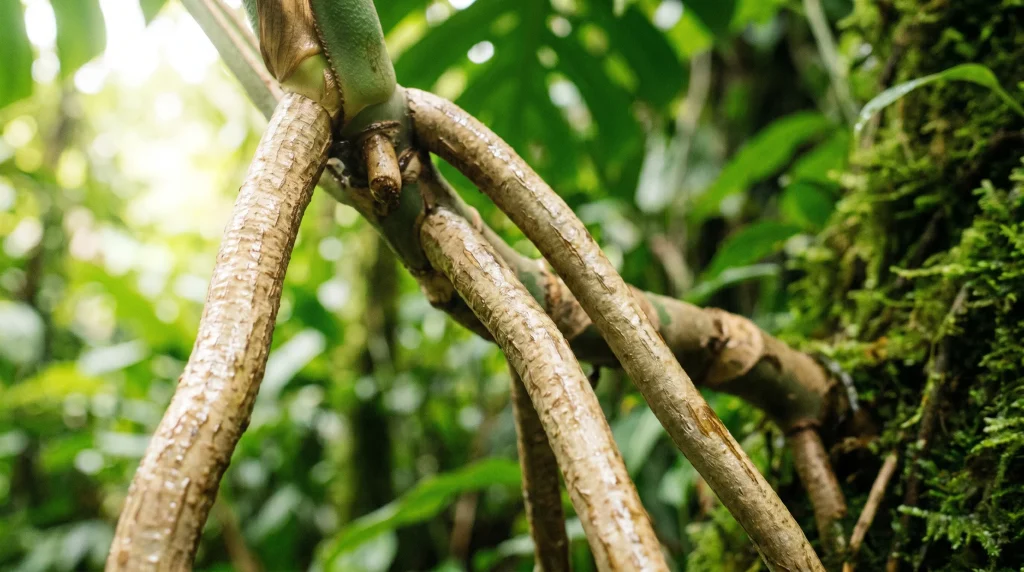
How to Redirect Monstera Aerial Roots Into Soil
Guiding monstera aerial roots soil placement is one of the most beneficial things you can do for a potted plant. When aerial roots reach moist potting mix, they can absorb water and nutrients directly, reducing stress on the primary root system.
- Assess flexibility first. Gently bend the root with your fingers. If it has any give, it can likely be redirected. If it feels completely rigid or starts cracking, don’t force it.
- Create a gentle curve. Rather than bending the root at a sharp angle, work it slowly into a wide arc pointing downward toward the pot. Do this gradually over several days if needed don’t force it in one session.
- Anchor it into the soil. Push the root tip into the potting mix by 1–2 inches. You can use a small U-shaped pin or a bent paperclip to hold it in place if it keeps springing back up.
- Keep the soil moist. The root will establish itself much faster in consistently moist (not waterlogged) soil. A dry mix won’t encourage the root to settle in.
- Leave it alone. Once anchored, resist the urge to pull it back out to check progress. Give it 3–4 weeks.
From my own experience: I’ve found that warming the root slightly with my hands for a minute before bending makes it noticeably more pliable. Aerial roots are more flexible when warm.
How to Redirect Monstera Aerial Roots to a Moss Pole
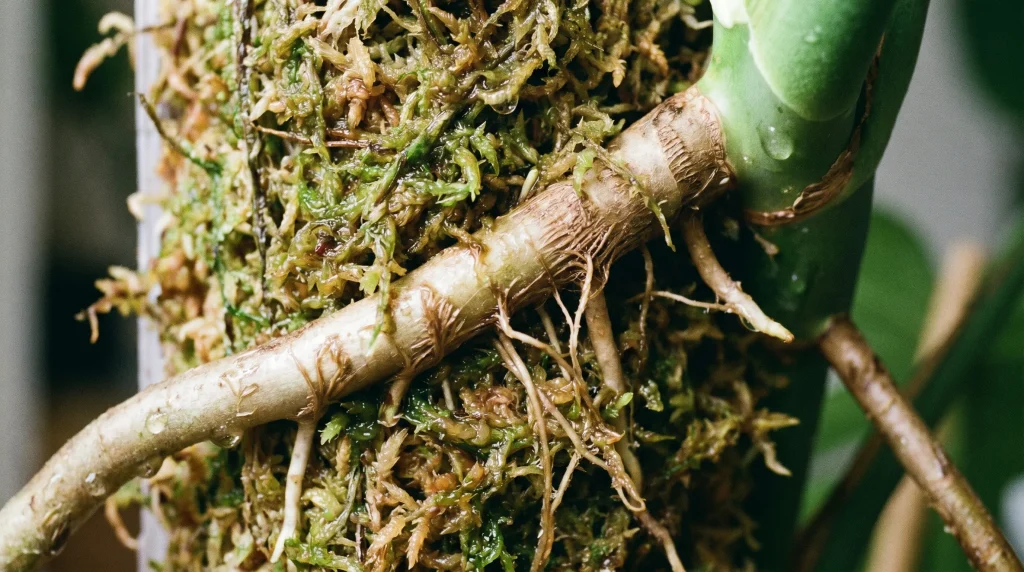
A monstera aerial roots moss pole setup is one of the best ways to encourage natural, upright growth while keeping aerial roots tidy and functional. Moss poles mimic the bark of trees in their native habitat and can significantly accelerate growth when used correctly.
- Use a damp pole. Dry moss or coir won’t attract aerial roots. Before redirecting, thoroughly moisten the pole. I keep mine damp by misting it every few days or using a bamboo stake to channel water down through it.
- Position the pole close to the stem. The less distance an aerial root has to travel, the easier the redirect. Install or reposition the pole so it runs directly adjacent to the stem.
- Guide the root to the pole surface. Press the root gently against the moist pole surface. It doesn’t need to “grip” immediately contact is enough to start.
- Secure loosely with plant tape or soft ties. Use a figure-eight tie that holds the root against the pole without constricting it. Soft silicone ties or jute twine work well. Avoid metal wire.
- Maintain pole moisture. Consistency is key. An aerial root that finds the pole dry will stop engaging with it. A damp pole will be colonized surprisingly quickly sometimes within a few weeks.
Once established, aerial roots will anchor themselves to the pole and won’t need the tie anymore. You can remove it once you see the root has gripped on its own.
How to Safely Cut Monstera Aerial Roots
When cutting is the right call for dead, damaged, or truly unmanageable roots do it properly to avoid introducing disease or stressing the plant.
- Sterilize your tool. Use sharp, clean pruning shears or scissors. Wipe the blades with 70% isopropyl alcohol and let them air dry for 30 seconds before cutting.
- Cut close, but not flush. Leave a 1–2 cm stub at the node. Cutting flush to the stem can damage the node tissue, which is where new growth originates. The stub rule matters.
- Make one clean cut. Don’t saw back and forth. A single clean cut minimizes tissue damage and heals faster.
- No treatment needed on the cut end. Healthy Monstera tissue doesn’t require rooting powder or sealant after cutting an aerial root. Just leave it and the stub will naturally callous over within a few days.
- Monitor for the next 2–3 weeks. Watch the cut site and surrounding stem for any discoloration or softness that might indicate an infection entered through the wound.
One important note: if you’re cutting multiple aerial roots in one session, re-sterilize your tool between each cut. It takes 10 seconds and is worth it.
Frequently Asked Questions About Monstera Aerial Roots
Can I put my Monstera’s aerial roots in water?
Yes, some growers place long aerial roots into a cup or vase of water nearby. The roots will absorb the moisture and it can be a practical way to keep them hydrated without redirecting them entirely. Just change the water regularly to prevent stagnation and bacterial buildup. It won’t produce the same structural benefits as redirecting to a moss pole, but it’s a valid option for very long roots.
Will cutting aerial roots hurt my Monstera?
No a healthy plant can handle the removal of aerial roots without any significant setback. You may notice a slight slowdown in growth while the plant adjusts, but it won’t cause lasting harm. The plant will typically produce new aerial roots from the same or nearby nodes over time.
Why are my Monstera’s aerial roots turning brown?
Some browning is normal, especially toward the tips or when humidity is low. Aerial roots exposed to dry indoor air will often turn tan or light brown that’s not a sign of disease, just the outer velamen layer drying out. Deep, dark brown that extends the full length of the root, combined with a mushy texture, is the concern: that suggests rot. Check the main root system if you see that.
How do I know if my Monstera needs a moss pole?
If your plant is producing multiple aerial roots actively reaching outward, leaning heavily, or growing new leaves that are noticeably smaller than older ones, it’s likely searching for a support structure. These are all signals that your Monstera would benefit from a moss pole or totem. Providing vertical support often triggers a marked improvement in leaf size and fenestration development.
Should I mist my Monstera’s aerial roots?
Misting can help in very dry environments, but it’s not a substitute for adequate ambient humidity. If your home runs below 40–50% humidity, consider a small humidifier near your plant rather than relying on misting, which provides only brief, superficial moisture. That said, misting a moss pole directly is a great way to keep it damp enough to attract and support aerial root attachment.
Growing Monstera well means working with the plant’s natural tendencies rather than fighting them. Aerial roots are a feature, not a bug — and now you have everything you need to manage them on your own terms.
